




'Learn from history to break out of middle income trap'
The failure to learn from history's school of economic hard knocks is the biggest hurdle for Malaysia in its journey toward a high-income country.
The failure to learn from history's school of economic hard knocks is the biggest hurdle for Malaysia in its journey toward becoming a high-income country.
This was the warning issued by assistant secretary-general for economic development in the United Nations' Department of Economic and Social Affairs, Jomo K Sundaram.
"It is important to learn from our failures and successes. If we don't know about our history, how can we go on?" he argued.
Jomo was speaking today in Kuala Lumpur at the 5th Annual Malaysian Student Leaders Summit, part of a panel of speakers on the topic of how Malaysia can achieve its high income economy aims.
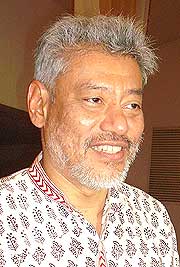 He was referring to Malaysia's experience through the economic downturns of the early 80s and mid 90s. Something he said could have been averted if our government was more astute.
Be that as it may, the UN official saw the lessons of the recent past as valuable signposts in our journey to becoming a high income nation, but worried that the government is yet again turning a blind eye to the same pitfalls and problems.
Most prominently, Jomo ( left ) lamented that despite warning signs from past difficulties, Malaysia's economy continues to be "unnecessarily FDI oriented".
"In most countries domestic investment leads and FDIs follow. But here FDIs lead but domestic investment follow," the economic expert point out.
Such a policy, he said, debilitates the government as it then in turn becomes beholden to foreign investors who expect incentives and other sweeteners.
Jomo's argument suggests that Malaysia will be held hostage by foreign investors who may pull out if things are not to their liking.
'Over reliance on finance sector'
Another anomaly in the Malaysian economy, Jomo went on to point out, is the reliance on the financial services sector which may be problematic.
 He cautioned that the finance sector while instrumental in moving around millions of ringgit does not really create any value added to the economy in reality.
"Similarly in other countries investment leads and finance follows. But here finance leads and investment follows."
The former Universiti Malaya lecturer added that the financial industry's influence is so big that it even led to the liberalisation of the stock market.
The focus on the twin money spinners of the stock market and finance led to the devaluation of real growth engines like the industrial sector.
Indeed Jomo shared statistics which showed that Malaysia has been in the process of de-industrialisation that saw the sector shrinking in the last decade.
He warned that this may be a bad move and may lead to problems.
"Rather than recognise where the growth is coming from, there was too much focus on the stock market," said the UN official.
'Finance minister of the year'
The situation, Jomo explained, was made worse with the emergence of the business media and the eagerness to receive its accolades, at the expense of implementing well-considered financial policies.
"How do you become the finance minister of the year? Well you do all you can to please the stock market.
This act more often than not led to inappropriate incentives and caused problems.
Those problems that led to the stock market collapse of 1993 and 1997. That collapse was the result of an overheated investment environment as government allowed the bubble to grow too fast and then was helpless as it burst.
The ensuing collapse in turn led to "disastrous consequences", such as the bailouts of BN-linked companies that cost taxpayers millions.
However, not all our past experiences were negatives ones, Jomo argued, pointing to the cogent industrial policy of previous administrations that led to the rapid growth in the late 80s and early 90s.
 He argued that a strong and government-led industrial policy could be our saviour in meeting the growth we need if we were to achieve high income. As an example, he gave state intervention in palm oil which opened new doors and generated a boom in Malaysian business.
This happened despite the anti-palm oil lobby at the time causing major problems to market access in traditional palm oil consumer nations like Europe and the US.
He gave credit for our palm oil success in large part to the centralised government effort to our palm oil success, as individually the palm oil producers would not have been able to clinch the deals and come up with plans that were put in place such as the barter deals with new markets like India and China.
However he cautioned that most regulations and laws that currently form the backbone of Malaysian policies are "inappropriate", "selectively enforced" or not enforced at all.
Jomo urged a redressing of our problematic regulations and laws as well as the formulation of a government policy to find, support and develop new and promising sectors as our future engine of growth.
Achieving a high income economy is the holy grail of Premier Najib Abdul Razak's New Economic Model and Economic Transformation Programme. This is a journey on which the government says we were well launched, though critics and economists like Jomo may hold a differing opinion.


Are you sure you want to delete this comment?
This action cannot be undone.