




Lift four states of emergency, urges Proham
The Association for the Promotion of Human Rights (Proham) has called on the government to immediately lift the four states of emergency still in effect in the country.
The Association for the Promotion of Human Rights (Proham) has called on the government to immediately lift the four states of emergency still in effect in the country.
Members of the new pro-human rights NGO are baffled that the four emergencies called at least over 30 years ago continue to be in effect despite already having served their purposes.
 There are four emergencies still in effect until today - the Malayan Emergency from 1947 to 1960 to combat a communist insurgency; the Sarawak Emergency in 1966 when there was a tussle for the chief ministership; the May 13, 1969 emergency during the racial riots; and the Kelantan Emergency in 1977 which marked a period of unrest and the expulsion of PAS from the BN.
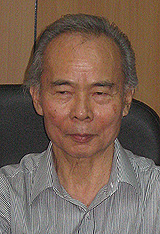
“We are still under emergency rule, and yet the conditions for an emergency no longer apply,” said Proham chairperson Simon Sipaun ( right ).
Simon, a former Suhakam commissioner, indicated that this is reflective of the apparent increase in the government’s use of preventive laws such as the ISA and more recently, the Emergency Ordinance (EO).
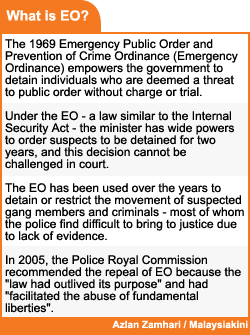 He said it was the government itself that pointed out that laws like the ISA were put in place to deal with the communist insurgents of decades past, making it no longer relevant.
“But if you look at what happened, instead of repealing the laws, they have strengthened the laws and used them against their political opponents,” he said after chairing a Proham committee meeting in Petaling Jaya last night. The association is made up of mostly former Suhakam commissioners.
Former Court of Appeals judge and Proham committee member KC Vohrah stressed that amendments to the Penal Code give even less reason for such preventive laws to continue to exist, noting that there are sufficient laws in place to manage public order.
‘Civil laws are sufficient’
Vohrah pointed out that the Penal Code has already been amended to include a chapter on anti-terrorist acts, which empowers the police to arrest and charge those who are believed to be involved in acts of terrorism.
“... there are chapters in the Penal Code which allow for the police to act under the ordinary laws of the country, to arrest these people and arrest them for subversion or terrorism, as now the government seems to allege that everything is against public order, meaning subversion or terrorism,” he said.
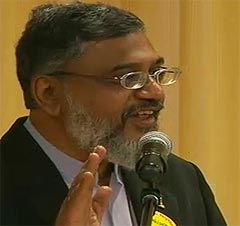 Fellow committee member Denison Jayasooria (
left
) criticised the government for abusing preventive laws despite pledging to at least review the ISA.
Fellow committee member Denison Jayasooria (
left
) criticised the government for abusing preventive laws despite pledging to at least review the ISA.
He acknowledged that some form of preventive law could be put in place for use in “exceptional cases”, but decried recent announcements by the authorities to use them for other issues such as the plan to use the EO on cyber-criminals and the ISA on those involved in illegal immigration.
“The way the EO was used on (PSM leader) Dr (D) Jeyakumar was also an abuse of preventive laws.
“This raises a major concern over the kind of revival of (the use of) preventive laws, when normal laws should be used,” he said.
Meeting with EC planned
Meanwhile, Simon said Proham are working on finalising their report based on the recent dialogue they organised between Bersih 2.0 chief Ambiga Sreenevesan, Election Commission (EC) deputy chairperson Wan Ahmad Wan Omar and senior lawyer Shafee Abdullah.
Simon said once the report is completed, they intend to follow up on the dialogue with a meeting with the EC, hopefully within the next two weeks.
“Proham is going to try and meet with the EC and see what difference Proham can make. The EC chief Tan Sri Abdul Aziz (Mohd Yusof) has agreed in principle to meet with us... let’s hope a lot of good sense will prevail,” he said.


Are you sure you want to delete this comment?
This action cannot be undone.