




Keeping bugs out of food-stamp system
SPECIAL REPORT Without clear guidelines, any move to introduce the ‘food stamp’ system in Malaysia is likely to backfire on the government, cautioned an expert on poverty.
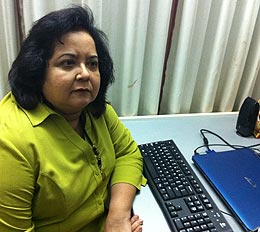
Sulochana Nair, now a consultant to the Universiti Malaya faculty of economics and administration, outlined the main challenges of implementing the policy, which the government is said to be considering.
SPECIAL REPORT Without clear guidelines, any move to introduce the ‘food stamp’ system in Malaysia is likely to backfire on the government, cautioned an expert on poverty.
 Sulochana Nair, a former lecturer with the Universiti Malaya faculty of economics and administration, outlined the main challenges of implementing the policy, which the government is said to be considering.
Nair, who had founded the faculty’s Centre for Poverty and Development Studies in 2006 and is now a consultant to it, said a key need is to target food-stamp beneficiaries at the micro-level.
“(The policy elsewhere has) often included people who don’t need it. (As such) people sell what they buy with (food) stamps, at a higher price. There is always a chance for (a) black market to evolve,” she said in a recent interview.
However, such setbacks can be overcome if a good and timely communication system is established, to enable the government to monitor those who no longer require aid.
“Micro-level targeting must institute a proper exit mechanism to monitor the recipients very closely,” she said.
“Some kind of institution has to be in the system and there must be a high level of political commitment for this system to be sustained.”
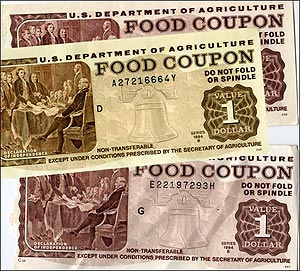 The US has had a Food Stamp Act for about 70 years now. Among other aspects, it regulates those who qualify for aid and the criteria they must meet.
At the same time, the US administration monitors its food stamp system every month.
“Here, (such a system) should be uploaded (online) and easily accessed by people distributing the food stamps,” Nair suggested.
Another factor to be considered is that not all poor people will benefit from food stamps, as much depends on their situation.
“(Poverty) varies by location, income status, type of household, gender, geographical location, employment status and education level. (All this will) affect the type of public distribution system used to cope with rising food prices.”
The poo
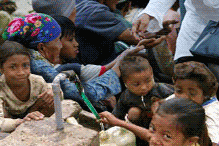 r are not homogenous either, resulting in the need to understand the cause of poverty - whether due to income status, gender or geography - in order for the system to work effectively for recipients.
“There has to be a standard or link in Malaysia to the family’s income to receive the food stamp, if (the decision is) to introduce a system based on the graduated scale, (rather than) the blanket system,” Nair said.
The graduated scale, she explained, is an allocation system based each household’s needs. A blanket system is one where every household receives an equal number of food stamps regardless of the demographics of its needs.
Other concerns
She further said the most vulnerable groups must be identified within the low-income group through micro-level targeting.
 “Pregnant women, lactating mothers, the elderly and children below six years old have to be taken into consideration because they are the most vulnerable and they show some indication of need-characteristic of the household.
“Food stamps will (also) help those in rural areas who experience food insecurity, such as kids and babies who need infant formula.”
Nair, who is on the board of trustees of Yayasan Sejahtera - a programme to eradicate poverty - expressed concern over the probability that the food basket standard may be carried over to the food stamp system.
 “One of the things I have realised during my research (into poverty) is that food baskets distributed by the government contained (such low-nutrition) food (as instant noodles).
“(Also,) the ikan bilis and peanuts, a source of protein for kids, were eaten by adults instead. As a result, children do not receive the (intended) nutrition.
“(In addition), obesity is high among women in the lower-income group because they tend to have a tong sampah mentality - they eat all the leftovers.”
Consumer and nutritional education must therefore be tackled in tandem with implementation of the food-stamp system, Nair said.
Food stamps have succeeded in countries like the US and Sri Lanka because such support is only limited to certain items.
“You cannot use it for hot food, pet food, alcohol and tobacco. It is limited to bread, cereal, vegetable, meat, candy and dairy products.”
Hot foods as well as food in restaurants are not included in the list of items eligible for food stamps because these are perishable, she added.
Tomorrow: ‘No single solution to rising food prices’


Are you sure you want to delete this comment?
This action cannot be undone.