




Food stamps not a silver bullet
SPECIAL REPORT Food stamps cannot be seen as a silver bullet in helping the poor cope with rising food prices in Malaysia, according to poverty researcher and economist Sulochana Nair.
The main purpose of food stamps - besides cushioning the increase in food prices - is to put purchasing power back in the hands of the lower-income consumers.
SPECIAL REPORT Food stamps cannot be seen as a silver bullet in helping the poor cope with rising food prices in Malaysia, according to poverty researcher and economist Sulochana Nair.
The main purpose of food stamps - besides cushioning the increase in food prices - is to put purchasing power back in the hands of the lower-income consumers.
However, this will not happen if prices continue to balloon due to external costs, as is the case in Malaysia, which is not self-sufficient in many areas of food production.
She suggested that other measures that the government could implement - price controls, production stimulus, encouraging imports, food production stimulus, release of stockpiles, setting up of fair price shops and rationing.
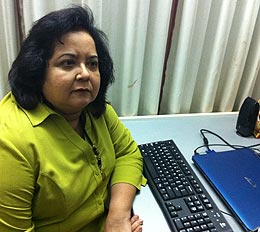 “We (also) have to really evaluate if the other systems of public distribution methods would work better. Maybe we need a combination of all," said Nair, who founded the Centre for Poverty and Development Studies (CPDS) in 2006 under the economics and administration faculty of Universiti Malaya.
“Food stamps seem to be cheaper than rationing system and seem to have a better impact in terms of improving nutritional standards and consumption patterns among the poor. It is also cheaper for the government because you don't have a huge distribution bureaucracy.”
However, based on empirical evidence from poverty-related research, she cited instances where the food-stamp system would not be effective.
“In Sri Lanka, even though food stamps have proven to relieve household expenditure, one weakness is that the value of the stamp was not aligned with the inflation rate... this defeats the purpose of the system,” she said.
People living in very remote geographical locations would not particularly benefit from this programme either.
 “For some, you might have to send the food directly to them; (otherwise) they would have to travel great distances to get the food,” explained Nair, now a consultant to the CPDS.
The cost of implementation could prove to be prohibitive in places like Sabah and Sarawak as transportation costs would be very high, she observed.
Food stamps could even be a disadvantage to certain communities among the poor - for example, the elderly - because the system is not meant to relieve the cause of their poverty.
“In countries where you are dealing with a very aging population, you have programmes like ‘Meals on Wheels’ because the person you are trying to help is not in a position to go out and get the ingredients to cook a meal, or even to cook a meal,” she said.
‘Identify causes of poverty’
Nair stressed the importance of determining the causes of poverty, so that the government arrives at the right mechanism to help the lower-income group to cope with the higher cost of living.
Decent employment and decent wages should be taken into consideration before implementing another public distribution system to stimulate the purchasing power of this group.
“The poor do need some kind of support. There are always food shortages and insecurities. While not all of their problems can be solved, at least some of their problems (can be solved) such as a certain amount of food on daily basis until they can be sustainable themselves.”
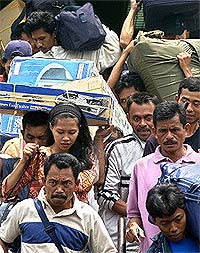 She also commented on the needs of immigrants, especially since they have not been included in the statistics in recent research into poverty in Malaysia.
“We do not know much about them. But we will have to feed them too and can’t just let them go hungry.
“When it comes to food and health, you really want to think who is entitled to it. We need to sort them out first or maybe change the some of the immigration policies.
“If they are here under an employer, I think the employer should bear some responsibility,” she added, relating the subject back to the issue of decent employment and wages.
Yesterday:
Keeping bugs out of food-stamp system


Are you sure you want to delete this comment?
This action cannot be undone.