




Only NGOs want natives in jungles, says CJ
A debate on the merits of development over preservation of native lifestyle took centre stage in the Federal Court today, as Chief Justice Zaki Azmi argued that Sarawak's natives need to be taken out of the jungle to enjoy development like other Malaysians.
A debate on the merits of development over preservation of native lifestyle took centre stage in the Federal Court today, as Chief Justice Zaki Azmi argued that Sarawak's natives need to be taken out of the jungle to enjoy development like other Malaysians.
 While listening to submissions from counsel Sulaiman Abdullah - who is representing Bato Bagi and Jalang Paran in seeking
redress
for the loss of their native customary rights (NCR) land - Zaki noted that the interests of the majority should be of higher priority over the minority.
While listening to submissions from counsel Sulaiman Abdullah - who is representing Bato Bagi and Jalang Paran in seeking
redress
for the loss of their native customary rights (NCR) land - Zaki noted that the interests of the majority should be of higher priority over the minority.
Zaki ( left) said that out of the tens of thousands of natives who had to relocate because of the Bakun hydroelectric dam project and a proposed pulp mill, only a handful have decided to formally challenge the government's takeover of their land.
"I'd say it's only the NGOs who want to leave the natives in the jungle," he said, arguing that the nation must come before individuals.
Zaki is hearing the case as part of a three-member Federal Court panel, which include Chief Judge of Sabah and Sarawak Richard Malanjum and Justice Md Raus Sharif.
Bato, along with five others, are suing the state government over the loss of their land due to the Bakun project, while Jalang’s suit is against the government and a state-owned company that took over his village’s land for a pulp mill project.
They are arguing that the state’s acquisition of their NCR land - as provided for under the Land Code - violated their fundamental rights under the federal constitution.
In pushing his clients’ arguments across, Sulaiman contended that it would be unfair to simply assume the natives want to abandon their traditional lifestyle without asking them in the first place.
He stressed that even if they are a minority, the federal constitution guarantees them the “right to life” as Malaysian citizens and they cannot be deprived of the freedom to choose to live as they see fit.
State’s conduct insults natives
Sulaiman posited that had the state government consulted the natives first before taking their land, not only could they have settled these issues but it would have also shown a state that cares and respects its people.
“Otherwise, it would be an insult to the natives when you say ‘sorry it turned out this way, here’s some money’. That is as if you’re saying, ‘that’s all you’re worth, that’s all your culture is worth’,” he said.
At the end of submissions, Zaki acknowledged that he was “persuaded” by Sulaiman’s position, but indicated that the final decision of his three-member panel must ultimately be based on the law.
“I’m persuaded by your position, but how do I reason out (in the judgment)? These issues (of native rights) are for politicians to decide, not the courts,” he said.
Zaki also said the judgment should be ready within one month, pledging to settle the case before he retires next month.
 This case has been hailed as a
historic test case
in the long-standing issue of acquisition of NCR land by the Sarawak state government from indigenous tribes in the state.
This case has been hailed as a
historic test case
in the long-standing issue of acquisition of NCR land by the Sarawak state government from indigenous tribes in the state.
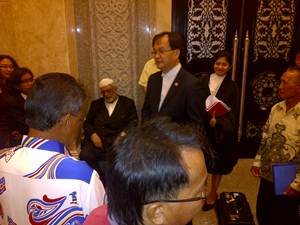
Lawyer and human rights activist Baru Bian ( centre in picture ), who is also acting as counsel for the appellants in this case, pointed out that the final judgment would have “major implications” for some 200 similar cases currently in the lower courts.


Are you sure you want to delete this comment?
This action cannot be undone.