




BBC admits airing M'sian gov't propaganda
International broadcaster BBC has admitted that it has aired to millions of people worldwide, programmes made by a public relations company hired by the Malaysian government.
International broadcaster BBC has admitted that it has aired to millions of people worldwide, programmes made by a public relations company hired by the Malaysian government.
It has suspended all programming from the London-based public relations company, FBC Media Ltd, which since 2009 has made at least four documentaries dealing with Malaysia.
According to an investigative report by Britain’s The Independent newspaper, the BBC said in a statement that "FBC has now admitted to the BBC that it has worked for the Malaysian government".
"That information was not disclosed to the BBC as we believe it should have been when the BBC contracted programming from FBC. Given this, the BBC has decided to transmit no more programming from FBC while it reviews its relationship with the company," BBC was quoted as saying.
According to the daily, the BBC is conducting an investigation into whether any of the FBC material it broadcast was in breach of BBC guidelines on impartiality.
The broadcast of programmes produced by FBC may be against the BBC's guidelines on conflict of interest which states: ‘Independent producers should not have inappropriate outside interests which could undermine the integrity and impartiality of the programmes and content they produce for the BBC.’
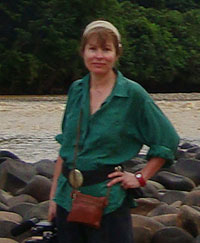 The controversy was first highlighted by
Sarawak Report
, a portal founded by journalist Clare Rewcastle-Brown
(left)
, who is the sister-in-law of former British prime minister Gordon Brown.
The controversy was first highlighted by
Sarawak Report
, a portal founded by journalist Clare Rewcastle-Brown
(left)
, who is the sister-in-law of former British prime minister Gordon Brown.
It claimed that FBC was paid millions of ringgit by BN politicians to glam up their image overseas.
This was verified by the entries in the government's Supplementary Budget 2010 which showed that FBC was allocated RM28.35 million for work on a ‘Global Strategic Communications Campaign’ ordered in 2009. The company had received RM29.34 million the previous year.
The Independent also reported that documents filed with the US House of Representatives in 2008 show that FBC contracted the Washington-based American lobbying company Apco Worldwide.
It had paid more than US$80,000 in 2008 for the purpose of ‘raising awareness of the importance of policies in Malaysia that are pro-business and pro-investment as well as [showing] the significance of reform and anti-terrorism efforts in that country’, said the report.
FBC denies impropriety
FBC has denied to The Independent any impropriety in its programmes for any broadcaster.
It said via its lawyers that ‘at no time have the television programmes made for the BBC ever been influenced or affected by our client's commercial activities’.
Its lawyers said FBC runs both production and commercial divisions, which "are and always have been quite separate and distinct".
"Our client, having reviewed its procedures, is now taking steps to ensure that even the merest appearance of bias or overlap is fully avoided," they added.
Yesterday the UK's broadcasting and telecommunications industries regulator Office of Communications said it is assessing the matter in accordance with its published procedures.
"We will shortly decide whether to launch a full investigation of the content in question under the broadcasting code."
Earlier another international news broadcaster CNBC, which was said to have aired programmes produced by FBC, announced that its flagship business show ‘World Business’ had been axed after the expose.
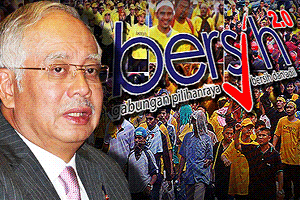 International broadcaster CNN, however,
denied
the
Sarawak Report
allegation that its recent interview with Prime Minister Najib Abdul Razak touching on the Bersih 2.0 rally was a result of lobbying by FBC.
International broadcaster CNN, however,
denied
the
Sarawak Report
allegation that its recent interview with Prime Minister Najib Abdul Razak touching on the Bersih 2.0 rally was a result of lobbying by FBC.
The Independent said in its report that the World News' ‘Third Eye’ series shown on BBC under the title ‘The Power of Asia’, was one of several FBC productions on Malaysia in the last three years.
Viewers were told of the key role of the Malaysian palm oil industry in meeting the growing demand for food in countries such as China and India.
In February 2011, BBC World News broadcast on its ‘One Square Mile’ programme a piece from Sarawak which explored the lifestyle of the tribal Iban people.
Similar subjects were examined in FBC's ‘Develop or Die’ documentary for the BBC in March 2009 which examined the benefits of the Malaysian palm oil industry and its value to the economy.
As part of its ‘Develop or Die’ series, BBC World News screened a FBC co-production, ‘World Debate: Islam and Democracy in 2009', featuring Najib sitting alongside the host on the panel.


Are you sure you want to delete this comment?
This action cannot be undone.