




Time to retire 100-year-old OSA
COMMENT This week, the UK ‘celebrates’ the 100th birthday of the 1911 Official Secrets Act. Typically when someone turns 100 in the UK, they receive a card from the Queen.
In the case of the OSA, most people believe that it would be better if it were to receive a small pension and sent off to a seaside town for a quiet retirement...
COMMENT This week, the UK ‘celebrates’ the 100th birthday of the 1911 Official Secrets Act. Typically when someone turns 100 in the UK, they receive a card from the Queen.
In the case of the OSA, most people believe that it would be better if it were to receive a small pension and sent off to a seaside town for a quiet retirement.
Since its inception, the Act has been the bane of whistleblowers, journalists and the public’s right to know. In its heyday, it was said to be able to suppress the number of tea cups served in a ministry’s dining room.
 It would be problematic if its impact only reached the UK borders. However, the OSA is the mother of similar laws in many Commonwealth countries. The laws have lasted long past their colonial roots with little reform. Malaysia’s 1972 Official Secrets Act did little to improve the original 1911 Act it replaced.
However, its time is clearly running out. In the UK, it was substantially amended in 1989 - following an attempt to prosecute a whistleblower who released crucial information to the Parliament - and further undercut by the adoption of the Freedom of Information Act in 2000.
It still rears its ugly head to try and muzzle whistleblowers revealing corruption and abuse but it no longer invokes fear in the same way. Today a threat to invoke it is more likely to result in a flurry of tweets rather than a confession and plea for mercy. Attempts by government to fully control information are quaint in the Internet age.
Other Commonwealth countries are also trying to deal with its legacy. In India, the Right to Information Act 1995 overrules it, making it mostly irrelevant. In Jamaica and Nigeria, the parliaments are currently working on repealing it.
It’s time for the same to happen in Malaysia, where the Act has been a substantial barrier to accountability and fighting corruption and a tool to suppress dissent.
Replace OSA with FOI Act
Stories abound of cases where the OSA has been invoked to restrict access to information essential to the public’s understanding of current events - the Bukit Antarabangsa landslide, the toll concession agreements, the collapse of the Jaya Supermarket and so on.
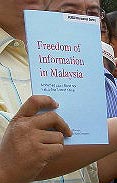 Progress should be recognised - the Selangor Freedom of Information Enactment 2010 and the national Whistleblower Protection Act are good first steps at reform. The eventual declassification of the Bukit Antarabangsa landslide report was a positive decision but there was no ground for its secrecy in the first place.
More needs to be done to make sure crucial information is available to the public in a timely manner.
What is needed instead is a modern national Right to Information Act, which requires the disclosure of information routinely and gives individuals the right to demand information.
Within the RTI, certain vital information such as truly sensitive national security documents, information about individuals’ personal lives, and corporate secrets, can still be protected but the burden would be on the government to justify it and show that it is not in the public interest to release the material in question.
Nearly 100 countries around the world have now adopted a RTI law, including Indonesia, India and Korea. Even China has a national regulation that gives citizens a legal right to demand information.
None of these are perfect at making information available but it’s better than secrecy for the sake of secrecy.
DAVID BANISAR is senior legal counsel for Article 19, the global campaign on freedom of expression, in London.


Are you sure you want to delete this comment?
This action cannot be undone.