




In Koh's imbroglio, a cautionary tale for Pakatan
COMMENT There are crucial lessons for Pakatan Rakyat parties in the current contretemps in BN component Gerakan over the suitability of Koh Tsu Koon to lead the latter.
Apart from the self-delusion that pervades the issue, especially the notion that you could have under Umno a BN component party leader who is nothing if not complaisant, there is the fact that Koh was not only the choice of the late and astute Dr Lim Chong Eu, but also of Dr Lim Keng Yaik, whose occasional theatrical pretense of recalcitrance within BN, Umno winked at if only to sustain the illusion of collegiality whereas its hegemony was problematic reality.
That Keng Yaik has turned into a critic of the very man he had endorsed as his successor does not excuse his poor judgement in electing to have Koh as his heir. Koh has never been anything other than a glorified boy scout...
COMMENT There are crucial lessons for Pakatan Rakyat parties in the current contretemps in BN component Gerakan over the suitability of Koh Tsu Koon to lead the latter.
Apart from the self-delusion that pervades the issue, especially the notion that you could have under Umno a BN component party leader who is nothing if not complaisant, there is the fact that Koh was not only the choice of the late and astute Dr Lim Chong Eu, but also of Dr Lim Keng Yaik, whose occasional theatrical pretense of recalcitrance within BN, Umno winked at if only to sustain the illusion of collegiality whereas its hegemony was problematic reality.
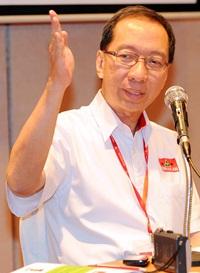 That Keng Yaik has turned into a critic of the very man he had endorsed as his successor does not excuse his poor judgement in electing to have Koh as his heir. Koh has never been anything other than a glorified boy scout.
In that incarnation, he was the favoured choice of Chong Eu as his successor as Penang Chief Minister and also of Keng Yaik as party president.
Koh's passivity was his primary credential for succession to Chong Eu and his complaisance the chief reason for elevation to the Gerakan presidency when Keng Yaik retired.
Complementing those traits was Umno's preference for BN component party leaders who can be counted on to be as passive as house pets.
Three and a half years on from Gerakan's wipeout at the hands of the DAP in its former bastion of Penang and heavily dependent on Umno for the retention of the two parliamentary seats its holds (Gerik and Simpang Renggam) elsewhere in the country, the rumblings within Gerakan over Koh's suitability to lead the party in the next general election is a diversion that simply won't wash.
It seems like a forlorn attempt by whiners in the party to fix on a scapegoat in advance of what is all but certain to be another Gerakan fiasco in the fast approaching 13th general election.
Santayana's principle to succession
Pakatan ought to regard the present charade being played out in Gerakan as a cautionary tale.
Choosing a slate of leaders to succeed ageing and burnt-out ones presents complex challenges that are better met by applying what the philosopher George Santayana meant when he said that we ought to learn how to "get experience from ideas," in reversal of the usual process of learning from a succession of experiences.
Pray, how do we wring experience from ideas?
Rather straightforward if you were to apply the Santayanan principle to succession in, say, a party like the DAP.
One would have to ask what the founding ideology of the party is before one can know who is suitable to lead it.
If it's ‘Malaysian Malaysia' then, obviously, the most suitable slate of successors to the incumbent leaders would be the ones who most felicitously project this pluralism, besides of course proven ability at the tasks the party may have assigned them over the years.
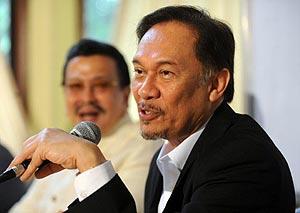 If its succession to the Anwar Ibrahim cohort in PKR, then, manifestly, it must be a coterie of leaders who most judiciously epitomise the ideal of egalitarianism and the aura that Malay political primacy would not be exerted at the expense of non-Malay interests.
Also, the successors must be able to inspire the confidence of leaders in the other Pakatan component parties that they have the caliber to be primus inter pares (‘first among equals') in the coalition.
Adhering to this logic, succession would be a vexed question in PAS because it is a party that is still in the process of resolving the contest between those who believe that the doors to interpretation (‘ijhtihad') are closed and those who hold otherwise.
But the PAS problem would be mild compared to succession in a party which has no ideology, such as Umno.
Parochial interests
Umno was a congeries of Malay NGOs in the immediate post-World War Two period which had as it motivating force the protection and defence of the Malay race.
For the sake of uniting a disparate collection of Malay groups, it set aside ideology because of fear that different systems of beliefs would spawn division and dissension. Unity through conformity to the imperatives of communal interests was the preferred path.
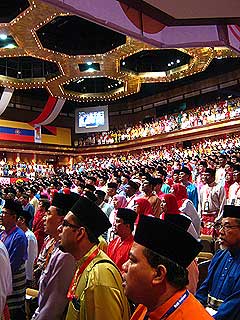 The upshot: 65 years on from its origins the party has been hollowed out by self-interest and the right to succession goes to leaders who are the better enablers of parochial interests rather than known embodiments of any ideals.
The Santayanan principle of extracting experience from ideas is stood on its head: where there is no motivating idea there is no experience to be had and the void would inevitably be filled by interests.
Thus Umno is wracked by Ambrose Bierce's definition of politics: "The strife of interests masquerading as a contest of principles."
In Gerakan's current imbroglio, Pakatan parties must learn to distill experience from ideas.
TERENCE NETTO has been a journalist for close on four decades. He likes the occupation because it puts him in contact with the eminent without being under the necessity to admire them. It is the ideal occupation for a temperament that finds power fascinating and its exercise abhorrent.


Are you sure you want to delete this comment?
This action cannot be undone.