




DAP: Computing Bill may stifle freedom of speech
DAP has warned that the Computing Professionals Bill 2011 (CPB) proposed by the Ministry of Science, Technology and Innovation (Mosti) may be abused to stifle freedom of speech.
DAP has warned that the Computing Professionals Bill 2011 (CPB) proposed by the Ministry of Science, Technology and Innovation (Mosti) may be abused to stifle freedom of speech.
CPB is an attempt by the ministry to regulate all “computing services” provided to entities or persons related to the “critical national information infrastructure” (CNII), DAP national publicity secretary Tony Pua pointed out.
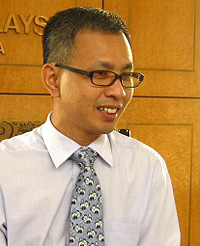 Pua
(left)
said in a statement today that the Bill defines 'computing services' as any services provided to 'plan, architect, design, create, develop, implement, use and manage information technology systems'.
Pua
(left)
said in a statement today that the Bill defines 'computing services' as any services provided to 'plan, architect, design, create, develop, implement, use and manage information technology systems'.
“Based on this definition, the scope of such services would cover anything from designing websites to the setting up of computer servers to the design and development of any computer product - whether software or hardware.
“In fact, one would easily classify the setting up of blogs and news portals, or even use of Facebook and Twitter accounts as being covered under 'computing services',” said the Petaling Jaya Utara MP.
On the other hand, CNII, Pua said, is defined as 'those assets, systems and functions that are vital to the nation that their incapacity or destruction would have a devastating impact on national economic strength or national image or national defence and security or government capability to function or public health and safety'.
"CNII could hence cover any entity in the government, financial institutions and government-linked companies.
“What is absolutely frightening is that the definition would also cover all the way to any website, portal or information technology application that could have a detrimental impact on the 'national image' or deemed to hurt the 'government's capability to function',” he added.
The Oxford graduate was a chief executive officer of an e-business consulting company before he went into politics in 2007.
Damaging consequences
The Bill also states that any ambiguity in the law shall be determined by the 15-member Board of Computing Professionals (BCP) appointed at the sole discretion of the minister, and subjected only to the minister's approval.
 Contrary to the
clarification
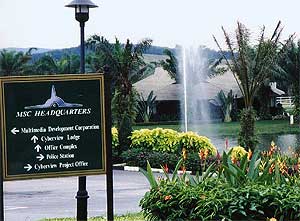
statement made by Mosti, which claimed that the Bill does not restrict the practise of “computing services” and is only limited to CNII, Pua claimed that the Bill has pervasive and damaging consequences not only on the information technology industry, but also infringes on key government commitments under the Multimedia Super Corridor Bill of Guarantees.
Contrary to the
clarification
statement made by Mosti, which claimed that the Bill does not restrict the practise of “computing services” and is only limited to CNII, Pua claimed that the Bill has pervasive and damaging consequences not only on the information technology industry, but also infringes on key government commitments under the Multimedia Super Corridor Bill of Guarantees.
The Bill of Guarantees has promised 'unrestricted employment of knowledge workers' and 'no censorship of the Internet'.
However, Pua said the CPB would clearly restrict the hiring of knowledge workers by necessitating registration, and could be used to register, regulate and restrict the activities of individuals or corporations to publish news reports or those who use Facebook, Twitter or other similar applications with the excuse of protecting the 'national image'.
“It is clear that the flimsily drafted CPB has the Orwellian 'Big Brother' fingerprints all over it,” he said.
He further explained that the information technology and computing industry has been operating without controversy, issues or impediment over the past decades.
Hence, there should be absolutely no bureaucratic requirement to restrict and control the industry, he said.
Pua will attend the CPB Open Day organised by Mosti tomorrow at Putrajaya to hear the ministry's clarifications on the Bill, and to submit the relevant points of objection.


Are you sure you want to delete this comment?
This action cannot be undone.