




Muhyiddin: Our pupils lagging in thinking skills
Deputy Prime Minister Muhyiddin Yassin who also holds the education portfolio told the Dewan Rakyat today that based on international standards, Malaysian schoolchildren lag when it comes to thinking skills.
Deputy Prime Minister Muhyiddin Yassin who also holds the education portfolio told the Dewan Rakyat today that based on international standards, Malaysian schoolchildren lag when it comes to thinking skills.
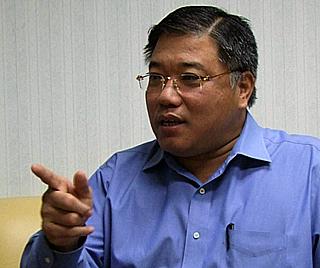 “When compared with other countries... and when we test with Pisa (Programme for International Student Assessment), the world student assessment body, we find that our students are lagging behind in thinking skills,” he said, replying to a question by Tiong King Sing (BN-Bintulu).
Tiong wanted to know if the ministry planned to review the current education system so that it balances the development of pupils in knowledge, physical, spiritual and moral aspects.
This is one of the reasons the ministry is introducing the I-Think system, a component of mindmap to the school curriculum, and training teachers in the techniques.
Replying to a supplementary question by Saifuddin Nasution (PKR-Machang) on the need to introduce the system and deploying the trained teachers, Muhyiddin said it was required to encourage creative and critical thinking among school children.
“It does not mean that teachers are not skilful... they are trained. The outcome of this project is the students... their thinking skills may be limited.
"As such we tried this subject and from the feedback we received, they could understand better and were more creative in the subjects taught,” he said.
About 700 teachers have been trained to undertake the I-Think system and 10,000 students are involved in the pioneering phase now being implemented in 10 schools.
Muhyiddin said the trained teachers would guide other teachers and implement the system nationwide.
Education development blueprint
He said the ministry will also hold a series of national dialogues from next month till the year’s end to gather inputs for the preparation of an education development blueprint.
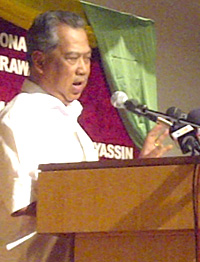 Muhyiddin (
left
) said the plan would be used to formulate a roadmap to determine the future direction of the national education system.
Muhyiddin (
left
) said the plan would be used to formulate a roadmap to determine the future direction of the national education system.
“We expect the preliminary blueprint to be ready by the end of September and the final report to be out in December followed by the formulation and development of the new education strategic plan,” he said.
Muhyiddin added the education assessment system would be implemented by the Project Management Office headed by the ministry’s director-general who would take into consideration the nine fields of priorities that had been identified.
The nine fields are teachers, school leaders, school quality, curriculum and assessment, command of multiple languages, post secondary education opportunities, parents and communities, resource efficiency and effectiveness as well as education delivery system.
Muhyiddin said the government had appointed two panels to evaluate the results of the assessment carried out by the Project Management Office.
“For the national level panel, we have appointed several education experts to provide inputs on education and we have also appointed four foreign experts for the global aspects of education,” he said.
Replying to a supplementary question by Tiong on whether the government would consider the aspect of school infrastructure development throughout the country under the strategic plan, Muhyiddin said this had already been started, and there was no need to wait for the report to be completed.
He said according to an audit report received by a committee chaired by the deputy education minister, there were 600 schools including those in Sabah and Sarawak that had been identified as being in very poor condition.
“From the development allocation provided by Parliament with the approval of the ministry, we spent a large portion for infrastructure development including the special allocation passed by Parliament with the goodwill of the prime minister where RM200 million were for schools in Sabah and Sarawak,” he said.


Are you sure you want to delete this comment?
This action cannot be undone.