




EC panel to meet on April 8 on PSC's recommendations
The Election Commission (EC) panel members will convene a meeting on April 18 to discuss and make decisions regarding the 22 recommendations made by the parliamentary select committee (PSC) on electoral reforms.
The Election Commission (EC) panel members will convene a meeting on April 18 to discuss and make decisions regarding the 22 recommendations made by the parliamentary select committee (PSC) on electoral reforms.
EC chairperson Abdul Aziz Mohd Yusof said the EC had received the recommendations after they were passed by the Dewan Rakyat without debate on April 3.
“Our seven-member panel will study all the recommendations before making any decisions on them,” he told a press conference after opening a briefing sessions for general election returning officers and assistant returning officers in Kuching today.
He also stressed that the EC did not wish to make a hasty decision on the matter as it involved the existing election law and must be scrutinised in depth.
“We cannot afford to make any mistakes because if we do, people can bring us to court,” he said, adding that a statement on the panel’s decision would also be issued after the meeting.
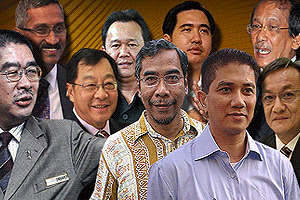 The PSC was established on Oct 2 last year and is chaired by Science, Technology and Innovation Minister Dr Maximus Ongkili, who also represents Sabah and the Kadazan community.
Other members of the committee are Barisan Nasional backbenchers Alexander Nanta Linggi (representing Sarawak and the Iban community), Mohd Radzi Sheikh Ahmad (representing Umno and the Malays), Dr Fong Chan Onn (MCA and the Chinese) and P Kamalanathan (MIC and the Indians).
Three PSC members from the opposition pact are Parti Keadilan Rakyat (PKR) deputy president Azmin Ali, PAS election director Dr Mohd Hatta Ramli and DAP Youth chief Anthony Loke, while the Independent members are represented by Wee Choo Keong.
The accepted recommendations are concerning matters to facilitate Malaysians abroad to cast their vote either at Malaysian embassies or through postal voting; voters living outside their constituencies; date for dissolution of Parliament; caretaker government; enforcement of existing regulations pertaining to the offence of providing false information during registration; free and fair media access; continuous process of cleaning up the electoral roll; review of the electoral roll for addresses with many registered voters; objections to the electoral roll that have been verified through complaints or feedback from political parties and non-governmental organisations.
- Bernama


Are you sure you want to delete this comment?
This action cannot be undone.