




'Privatising fines making good business of speeding'
The award of the Automated Enforcement System (AES) to two private companies will place maximising of profits through fines collection above the promotion of road safety, said
Selayang MP William Leong Jee Keen.
The award of the Automated Enforcement System (AES) to two private companies will place maximising of profits through fines collection above the promotion of road safety, said
Selayang MP William Leong Jee Keen.
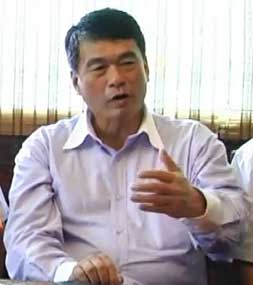 He was responding to the present model of the AES that will afford the successful bidders Beta Tegap Sdn Bhd and ATES Sdn Bhd a share of the fines collected.
This, said the DAP parliamentarian, will encourage the maximising of traffic fines in the interest of maximising profits for the two companies, rather than minimise offences.
The companies’ internal projection is that they will achieve 17 percent returns based on 10 million summonses issued each year, he said in a statement today.
Leong accused the administration of a “dereliction of duties” as they should instead be targetting road safety.
“The Ministry of Transport should not be looking to traffic summons as a profit center,” he said.
Speeding good for business?
According to Leong, the companies will each receive RM16 for each traffic summons for the first 5 million summonses issued, and subsequently 50 percent of the balance of the summonses up to RM270 million per year.
In the third tier, they will receive 7.5 percent of the balance of the summonses after the RM270 million mark.
He said therefore it would be in the companies’ interest to ensure that speeding violations do not go below 10 million annually, and to be increased if they are to ensure profits and growth.
He said the government was therefore “turning the issuance of traffic summonses into a business for the maximization of profits and a dereliction of its duty to promote road safety”.
“This is because if motorists keep to the speed limits these two companies will not be able to make any profits,” he said.
He said this was a “serious flaw ” in the model that renders it incompatible with the promotion of road safety.
Instead, said Leong, the ministry should be looking at ways to reduce speeding and road accidents.
‘Focus on road safety’
He cited programmes such as Ops Sikap and the physical presence of law enforcement as more effective measures.
“Road safety is improved by the physical presence of the police where a friendly warning not to speed is more effective than an injudicious mechanical taking of pictures by hidden cameras,” he said.
The DAP parliamentarian also questioned MCA chief Chua Soi Lek’s denial that the two companies were linked to the BN component party.
“However, this project was mooted and implemented under the watch of three Ministers of Transport, all of whom are from the MCA,” said Leong, challenging the Chua and the transport minister to disclose details of the award and the two companies’ directors and shareholders.


Are you sure you want to delete this comment?
This action cannot be undone.