




Baharudin died of natural causes, rules coroner
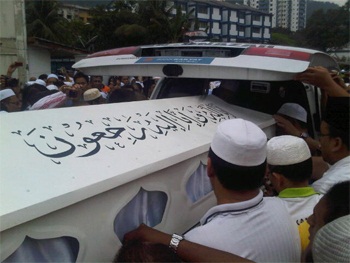
Taxi driver and PAS member Baharudin Ahmad’s death during the Bersih 2.0 rally on July 9 last year was due to natural causes, a coroner’s inquest in Kuala Lumpur ruled today.
Taxi driver and PAS member Baharudin Ahmad’s death during the Bersih 2.0 rally on July 9 last year was due to natural causes, a coroner’s inquest in Kuala Lumpur ruled today.
Coroner Zulkipli Abdullah ruled out any foul play, but found that there was a presence of tear gas and chemical-laced water in the vicinity Baharudin was at the time of his death.
 This was despite testimony from several police and riot squad members who testified that no tear gas or chemical laced water was fired.
In making the finding that tear gas and chemical-laced water had been fired, Zulkipli depended on CCTV recordings made in the Kuala Lumpur City Centre area.
The coroner also noted that the police had committed violent acts on that day, based on the testimonies from witnesses.
"However, there is no statement or evidence (before the court) that the victim had been struck by tear gas or chemical-laced water, or that he had been assaulted.
"Following this, the court rules that he died of natural causes, which was listed in the post-mortem report as heart attack," Zulkipli said.
The coroner also accepted the post-mortem report from Hospital Kuala Lumpur, which lists heart attack (or acute myocardial infarction) as the cause of Baharudin’s death, as prima facie evidence for the court.
Zulkipli said the report stated that fracture of three ribs on the left side of the body could have been as a result of the CPR treatment and the broken tooth too was a result of the emergency treatment.
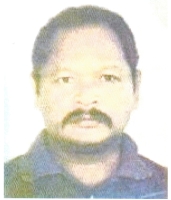 A total of 35 witnesses testified during the inquest. Baharudin, 59, took part in the Bersih rally and was running into Avenue K, just as its roller shutters were being lowered to prevent people from coming in.
A member of the public spotted him lying down, semi-motionless, about 4.30pm on July 9.
People in the crowd called for an ambulance and paramedics arrived 20 minutes later, but they could not revive him.
Baharudin was then taken to the HKL, where he was pronounce dead at 5.30pm. His family suspected foul play as Baharudin did not have any history of heart ailments.
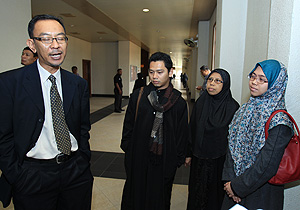
Lawyers Ahmad Jufliz Faiza, Patrick Dass, CW Chan and Ahmad Zamri Asa'ad Khuzaimi represented Baharudin's family. Assisting the coroner in the inquest were Kamizah Salleh and Ahmad Ishrakh Saad.
Tear gas was fired
Zulkipli in his decision said there were two conflicting testimonies as to whether tear gas and chemical-laced water were unleashed as police and a security supervisor at KLCC had testified that no such thing took place.
However, he said, seven witnesses who took part in the rally testified that they heard tear gas being fired and some of them testified they felt the after-effects of the tear gas, even though it was not as strong as that experienced at Dataran Maybank.
“There is also a CCTV video recording from the KLCC management that shows white smoke and there are images of short bursts of chemical-laced water. However, a police witness said they had problems with the water spray.
“Based on the evidence, the court is satisfied that there is enough evidence for it to determine that tear gas was fired by the security forces to disperse the crowd at the junction in front of KLCC and chemical-laced water was unleashed, as clearly recorded in the CCTV,” Zulkipli ruled.
 Zulkipli said the evidence from the chemist was that there was no sign of chemicals on Baharudin's clothing and there was no evidence that Baharudin was assaulted by the police.
However, there was evidence from people at the scene that they saw violence committed by the police when they were about to arrest the protesters.
“The evidence is insufficient for the court to rule that the deceased was assaulted by the police. The court found that there is insufficient evidence to show that the injuries on the deceased were due to criminal force used on the deceased by anyone,” he said.
The coroner also ruled out negligence in the procedure to save Baharudin as the injuries, including the three fractures to the ribs on the left of the body, were injuries that are a normal risk when CPR is performed.
Coroner rejects several testimonies
Commenting on the decision later, Ahmad Jufliz said while they respected the verdict, the family's counsel felt there were several issues that the coroner had ignored.
He said there was already injury to Baharudin, on his back, before he was found lying down semi-motionless at K Avenue.
“There was already blood on the back of his shirt and the witness who found Baharudin also noted that his left tooth had been broken before he was given treatment.”
“There was also another body, that of one Sulaiman Ramli, which was taken to Hospital Kuala Lumpur (HKL) from Petaling Jaya and we feel that it was to create a discrepancy in the coroner's finding.
“The post-mortem on Sulaiman was supposed to be conducted at the Universiti Malaya Medical Centre but the body was taken to HKL. Why? Sulaiman was found to have died from heart attack while the cause of Baharudin’s death was not listed pending chemical tests,” Ahmad Jufliz said.
Baharudin's family had contended throughout the trial the possibility of the findings in the cause of death of Sulaiman being used to detail the death of the Bersih protester.
“We expected this verdict as this took place in a highly-charged political episode during the Bersih 2.0 rally.
“The lawyers will consult the family on what to do next. We will also consider in filing a review of today's decision,” Ahmad Jufliz said.
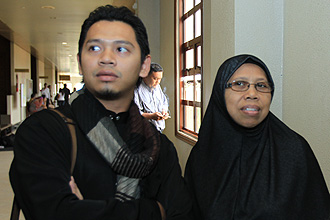 Baharudin's widow Rosni Malan said she would seek her the views of her lawyers before deciding on her next course of action.
Another lawyer, Ahmad Zamri, who is from PAS, also questioned the chemist's findings and the open tests that were conducted in Banting.
“The tests were conducted in an open area in Banting while the Avenue K area was much more closed.
“We still question the police standard operating procedure in handling rallies like this. This ruling is expected as the government does not want another Teoh Beng Hock saga as election approaches,” Ahmad Zamri said.


Are you sure you want to delete this comment?
This action cannot be undone.