




Questions over 4G licence to Syed Mokhtar's firm
DAP has questioned the decision of the Malaysian Communications and Multimedia Commission (MCMC) to award the largest share of the fourth generation (4G) bandwidth to Puncak Semangat Sdn Bhd, owned by tycoon Syed Mokhtar Al-Bukhary.
DAP has questioned the decision of the Malaysian Communications and Multimedia Commission (MCMC) to award the largest share of the fourth generation (4G) bandwidth to Puncak Semangat Sdn Bhd, owned by tycoon Syed Mokhtar Al-Bukhary.
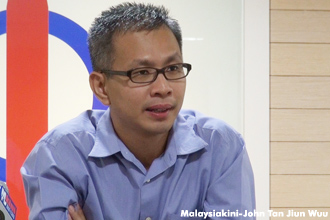 “The most straightforward question to ask MCMC is: why is it that a company with zero track record in the industry has been given the privilege of securing the largest chunk of the bandwidth?” said DAP's national publicity secretary Tony Pua
(left)
in a statement today.
“The most straightforward question to ask MCMC is: why is it that a company with zero track record in the industry has been given the privilege of securing the largest chunk of the bandwidth?” said DAP's national publicity secretary Tony Pua
(left)
in a statement today.
He claimed that the industry has been taken by surprise as Puncak Semangat is a “little known entity”.
It was recently awarded 40MHz of bandwidth for the 4G long-term evolution (LTE) spectrum, the highest share among nine companies.
The others are telecommunications companies Maxis Broadband Sdn Bhd, Digi Telecommunications Sdn Bhd, Celcom Axiata Bhd, U Mobile Sdn Bhd, Redtone Marketing Sdn Bhd, YTL Communications and Packet One Networks (M) Sdn Bhd, which only received 20MHz of bandwidth each.
Another company Asiaspace Sdn Bhd, which holds a Wimax spectrum, was given 10MHz.
Pua, who is also Petaling Jaya Utara MP, said it has become an endemic of Malaysian regulators to award quotas and licences to companies with “questionable financial credentials and without any track record” in their respective industries.
“It appears that the MCMC, which has landed in controversy in the past, is persisting in awarding licences to companies with little track record or financial capabilities,” he said.
“(Following) the awarding of bandwidth for the 3G and Wimax spectrum, several companies have failed to deliver the services or have effectively sold their licence for a quick profit,” he alleged.
He also asked why Malaysia does not practise a common auction system in awarding such licences as is done in developed nations.
“The auction process will not only ensure the most committed companies take part in the exercise, but will also raise valuable revenue for the government,” he said.
 The UK telecommunications regulator, for example, set a reserve auction price of 1.3 billion pounds sterling for 4G-LTE licences, with the potential to raise 3-4 billion pounds sterling for the government.
“In 2010, the highest bid in the German spectrum auction was 7.5 million Euros for two blocks in the 800 MHz band.
“In 2008, Sweden concluded an electronic 16-day auction for nine 15-year 4G licences for a total bandwidth of 190MHz in the 2.6 Hz band. The total required minimum bids were 50 million kroners, but the total winning bids (amounted to) US$314 million.”
‘Lost opportunity’
Countries such as Taiwan, Singapore, Brazil are planning for 4G auctions next year, said Pua.
Thailand has just concluded its 3G auction, netting US$1.4 billion for its government in spite of a more depressed market environment and alleged collusion to lower the auction price, he noted.
In Malaysia, however, the regulators are more interested in increasing profits and favouring “certain connected parties” despite their poor track record, Pua claimed.
“This is a clear-cut case of lost opportunity for the government to raise valuable funds to provide much needed services and facilities for Malaysians, such as toll-free highways and affordable homes.”
He added that, should it come to federal power, Pakatan Rakyat would ensure a transparent and competitive way of awarding licences that would in turn increase revenue for use in the interests of Malaysians.


Are you sure you want to delete this comment?
This action cannot be undone.