




What are ministers trying to hide, Paul Low asked
Penang Chief Minister Lim Guan Eng has slammed the new transparency minister for avoiding calls to implement a public asset declaration for cabinet ministers, asking what is there to hide.
Penang Chief Minister Lim Guan Eng has slammed the new transparency minister for avoiding calls to implement public asset declarations for cabinet ministers, asking what is there to hide.
Lim said Minister in the Prime Minister’s Department Paul Low had once lauded the Penang government for being the first to have its exco members publicly declare their assets.
“Instead of adopting a similar measure to uphold public integrity in the federal government, why is he taking a different position now,” said the DAP secretary-general in a statement today.
 “Now that Paul Low is a BN minister, he has swallowed the BN propaganda hook, line and sinker that publicly declaration of assets would threaten the personal security of cabinet members.
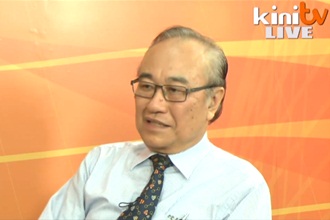
“What do cabinet members have to hide?” Lim ( left ) asked.
He added that his administration has taken a further step to ensure that even state assemblypersons are required to declare their assets.
Lim said Penang’s experience shows that their leaders have not had their personal security threatened, as Low has suggested.
“Perhaps it is because our assets are pitifully few to make much of an impact. If at all our personal security is threatened, it is by racists from BN supporters and Perkasa,” he quipped.
'Speaking like a BN leader'
Lim ticked the former Transparency International Malaysia (TI-M) chief for making a quick switch to being an NGO leader to a “BN spokesman by being adept in BN’s culture of lies” in explaining why cabinet members should not publicly disclose their assets.
“Paul Low lied when he said that the Penang chief minister and state exco members’ public declaration of assets, whilst positive, was ‘informal’ because officials who failed to declare their assets would not be penalised...” he said.
 Lim said Penang exco members must sign a pledge and that their declarations are certified by an international accounting firm, while members who fail to declare their assets are dismissed.
“Isn’t that a sufficiently harsh penalty to ensure full compliance? Would Paul Low ( right ) take the lead by publicly declaring his assets,” the DAP secretary-general added.
Lim was responding to Low’s avoidance of the issue during an interview with Malaysiakini last week.
When asked whether, as the new minister in charge of transparency, he would be making public asset declarations compulsory for cabinet members, Low had answered vaguely that there were “pros and cons” to the move.
Low noted that the matter had to be further discussed, but said cabinet ministers were already required to declare their assets privately to the prime minister.
Pledge tailored for BN?
Lim said private declarations were insufficient as it is hidden from public scrutiny and verification from professional auditors.
“As an accountant himself, Paul Low should know that such verification by international accounting firms are much more reliable, credible and trustworthy than government agencies who monitor and audit the declarations as government agencies are subject to ministerial directives,” he said.
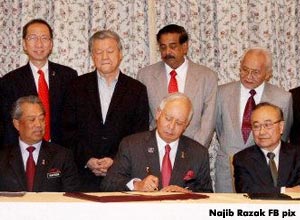 The chief minister was also critical of the Election Integrity Pledge that TI-M had Prime Minister Najib Abdul Razak sign before the general election for refusing to include asset declarations.
“I still remember when Paul Low met me last year (to clarify matters) on Transparency International’s Integrity Pledge; he had refused my request that a public declaration of assets be included in it.
“Paul Low explained that by including the public declaration of assets into the Integrity Pledge, BN would not sign it.
“Clearly, he was tailoring the Integrity Pledge not to promote public integrity, but to suit BN,” he stressed.
Lim is not alone in criticising the pledge, as Koris Atan - who is a TI-M member - also slammed Low for going ahead with the move without getting the approval of the organisation's executive committee first.
"Now that he has been appointed a minister, questions arise if this was part of the plan," Koris told Malaysiakini last week.


Are you sure you want to delete this comment?
This action cannot be undone.