




Singapore's prosecution and deportation of M'sians normal
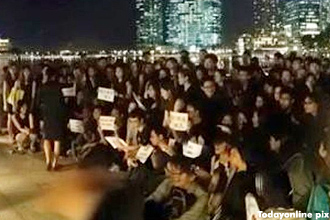
COMMENT The recent arrest , questioning and revocation of work visas of several Malaysians represents a consistent pattern of control over the political expression of foreign workers and migrant residents in Singapore.
COMMENT The recent arrest , questioning and revocation of work visas of several Malaysians represents a consistent pattern of control over the political expression of foreign workers and migrant residents in Singapore.
 Such tactics of managing the political expression of different foreign residents is not particular to the recent Malaysians' case.
In 2008, a number of Burmese residing and working in Singapore took part in a series of public expression activities against the junta regime in Burma.
The net result was several of these Burmese were warned and a selected few did not have their work visas renewed at the end of their expiry and had to leave the city-state.
Earlier in July 2006, Chen Pei Yu a 73-year-old Chinese national and two other Singaporeans were charged with "harassment by displaying insulting writings - with common intention" for unfurling a red banner with the words "Stop persecution of Falun Gong in China" outside the Chinese embassy.
Later, charges against Chen were dropped and instead she was scheduled to be repatriated back to China.
There are also other incidents when foreign lawyers and civil society activists, were denied entry into Singapore. Earlier this year, 29 mainland Chinese bus drivers were prosecuted and then deported for "striking" over unsatisfactory employment conditions.
Taking steam out of protests
Even longtime foreign residents working in the arts and education sector have had their permanent resident visas cancelled or not renewed for engaging in local activism, although some have been allowed to remain on work visas.
A key strategy behind the arrests, non-renewal of work visas and repatriation is to quickly cull these periodic pockets of political expressions by foreigners before they snowball into larger and sustained activities.
In the recent Malaysian case, some Singaporeans have expressed their reservations over Malaysian politics spilling over into Singapore.
B
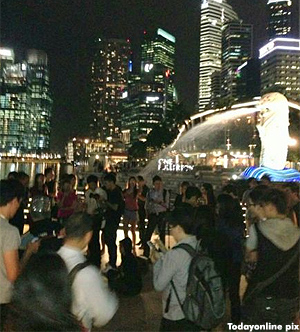 ut on the other hand Singaporeans also have a track record of supporting the political expression of other communities residing and working in Singapore as it was the case on 12 May 2013 when many gathered at the Speakers Corner.
On several occasions such Singaporeans have been either admonished by their fellow Singaporeans or sometimes arrested by the police for breaking Singapore's public order laws.
Here, Singapore observers need to note that the often local policing authorities, will be quick to point out that such "detractors", both local and foreign, have "broken" Singapore's public order laws - laws which many argue are out of synch with international human rights standards.
Limit to homeland links
In this focus on foreigners in Singapore, it is good to be reminded that even Singaporeans have been threatened time to time not to be taken in by political developments linked to their ancestral homelands.
For instance in 1984, Singaporean Sikhs were warned not to take part in the politics of Punjab as it related to the issues surrounding the Golden Temple massacre then.
As Singapore relies more on its foreign workers from in the region and beyond, it is natural that developments at a foreigner's homeland would need an outlet for expression in the city-state.
At present the republic's laws makes many forms of political expression by both local and foreigners illegal in Singapore.
The situation in Singapore becomes inequitable when some of these foreign nationals can exercise their right to political expression more freely and within the law or conventions back in their home country.
Thus, this recent example of a clampdown on Malaysian political expression in Singapore represents a longstanding but unnatural suppression of natural political expression.
Singaporeans, too, have to put up with it on a daily basis with regard to their own political expressions.
Associate Professor Dr JAMES GOMEZ is an academic at the School of International Studies, Universiti Utara Malaysia is. He can be contacted at gomez@umm.edu.my


Are you sure you want to delete this comment?
This action cannot be undone.