




Human rights priorities for Malaysia
COMMENT The UN Human Rights Council provides a good assessment of Malaysia’s standing through the Universal Periodical Review (UPR), based on global benchmarks and instruments.
Now that the second UPR cycle has ended in Geneva, what are the key human rights priorities for Malaysia? What is the time frame so that Malaysia has a better standing at the third cycle in 2018?
These were among issues raised at a discussion yesterday on ‘Human Rights Priorities for Malaysia’, hosted by Proham and the Global Movement of Moderates.
COMMENT The UN Human Rights Council provides a good assessment of Malaysia’s standing through the Universal Periodical Review (UPR), based on global benchmarks and instruments.
Now that the second UPR cycle has ended in Geneva, what are the key human rights priorities for Malaysia? What is the time frame so that Malaysia has a better standing at the third cycle in 2018?
These were among issues raised at a discussion yesterday on ‘Human Rights Priorities for Malaysia’, hosted by Proham and the Global Movement of Moderates.
 We recognise that Malaysia has done well especially in the socio-economic dimensions as reflected in achievements under the Millennium Development Goals; poverty eradication through development planning; and effective delivery through the Government Transformation Programme (GTP) and Economic Transformation Programme (ETP).
However, we recognise that there are major gaps and room for improvement. Therefore it is imperative to draw up the priorities and establish specific benchmarks toward realisation by 2018.
1. Develop a national Human Rights Action Plan
Malaysia has good development planning policy documents like the 10th Malaysia Plan and GTP and ETP. We have a blueprint for education and the National Unity Blueprint will be ready by June 2014.
Malaysia now urgently needs a human rights blueprint with an action plan, as proposed by the Human Rights Commission (Suhakam) in 2001.
Our suggestion is for Suhakam to take the lead on this and involve the relevant federal agencies and civil society. A document should be prepared within the first six months of next year.
2. Ratify the core human rights conventions
Malaysia has so far ratified only three of the core human rights conventions. We are at the bottom of the global performance index, even compared to OIC and Asean member-states. Unfortunately, we are alongside Myanmar and North Korea in this regard.
Malaysia has served two terms on the Human Rights Council and is seeking a seat on the UN Security Council. It must do more to benchmark human rights on international standards.
 Ratification of the Convention on Economic, Social and Cultural Rights; the Convention on the Elimination of All Forms of Racial Discrimination; and the Convention against Torture must be at the top of the national agenda.
We feel that the ‘we are not ready’ excuse is embarrassing. It reveals that we lack the political will and leadership to take Malaysia to the next level of human rights.
Ratification does not mean that everything is in place. It just means that we share the UN vision and aspiration for a better world where discrimination, torture and abuse are eliminated and that the government of the day is committed to this agenda.
In addition, we are making a statement that we are prepared for global review of our performance and execution based on universal principles.
Malaysia will have to comply with requirements through legislative and institutional changes. This is a progressive venture but the most important is to indicate that we share in the vision of building a society free from discrimination, torture and abuse of power.
Ratification of UN conventions does not need parliamentary approval in Malaysia. This can be done through a cabinet decision.
3. Strengthen Suhakam’s enabling Act
The Human Rights Commission of Malaysia Act should be amended to increase Suhakam’s investigative and enforcement powers for the protection of human rights.
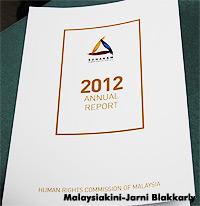 Currently Suhakam is purely an advisory body. Therefore the majority of its recommendations are not seriously viewed by government agencies and those in public office.
In addition, the Dewan Rakyat must allocate at least two days to debate the Suhakam annual report - something that has not been done for the past 12 years. All it needs is the political will for time to be allocated.
There must also be a permanent parliamentary select committee on human rights. This should monitor the implementation of Suhakam’s recommendations and human rights compliance by public institutions and agencies.
4. Establish a Human Rights Court
This is to give specific attention to human rights cases and violations. An independent mediation mechanism like the Ombudsman could also be useful to resolve issues.
A human rights approach in line with an Equal Opportunities Commission might strengthen compliance with standards for justice, fairness and equality in both in public and private sectors.
There is a need to strengthen grievance remedies, similar to the labour court and small claims court which enable the ordinary person - especially the poor and low-income earner - to seek legal remedies.
5. Establish a Law Reform Committee
This is with a view to widen legislative compliance with human rights standards in the context of the federal constitution.
6. Carry out policy reform in line with human rights
There is a need for development polices to find a balance between economic and social rights (education, healthcare, poverty eradication and housing) and civil and political rights.
Civil and political rights involve consultation and participation of all stakeholders, including the poor, in the development process.
It also must ensure accountability and transparency in governance. It must be a people-centred and people-empowerment approach that is friendly to human rights.
7. Conduct effective public education on human rights
This is necessary in light of the distorted view that human rights is anti-Islam, anti-nation and a western agenda. An accurate understanding of Islam and human rights is required. The OIC position on human rights could guide the Malaysian discussion.
Human rights education and training must be directed towards politicians and elected/nominated public officials, teachers and civil servants, especially enforcement officers.
Suhakam has done much work in this area with the Education Ministry and the police force. This could be strengthened.
8. Include the private sector and business community
The private sector in Malaysia is the largest employer of workers and many issues related to human resources and use of natural resources have an impact on human rights.
The UN Guiding Principle on Business and Human Rights must be adopted and popularised among Malaysian industries. More needs to be done with business associations and chambers of commerce to push the agenda beyond the traditional approach to corporate social responsibility.
9. Establish a permanent mechanism for consultation
The UPR mechanism has shown that the Human Rights Council is consultative and transparent in conducting the process - as a result, civil society groups have access to this international platform.
Similarly, the Foreign Affairs Ministry and Attorney-General’s Chambers must engage with civil society groups involved in human rights.
A formal mechanism and periodical engagement is important, and fostering a partnership will enhance Malaysia’s human rights position globally.
10. Be open, rational and reasonable on human rights development
Given the diverse views on discussion of human rights, it is important to be tolerant of views that are different.
Any attempt to criminalise, demonise and distort such concerns is not helpful and does great injustice to nation-building. We must have respect for the democratic process, and be fair and reasonable in our discussions.
The use of UN and regional instruments - like the Cairo Declaration for Human Rights from an Islamic Dimension and the Asean Human Rights Declaration - will enhance rational and objective discussion in Malaysia.
SAIFUDDIN ABDULLAH is the chief executive officer of Global Movement of Moderates (GMM), while DENISON JAYASOORIA is secretary-general of Association for the Promotion of Human Rights (Proham).


Are you sure you want to delete this comment?
This action cannot be undone.