




The year's dark episodes in Sabah history
The intrusion by a group of terrorists from Southern Philippines into Kampung Tanduo in Lahad Datu in February, rattled the nation and marked a dark episode in Sabah's history.
Although Sabah is no stranger to countless attempts by the so-called royal Sulu descendants to claim the land, the intrusion, which created state-wide panic, was the worst.
The intrusion by a group of terrorists from Southern Philippines into Kampung Tanduo in Lahad Datu in February, rattled the nation and marked a dark episode in Sabah's history.
Although Sabah is no stranger to countless attempts by the so-called royal Sulu descendants to claim the land, the intrusion, which created state-wide panic, was the worst.
However, with the quick mobilisation of security personnel and the setting up of the Eastern Sabah Security Command (Esscom), with Lahad Datu as its headquarters, improved the community’s confidence in the area's security.
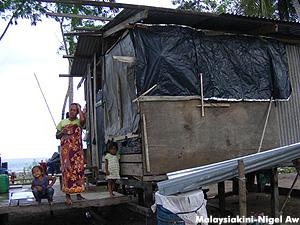 This was further boosted with the demolition of several water villages and illegal settlements that could potentially serve as hideouts for intruders.
Stringent checks were also practised at all entry points to the state.
The heavy monitoring and patrolling on land and sea, focusing on known illegal entry points, minimised attempts by foreigners from setting foot illegally on Sabah. This served a confidence-booster for Sabahans.
However, fear crept in when a 57-year-old Taiwanese tourist was shot dead at a resort on Pom Pom Island near Semporna in the early hours of Nov 15, while his companion and compatriot,
Chang An Wei, 58, was abducted.
The couple was holidaying off Sabah's east coast when Abu Sayyaf-linked gunmen stormed their villa and took Chang away, by boat to the Philippine island of Jolo.
On Dec 20, Chang's abductors freed her in Southern Philippines before the Philippine authorities found her on the same day, in a forested area between Maimbung and Indanan in Jolo.
Earlier, the Malaysian government, which was liaising with its Philippine counterpart, was given the assurance that Chang would be safe.
About that time, Esscom director-general Mohammad Mentek called to island resort operators in the state, especially those in Sabah's east coast, to cooperate with security personnel patrolling their areas.
In light of the incident, State Tourism, Culture and Environment Minister Masidi Manjun said a special task force comprising representatives from his ministry, the federal Tourism and Culture Ministry, Immigration Department and other relevant agencies had been set up to ensure that only legal operators of any services, including lodging houses, were allowed to operate coastal
tourism ventures in Semporna.
RCI on illegals finally sat
Early this year, the much-anticipated Royal Commission of Inquiry (RCI) to investigate the problem of illegal immigrants in Sabah finally saw its first sitting on Jan 14.
It was presided by a five-man panel led by former chief judge of Sabah and Sarawak Steve Shim Lip Kiong as chairman of the commission.
This came a little over five months since the RCI was set up and the appointment of Shim and his fellow commissioners was announced by Prime Minister Najib Abdul Razak in a bid to solve the longstanding problems faced by Sabah.
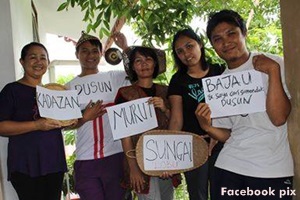 The terms of reference for the RCI included investigation into the number of immigrants in the state who were issued with identity cards (ICs) or citizenship.
The other commissioners appointed to preside over the proceeding were former Universiti Malaysia Sabah (UMS) vice-chancellor Kamaruzzaman Ampon, former Kuala Lumpur police chief Henry Chin Poy Wu, former Sabah deputy chief minister Herman J Luping and former Sabah state secretary K Y Mustapha.
Since then, a series of hearings were held and concluded on Sept 20, without much hassle to which, on the last day of the proceedings, Shim said: "It has been a smooth process. There had been no tantrums, no throwing of chairs. All arguments were done in civilised order."
The RCI saw 211 witnesses giving their testimonies, including high-profile politicians such as former prime minister Dr Mahathir Mohamad and Opposition Leader Anwar Ibrahim, as well as vocal state leaders on the issue such as Sabah Deputy Chief Minister Joseph Pairin Kitingan and United Pasokmomogun Kadazandusun Murut Organisation (Upko) president Bernard Dompok.
Child rape raises fury
Meanwhile, as a state rich in bidodiversity, Sabahans were shocked to hear that 14 endangered pygmy elephant carcasses were found at Gunung Rara Forest Reserve in Tawau.
Initially, state wildlife director Dr Laurentius Ambu said two highly-decomposed carcasses were found in early January, while 12 more carcasses of the rare sub-species of the Asian elephant were found after further inspection of the area.
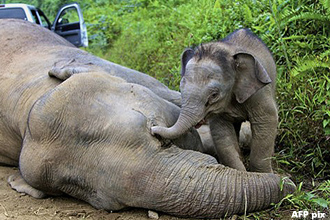 The pachyderms were believed to have been poisoned.
In relation to this gruesome discovery, the authorities stumbled on a living three-month-old pygmy elephant, which was trying to revive its dead mother.
The story of the orphaned young elephant moved many to tears, but joy soon came when the calf, nicknamed 'Joe', was reported to be healthy and doing well at the Lok Kawi Wildlife Zoo near Kota Kinabalu, under the care of the zoo staff, Augustine David.
Also, news of a 12-year-old schoolgirl allegedly raped by a 40-year-old man at a roadside near Kionsom Waterfall in Inanam in February caused fury among the people of Sabah, with women's movements voicing their outrage.
This case has gone to the court, which will give its decision on Jan 24.
On June 19, the state was jolted with news of three tourists from Hong Kong, including two women, being injured when their vehicle was hit by a train near the Kota Kinabalu International Airport (KKIA) Terminal 1 at Jalan Lintas in Petagas, near Kota Kinabalu.
In the 5.35pm incident, the tourists were on their way to KKIA to catch a flight that night, while the train was travelling from Kota Kinabalu to Beaufort.
The victims were sent to the Queen Elizabeth Hospital, where one of them, a man in his 50s, who was the driver of the vehicle, died while receiving treatment.
- Bernama


Are you sure you want to delete this comment?
This action cannot be undone.