




Moderate growth in nation’s energy use next year
Malaysia's energy consumption is expected to record moderate growth next year on the back of marginal population growth and moderate economic expansion, the International Energy Agency (IEA) said.
IEA said Malaysia is the third largest energy consumer in the Asean region, with population increasing at an average annual rate of 1.2 percent and gross domestic product (GDP) growth at an average of four percent a year.
Malaysia's energy consumption is expected to record moderate growth next year on the back of marginal population growth and moderate economic expansion, the International Energy Agency (IEA) said.
IEA said Malaysia is the third largest energy consumer in the Asean region, with population increasing at an average annual rate of 1.2 percent and gross domestic product (GDP) growth at an average of four percent a year.
"These factors help drive an increase in Malaysia's primary energy demand by an annual growth rate of 2.3 percent," it said in its ‘Southeast Asia Energy Outlook’ special report.
IEA said growth in Malaysia's energy demand would slow over time as growth in population and GDP moderates.
 It said Malaysia's per capita energy consumption is currently relatively high for the region, at 61 percent of the Organisation for Economic Cooperation and Development (OECD) average.
The energy agency said Malaysia's gas production is expected to rise in the medium term, to about 70 billion cubic metres by 2020 with almost half of it to feed the export market.
"The prospects for continued exports remain strong in the medium term, with recent discoveries and new developments set to keep the liquefied natural gas (LNG) terminal operating at full capacity, at least until 2018," it said.
IEA said Malaysia's proven gas reserves stood at 2.4 trillion cubic metres, with its oil supply projected to rise to 740,000 barrels per day (bpd) in the short term, compared with 670,000 bpd recorded last year.
It said the enhanced oil recovery (EOR) projects and the ramp up in oil output from deepwater projects in offshore Sabah are expected to reverse Malaysia's falling output but will not be enough to stem declining oil output in the longer term.
Asean’s second largest oil producer
It said with a proven oil reserves of four billion barrels as of last year, Malaysia is the second largest oil producer in Asean and a net exporter of oil, though rising local demand has narrowed the gap, with exports falling to 70,000 bpd in 2012.
In 2013, IEA said, among the major developments in Malaysia's oil and gas industry were the commissioning of Sungai Udang regasification terminal in Malacca in April.
The RM3 billion project with the maximum capacity of 3.8 million tonnes per annum of LNG will be channelled mostly to power generation.
The 2014 Budget, tabled by Prime Minister Najib Abdul Razak in October, said Petroliam Nasional Bhd (Petronas) will set up another regasification plant in Lahad Datu, Sabah.
The budget also highlighted other projects to be undertaken by Petronas - Sabah Ammonia Urea Project in Sipitang; integrated oil and gas production development project in Kebabangan; and the Refinery and Petrochemical Integrated Development ( Rapid ) in Pengerang, Johor.
According to Petronas, Rapid is in the detailed feasibility study phase and a final investment decision is expected in March next year.
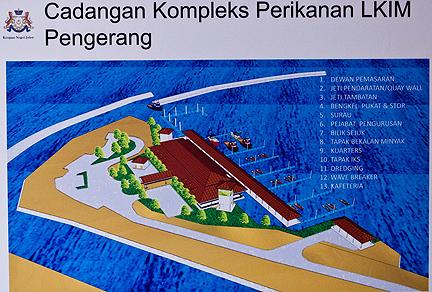 The project will double Petronas's LNG regasification storage to seven million tonnes per annum once operational in 2017, it said.
Another development in the local oil and gas industry this year is the completion of EOR Topside by Malaysia Marine and Heavy Engineering Bhd for Tapis oilfield offshore Terengganu.
Major Petronas contracts awarded
The RM10 billion EOR project, which is undertaken by ExxonMobil Exploration and Production Malaysia Inc, Petronas Carigali Sdn Bhd and Petronas, would boost Tapis production to 35,000 barrels per day from just between 3,000 and 4,000 bpd currently.
Petronas also awarded contracts for a massive block of 13 work packages worth a combined RM10 billion to six local companies - Kencana HL Sdn Bhd, Dayang Entreprise, Petra Resources Sdn Bhd, Carimin Engineering Services Sdn Bhd and Sigur Ros Sdn Bhd.
A month later, on Dec 13, Petronas awarded another RM10 billion integrated hook-up and commissioning and topside major maintenance contract to TL Offshore Sdn Bhd, PBJV Sdn Bhd and GOM Resources Sdn Bhd.
 Another breakthrough in 2013 is the discovery of oil and gas field onshore, 20km off Miri, the first onshore field discovered after 24 years.
Petronas has also awarded Salamander Energy Malaysia Ltd and Petronas Carigali Sdn Bhd a production-sharing contract (PSC) for block PM322, in the Straits of Malacca, which marked the 100 active PSCs in Malaysia since the system was introduced in the country 37 years ago.
On global scene, Norwegian investment bank, DNB Bank ASA, expects oil prices to decline next year to US$102 per barrel, from US$108 projected for the whole of this year, as geopolitical issues affect oil-producing countries.
Its analyst, Torbjorn Kjus, said the key factors that will pull oil prices lower are how quick major oil producing nations affected by the crisis, such as Libya and Iran, return to the market, especially Iran, which recently received sanction relief for six months in exchange for scaling back its nuclear activity.
"If a broad-based deal with Iran can be reached during the next six months of negotiations, the price picture could turn out to be much more bearish than our forecast of US$102 per barrel for 2014," Kjus said in the "2014 Oil Market Outlook" report.
He said global oil production has been reduced by about two million bpd due to the political unrests in Libya and sanctions in Iran.
Kjus said global supply and demand balance for next year is expected to be weak, with demand increasing 1.1 million bpd while supply from non-Organisation of the Petroleum Exporting Countries (Opec) will be up by 1.7 million bpd to mitigate the 600,000 bpd reduction in supply from Opec.
Demand in the 34-country OECD countries, which constituted over 50 percent of global oil consumption, is expected to see a small growth.
This outlook is based on the improvement in efficiency in the United States car fleet and better sentiment in the macroeconomic indicators in Europe in the last couple of months, Kjus said.
Meanwhile, in the non-OECD countries, he said, oil demand growth is expected to weaken to one million bpd from 1.1 million bpd this year on the back of lower total GDP growth, coupled with lessening investment-oriented growth
- Bernama


Are you sure you want to delete this comment?
This action cannot be undone.