




'Are Zionists or Shiites more dangerous?'
Political differences should not be the reason for disunity between the different Islamic sects in the country, said renowned Muslim scholar from Kuwait, Tareq Mohammed Al-Suwaidan.
Political differences should not be the reason for disunity between the different Islamic sects in the country, said renowned Muslim scholar from Kuwait, Tareq Mohammed Al-Suwaidan.
Al-Suwaidan said there is no doubt that Shiites are Muslims although there might be differences with other sects in the way they practice their religion.
“I know the Shiites so well and I have been to Iran, the centre of knowledge for Shiism. I have the books on the original authority of Shiites. There is no doubt Shiites are Muslims,” Al-Suwaidan said during the question-and-answer session after his talk entitled ‘The future of Islam’ in Penang.
“We share a lot. Yes, there are differences, a lot of differences are in the practice. This doesn’t matter,” he added during the two-hour session organised by the Penang Islamic Foundation.
“There is a political issue here (with the Shiites), I know, but it should not break relationships between different sects in Islam,” Al-Suwaidan, who studied and lived in the United States, stressed.
Tareq was responding to a question from a participant who asked, “Who is more dangerous, Zionists or Shiites?”
The question drew laughter from the crowd as Malaysia has come down hard on Shiites, whose believers are considered religious deviants.
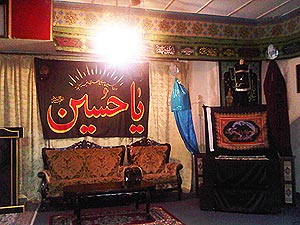 Those found to be practising Shiism in Malaysia can be imprisoned and six were
detained
under the Internal Security Act in 2001.
Those found to be practising Shiism in Malaysia can be imprisoned and six were
detained
under the Internal Security Act in 2001.
PAS deputy president Mohamed Sabu was even suspected of being a Shiite follower, where the Home Ministry has revealed his purported activities and is monitoring him closely.
However, keen political observers believe that the attack on Shiites is political rivalry among the country’s Muslim leadership, as Malaysian Muslims are of the Sunni sect.
Attending the talk were Deputy Chief Minister I Rashid Hasnor and PKR’s Bukit Tengah assemblyperson Ong Chin Wen, while the foundation’s chairperson and Nibong Tebal MP Mansor Othman gave the opening speech.
Tareq said what does matter in Islam were differences in Akidah (faith) because these are the issues which make a person a Muslim or not.
“They (Shiites) believe certain things to be essential, for example, their belief in certain Imams (clerics). They are great people but humans,” said Tareq.
“But looking at these differences does not make the Muslims not Muslims, and we cannot compare them with Zionists,” he added.
Tareq said Zionism is not Judaism and Zionists are the enemy, not only to Islam, but to humanity due to its “racist agenda”.
“They are anti-religion, anti-Islam and anti-humanity, they cannot be compared at all to Shiites,” he said.
‘Taking it too far and it is wrong’
“I know there are some brothers and sisters who think Shiites are the most important enemy - it is taking it too far and it is wrong,” he added.
“Don’t take political differences and make them into religious differences,” he quipped.
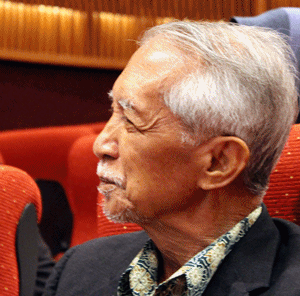 Al-Suwaidan was also asked about the anti-hadith movement, where currently in Malaysia, author and former political activist Kassim Ahmad (
right
), who in the past was accused of leading such a group here, is now being
attacked
for claiming Islam in the country had been abused through a “priesthood caste” system.
Al-Suwaidan was also asked about the anti-hadith movement, where currently in Malaysia, author and former political activist Kassim Ahmad (
right
), who in the past was accused of leading such a group here, is now being
attacked
for claiming Islam in the country had been abused through a “priesthood caste” system.
Last Friday, in an apparent response to Kassim, Muslims in the country were cautioned through Friday sermons on the threat from those who are “anti-hadith” .
Al-Suwaidan said both the Quran and Hadith are equally important for Muslims all over the world.
“If something in the Hadith is not according to the Quran, then of course, follow the Quran. Sometimes it is not the Prophet who said it (verses in the Hadith) but the narrator did,” Al-Suwaidan said.
“We cannot practice our religion without Hadith. We wouldn’t know how to pray, how many raka’as in each prayer, the duties of Haj or Zakat (tithes),” he added.
Al-Suwaidan, who is well-known in Middle East and the Muslim world, holds pro-democratic, free speech and freedom of religion viewpoints and is one of the signatories of ‘A common word between us and you’, an open letter by Islamic scholars to Christian leaders urging peace and understanding.
On the issue of the ban of the ‘Allah’ word from being used among Christians, Al-Suwaidan said those who insist on the matter are “too sensitive”.
He cited an example where the Prophet did not even stop an enemy of Islam from describing God as Allah.
“Allah is the word for God. We don’t have another word. Illah is also God. Allah is the God. I don’t agree with the ruling. It looks like we doubt our religion, when in fact, we do not doubt,” he said.
“The word is used by even all the unbelievers to describe God. Unless it is a Malaysian issue, something in history, that I do not know of but the general rule is to allow it (for non-Muslims to use),” he added.


Are you sure you want to delete this comment?
This action cannot be undone.