




Abolition of Sedition Act part of 'transformation'
The abolition of the Sedition Act 1948 is part of the government’s transformation programme and should be supported, but not at the expense of national stability, says Communications and Multimedia Minister Ahmad Shabery Cheek.
It remained to be seen whether the Sedition Act would be abolished in full, Shabery said, or whether parts of it will be kept, since the proposed harmony bills slated to replace the Act were still under the consultation process.
The abolition of the Sedition Act 1948 is part of the government’s transformation programme and should be supported, but not at the expense of national stability, says Communications and Multimedia Minister Ahmad Shabery Cheek.
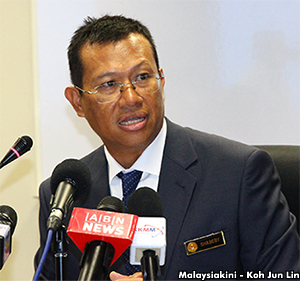 It remained to be seen whether the Sedition Act would be abolished in full, Shabery (
left
) said, or whether parts of it will be kept, since the proposed harmony bills slated to replace the Act were still under the consultation process.
It remained to be seen whether the Sedition Act would be abolished in full, Shabery (
left
) said, or whether parts of it will be kept, since the proposed harmony bills slated to replace the Act were still under the consultation process.
“We know that this is a part of the government’s transformation programme that we all should give attention to, and give support to, as we move towards a more open era.
“But at the same time, we assert that the main aspects that become a nation’s strengths, in terms of stability, peace, and inter-racial harmony, will not be affected,” Shabery told a press conference in Putrajaya this afternoon.
He was asked whether the abolition of the Sedition Act would pose problems to the government’s control on the social media, to which he replied that it would be too early to say.
'Important thing is for citizens to live in peace'
To another question on whether he agreed with the draft laws that the National Unity Consultative Council (NUCC) had proposed, Shabery reiterated that the draft is not final, so the issue of whether he agrees with the draft does not arise.
“What is certain is that we will study this on all aspects, so the important thing is our citizens can live in peace and people cannot abuse the broadband facilities that we have to threaten national stability,” he added.
The Sedition Act is slated to be replaced with three bills that will criminalise bigotry, including racial discrimination by the government.
The three bills are the National Unity Bill, the National Harmony Bill, and the National Unity and Integration Commission Bill, which have been proposed to the government by the NUCC.
At the start of the press conference, Shabery briefed members of the media on the achievements and targets of the Communications Content and Infrastructure Industry (CCI).
He said the industry was on track to generate the targeted RM33 billion in gross national income (GNI), making it the fourth largest industry in Malaysia after oil and gas, electrical and electronics manufacturing and tourism.


Are you sure you want to delete this comment?
This action cannot be undone.