




PAS polls post-mortem: Party lost young Malay voters
PAS' post-mortem report on its dismal performance in the recent general election went beyond the expected charges of fraud levelled at the ruling BN coalition and the Election Commission as well as the lop-sided reporting by the government-controlled mass media.
PAS' post-mortem report on its dismal performance in the recent general election went beyond the expected charges of fraud levelled at the ruling BN coalition and the Election Commission as well as the lop-sided reporting by the government-controlled mass media.
The report also honed into the party's apparent loss of support from young Malay voters who, according to party sources and sympathisers, was the crucial factor behind the Islamic opposition party's blowing defeat at the both parliamentary and state-level contests.
This may in turn factor significantly in the way the party goes about "repackaging and reformatting" its message to attract more people to its Islamic ideology, said some party leaders.
PAS lost Terengganu to the BN coalition, but held on to Kelantan with the tiniest of margins - a mere three seats - in the March 21 general election
The opposition party also saw its representatives in Parliament slashed from 27 to 7.
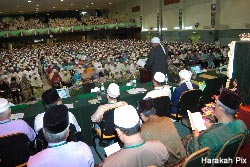
On Thursday, the committee in charge of conducting the post-mortem report, which is led by PAS' vice-president Mustafa Ali, submitted its final findings to the party president Abdul Hadi Awang.
At a press conference to mark the handing over of the 99-page report, Abdul Hadi said he would reserve comments on the issue until he had read its contents.
 According to a party source based in Kota Baru who have played a fact-finding role in the post-mortem committee, the team had found that the opposition party lost the support of some 60,000 young Malay voters in Kelantan and Terengganu.
"It is not so much the non-Muslims who were responsible (for our losses). It was the young Malay voters. There were 60,000 of them, and they were the ones who were crucial to our losses in Terengganu and Kelantan," he told malaysiakini when contacted.
PAS would be "repackaging and reformatting the way the party delivers its vision of the Islamic state," said the source, who declined to be named.
"We realised that we had not reached out sufficiently to address the perceptions these people may have about the Islamic state.
"In the post-mortem report, there are sections devoted to improving on the party's education, information, and socialisation efforts with this sector of the electorate," he added.
No leaders blamed
 Despite
criticisms
previously leveled at Abdul Hadi, who had been criticised for alleged policy inconsistencies with regards to calls for a boycott of the elections outcome as well as his erratic leadership style, the report did not zoom in on the party leader's shortcomings or those of any particular personalities, says one PAS leader.
Despite
criticisms
previously leveled at Abdul Hadi, who had been criticised for alleged policy inconsistencies with regards to calls for a boycott of the elections outcome as well as his erratic leadership style, the report did not zoom in on the party leader's shortcomings or those of any particular personalities, says one PAS leader.
Central committee member Kamaruddin Jaffar, who said he had not seen the contents of the report, attested that the surprise and shock expressed by party leadership at PAS' dismal performance in the elections indicated failure to accurately read the actual extent of the party's support-base.
"I've been made to understand that the report is very objective, and any criticism to be levelled at party leaders will not spare anybody," said Kamaruddin when contacted.
But rather than focusing on the failures of specific personalities in the top leadership, "it was overall management issues that would be addressed in the post-mortem", he said.


Are you sure you want to delete this comment?
This action cannot be undone.