




City woes lead to high emigration rate from KL
The lack of affordable housing, social, cultural or entertainment incentives and traffic congestion are among the woes of life in Kuala Lumpur that are hampering efforts to make it a 'world class city'.
The lack of affordable housing, social, cultural or entertainment incentives and traffic congestion are among the woes of life in Kuala Lumpur that are hampering efforts to make it a 'world class city'.
Such problems, according to Kuala Lumpur City Hall, are causing too many people to leave the city as a preferred place of residence.
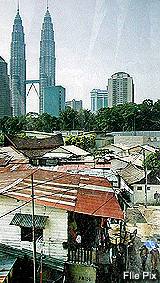 According to City Hall's recently released Kuala Lumpur Structural Plan 2020 (KLSP), emigration to KL's conurbation, coupled with a sharp decline in birth rates in Kuala Lumpur, have caused the population to shrink.
The plan, submitted last week to Federal Territory Minister Mohd Isa Abdul Samad, states that there are only 1.4 million residents in Kuala Lumpur at present, and a workforce of not more than 834,400.
The first structure plan released in 1984 had projected a population of 2.2 million residents and an employment force of 1.4 million by the year 2000.
Migration into Kuala Lumpur has, since 1982, been surpassed by migration out of the city to its conurbation, thereby setting back "the optimisation of the infrastructural investment put in place" since 1984, according to the new KLSP.
The emigration trend peaked at nearly 8,000 annually during the years 1986-1991, totalled 25,700 from 1991 to 1997, and is currently averaging a net emigration average of 4,280 between the years 1991 to 1997.
Bringing life back
In response to these developments, a planning department officer said efforts would be focused on attracting people and bringing life back to Kuala Lumpur.
Among mechanisms to reverse the emigration trend is to promote service apartments and high-end housing in such strategic locations as the city centre, Damansara-Penchala, Bukit Jalil-Seputeh, and designated 'international zones' within those areas.
Low-and medium cost housing will be distributed in other places such as in Sentul-Menjalara and Bandar Tun Razak-Sungai Besi, the officer said.
To relieve traffic congestion, there will be 'transit link' terminals to facilitate the integration of public transportation with private transportation.
Detailed plans for implementing the goals of KLSP 2020 will be determined by local planning bodies engaged by City Hall, the officer added.
The KLSP also states that the emigration pattern since the mid-1980s has resulted in a higher percentage of bumiputeras living in Kuala Lumpur.
The proportion of bumiputras grew from 33% in 1980 to 37% in 1991. By 2000, they made up 38% of the city's population in comparison to Chinese and Indian Malaysians who made up 43% and 10%, respectively.
The number of Chinese and Indian Malaysian residents has decreased from 1980 when they made up 52% and 14% respectively. In 1991, the percentage of Chinese was 46% , while Indians made up 11%.
'Others' and 'non-citizens' make up nearly 10% of the city's current population, up from one percent in 1980 and six percent in 1991.


Are you sure you want to delete this comment?
This action cannot be undone.