




Need for better means to monitor haze
COMMENT I like the song, ‘Haze, Haze, Haze’ . It looks like we are going to be forever facing this problem every year for the next century, despite all the intra-governmental forums.
Let me say upfront that I do not hope for a solution for our haze woes, even at Asean level, but at least, there should be a better mechanism in place to monitor the Air Pollution Index (API) and to keep concerned parents with school-going children informed of the Education Ministry’s decision to close the schools.
COMMENT I like the song, ‘Haze, Haze, Haze’ . It looks like we are going to be forever facing this problem every year for the next century, despite all the intra-governmental forums.
Let me say upfront that I do not hope for a solution for our haze woes, even at Asean level, but at least, there should be a better mechanism in place to monitor the Air Pollution Index (API) and to keep concerned parents with school-going children informed of the Education Ministry’s decision to close the schools.
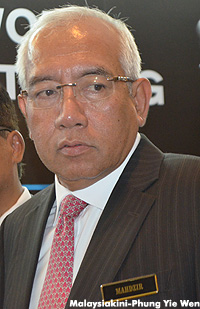 For its minister Mahdzir Khalid (
photo
) to say that, besides the API, school authorities and parents can also use poor visibility as a criterion, is nothing but ‘utter rubbish’ from yet another cabinet minister.
For its minister Mahdzir Khalid (
photo
) to say that, besides the API, school authorities and parents can also use poor visibility as a criterion, is nothing but ‘utter rubbish’ from yet another cabinet minister.
It has probably been regurgitated from elsewhere without going through the grey matter and when it appears in the news, it makes a fool of Mahadzir himself.
Therefore, I urge the honourable minister to think again and perhaps, work on a better mechanism to keep concerned parents updated on the API and the ministry’s decisions.
I am not an expert in aviation but when we talk about ‘poor visibility’ of 500 metres, I believe we are mostly talking about airports where the pilot needs to have better visibility to help them land or take off the plane safety.
In the context of an airport, it is possible to do this because there are already existing yardsticks. That is why they communicate in terms of visibility of 500 metres.
But, for the ordinary people, how would Mahadzir expect a school principal or a mother of four children to use it as a gauge, before deciding not to send her kids to school? From now on, schools would have to set up their own ‘visibility monitoring mechanism’ if the minister’s recent statement is taken seriously.
Real on-ground situation
The reason why I am writing this is because I am currently with a parents’ Whatsapp group. These are parents from the same school that my son attends.
The major concern amongst parents is the haze situation, and its adverse effects on the health of the children. Therefore, decisions have to be made by parents at times when they see the situation worsening.
I had to do this on the first few days when I saw that the haze situation was trending upwards. Although the API was at 160 plus, I decided not to send my son to school the next day, except to go for his daycare tuition classes (with airconditioning) in the morning.
It was not until the following day that the ministry gave the haze alert after the API hit above 200. Anything about 200, the schools will be ordered to close; but there again, it is not as straightforward.
Parents will not know whether to send their children if the API is only at 160, but appears to be trending upwards. Parents will have to decide whether to send their children to the babysitter’s home, or to school, within the next 12 hours.
Currently, the API trend is taken into consideration, but the ministry should also take into consideration the wind conditions, in order to predict intelligently whether the API is on the upward or downward trend.
Despite the haze being a national disaster, the various authorities should get together to coordinate a proper response, instead of the public depending on various sources for the latest update.
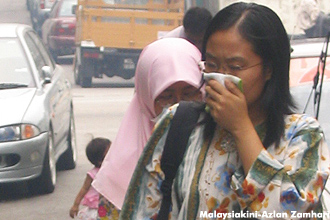 A good indication that I personally use is to look at the wind’s direction and the day’s API data, especially for Port Klang, in order for me to decide whether to send my children to school the next day. I suggest the Department of Environment (DOE) to at least maintain the data for at least the two or three previous days.
I suggest that the API data should be tabulated on a chart, along with other useful information such as the wind conditions, in order for us to make a decision. By 6am, when we have to send our children to school, we would not even be able to check the latest API for the day or compare it to the data for the day before.
A standalone API reading would not be accurate, because the readings are only done at selected locations. This is why the ministry cannot only depend on the API but a number of other environmental factors to make an accurate prediction for at least the next 24 or 48 hours.
Better communication
Currently, there is little coordination by both the schools and the Education Ministry to keep parents informed.
I have always advised parents to check the latest update from the DOE) and Education Ministry websites, but even I was deceived by an official letter purportedly from the ministry which was later found to be falsified .
Some mischievous people must have thought it was fun to play such a prank, yet, after detecting it, I wonder if the ministry has lodged a police report to find out who the culprit is.
The ministry has to be more proactive. It is not difficult, for example, for the ministry to set up an email response mechanism or a hotline phone with voice recorded messages, for those who are less IT-savvy. But, please stop talking about poor visibility.
All it takes is a bit of ingenuity and some maintenance of the system on a daily basis. For example, an email can be updated with an auto-responder with the ministry’s official statement about the schools.
School principals can also encourage their teachers to set up a Whatsapp broadcast list in order to send out official alerts to parents. All it takes is a clerical person to key in the phone numbers of parents according to the classes.
With the VFrog education site in place, this can also provide a good platform for parents to get their latest information.
As a minister, Mahdzir should set in place the monitoring and communication system that can reach every parent within the shortest time. He can then tell us whether we are experiencing poor visibility beyond 500 metres.
STEPHEN NG is an ordinary citizen with an avid interest in following political developments in the country since 2008.


Are you sure you want to delete this comment?
This action cannot be undone.