




'Suicidal to conclude TPPA talks without HRIA study'
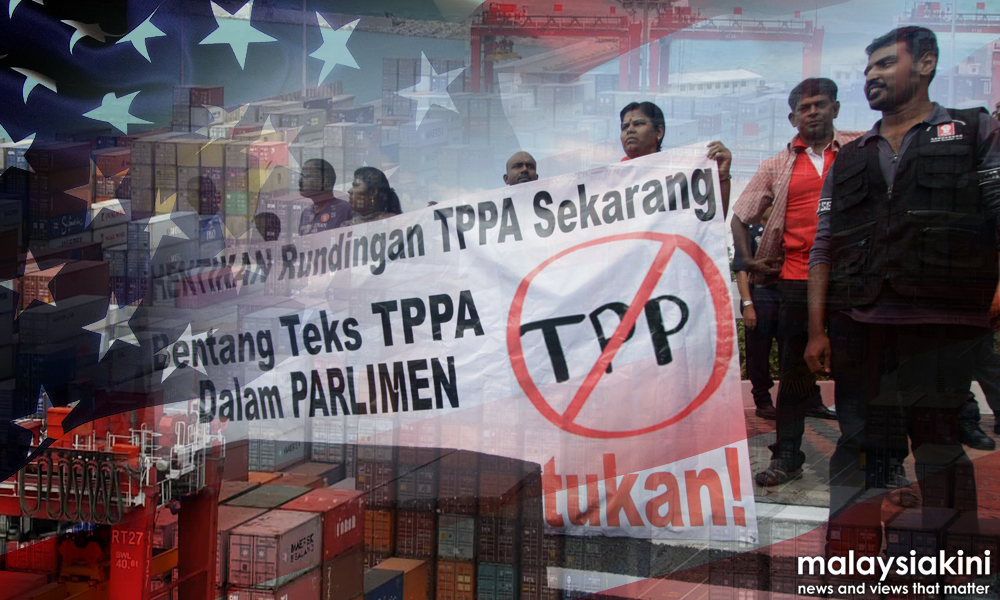
Concluding the Trans-Pacific Partnership Agreement (TPPA) talks without a human rights impact assessment (HRIA) study is a clear attempt to kill the rights of Malaysians.
Parti Sosialis Malaysia (PSM) secretary-general A Sivarajan said today that Malaysian negotiators were in no position to conclude the talks without first conducting a HRIA study.
Concluding the Trans-Pacific Partnership Agreement (TPPA) talks without a human rights impact assessment (HRIA) study is a clear attempt to kill the rights of Malaysians.
Parti Sosialis Malaysia (PSM) secretary-general A Sivarajan said today that Malaysian negotiators were in no position to conclude the talks without first conducting a HRIA study.
The HRIA study, explained Sivarajan, is to examine the impact of the trade treaty on Malaysians when it is signed and implemented.
Sivarajan pointed out that the HRIA was not something new and that other countries had conducted it before, citing Thailand.
"It's very crucial for Malaysia to conduct this study. They are going on a suicide mission if they don't do this.
"It's like going for an exam without first doing your homework," he said, at the press conference in Kuala Lumpur.
The final round of negotiations for the TPPA are currently ongoing in the US this week.
 Sivarajan also pointed out that the two cost benefit analysis (CBA) studies initiated by the International Trade and Industries Ministry (Miti) were only on the TPPA's impact on bumiputera policy, small and medium enterprises (SMEs) and national interests.
Even then, he said, the findings of both studies have yet to be released.
"We reiterate that the two CBAs conducted are insufficient as an analysis. The implementation of the TPPA has vast impact on various aspects of our daily lives," he said.
Among possible impacts of the trade agreement are the right to food, healthcare, basic amenities, education, housing, workers as well as indigenous communities rights among others.
Expressing concern that the government had taken up the matter without adequate study, Sivarajan said the current CBAs were no more than a "superficial attempt" to understand the social, economic and human rights impacts of the TPPA.
Allow parliamentary debate
Asked on what else could be done to ensure that the government did not bulldoze through the agreement on Malaysians, Sivarajan said the cabinet had full authority to decide on any trade agreement.
He noted the TPPA is the only agreement which will presented in Parliament due to continuous pressure from civil society.
"Before this, there have been so many free trade agreements and they were never presented in Parliament.
"But because of the continuous pressure since 2010, the TPPA is coming to Parliament," he said.
Expressing hope that MPs would be able to debate the agreement, Sivarajan said that the debate should not be conducted at inappropriate times such as midnight.
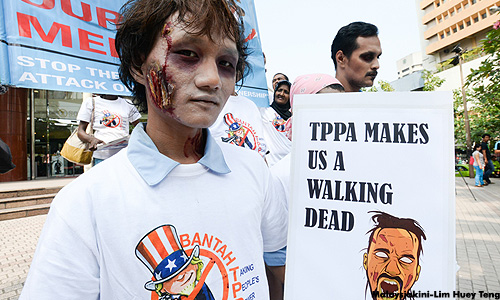 "They must properly debate this. But for MPs to debate, you must give them proper information.
"That's why we are questioning the CBAs. They are not sufficient.
"If the government is sincere it should do a complete HRIA study, present it in Parliament and MPs should debate it properly," he said.
Sivarajan also confirmed that his party would submit a memorandum on the matter to Parliament by the end of the month.
Secretive negotiations
Meanwhile, Suara Rakyat Malaysia (Suaram) executive director Sevan Doraisamy also stressed that it was important for the government to conduct a thorough study first on the impacts of the agreement.
"I call on the Human Rights Commission of Malaysia (Suhakam) to lead this impact study," he said.
The TPPA is a multinational free trade agreement in which the US is a main proponent. Apart from Malaysia, other countries involved in its secretive negotiationsinclude Australia, New Zealand, Vietnam, Mexico and Canada, among others.
All that is known about the agreement have come only from leaks of the purported draft of the agreement.
For TPPA’s critics, one contentious component of the draft agreement is that it incorporates a system for investor-state dispute settlement (ISDS), which could affect a country's ability to enact public interest laws - such as to control the use of tobacco - by forcing governments to pay hefty compensation to corporations that stand to lose from such legal changes.


