




Is Malaysia truly serious about the refugee crisis?
COMMENT As a Malaysian, I welcome Prime Minister Najib Abdul Razak’s decision , which was announced during his speech at the United Nations General Assembly on Oct 1, 2015, in accepting 3,000 Syrian refugees (or migrants as he put it) over the next three years to alleviate the refugee crisis.
I further welcome Deputy Prime Minister Ahmad Zahid Hamidi’s announcement that those Syrian refugees will be issued with special identification card and that the Malaysian government will be looking at providing them access to education and temporary jobs while they are in Malaysia.
For someone who is not familiar with Malaysia, one may possibly be looking up to Malaysia after the announcement by its prime minister and his deputy respectively. It would seem that Malaysia is better than some of those European countries that are closing their borders to those refugees.
However, to those who are familiar with Malaysia’s human rights record and its stance on the refugee issue, Najib the announcement yo the UN General Assembly and the statement of his deputy may come as a surprise.
Refugees in Malaysia
The issue of refugees is not something new in Malaysia. According to the UN High Commission for Refugees (UNHCR), as at the end August 2015, there are some 153,880 refugees and asylum-seekers registered in Malaysia, of whom 143,050 are from Myanmar.
However, as Malaysia is not a signatory to the 1951 Refugee Convention and does not intend to be one, as stated by Minister in Prime Minister’s Department Shahidan Kassim, who also declared that refugees are treated as the same as illegal migrants.
In other words, there is no such category of people called ‘refugees’ in Malaysia.
This is also probably why Najib decided to refer these people as ‘migrants’, as opposed to ‘refugees’, in his speecch to the UN General Assembly when he said that Malaysia has taken in many people fleeing war, starvation and persecution over the years and that “we currently have hundreds of thousands of irregular migrants”, despite the fact that many of those are recognised and have been registered by UNHCR.
Since refugees are not recognised in Malaysia, they are treated as the same as illegal migrants, where they are always at risk of being arrested and detained. They are often subjected to exploitation, harassment, abuse and torture.
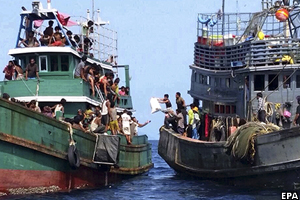 The refugees have no right to work legally in Malaysia nor to send their children to school. The mistreatment and abuse of refugees was exposed by
Al Jazeera
last year in its documentary,
‘Malaysia’s Unwanted’
, which is an extensive investigation, complete with undercover filming.
The refugees have no right to work legally in Malaysia nor to send their children to school. The mistreatment and abuse of refugees was exposed by
Al Jazeera
last year in its documentary,
‘Malaysia’s Unwanted’
, which is an extensive investigation, complete with undercover filming.
In that documentary, it was exposed that even refugee children are being detained in immigration detention centres - which clearly contravenes international laws and the UN Convention on the Rights of the Child, to which Malaysia is a signatory.
Different in speech and action?
The emotive and compassionate speech by our prime minister to the UN in accepting 3,000 Syrian refugees and urging all other countries to do the same on humanitarian grounds came as a shock to many, for we still remember how Malaysia was engaged in a “human ping-pong” not too long ago with Thailand and Indonesia when thousands of refugees and migrants were stranded and dying in the Andaman Sea.
And it was only after great international pressure that Malaysia agreed to provide temporary shelter to the thousands of refugees and migrants, on the condition that the “international community will take responsibility for the repatriation of the irregular migrants to their countries of origin or resettlement to third countries… within one year”.
In April this year, Minister Shahidan Kassim was reported as saying that Malaysia will not open its doors to refugees and asylum seekers even on humanitarian grounds as they have become a security threat to Malaysia.
In August, Shahidan was even reported to be urging the UNHCR to stop issuing refugee cards without the consent of the Malaysian government.
It is hence difficult to apprehend why there is a sudden, complete change of attitude and stand by the Malaysian government and Prime Minister Najib when he appears and stands on the world stage.
Why are some refugees treated differently?
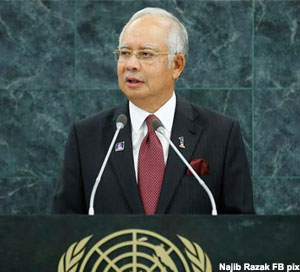 Since Malaysia is now willing to open its doors to 3,000 Syrian ‘migrants’ over the next three years and will also be providing them access to education and temporary jobs until they are able to return to Syria, will Malaysia also be ready to open its doors and provide equal treatment to all other ‘migrants’ who are already knocking – and many even died – at our doors for years, especially those from Myanmar and specifically, the Rohingyas, the world’s most persecuted minorities?
And if Malaysia and Najib are not willing, then the question is why?
Why are we willing to open our doors to Syrian refugees who are from so far away and not those here, in our neighboring countries, and those who are already on our soil? Why is Najib treating the refugees differently when we should “transcend the silos of race and faith” and “respect our common humanity”?
Recognise and treat refugees as human
If Najib and the Malaysian government are serious and committed to helping and solving the refugee crisis, the Malaysian government should sign the 1951 Refugee Convention, recognise all refugees and give them necessary protection and help.
It is hypocritical for one to preach and show humanity at the international stage but practice a totally different way at home and continue to persecute those already persecuted.
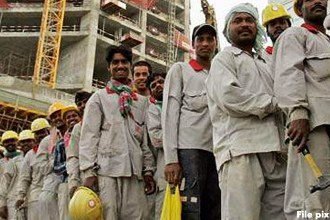 Further, if Malaysia is in need of a workforce, with the government having planned to bring in another 1.5 million workers from Bangladesh over the next three years, there is no reason why the government is not willing to recognise and allow the 150,000 already registered refugees to work.
Recognising these refugees who are already in Malaysia and allowing them to work legally will certainly help to curb social and security issues that the Malaysian government fears as well.
Now is certainly the best time for Malaysia, being the chair of Asean and a member of the United Nations Security Council, to lead by example in helping the refugees and upholding human rights. Malaysia should play an active role in solving the refugee crisis, especially in Southeast Asia.
All refugees should be equally recognised and protected. All nations and the international community should stand united in solving the refugee crisis. All of us should remember one simple thing: refugees are like each and every one of us – human beings!
TAN ZHONG YAN launched an online petition last May, during the South-East Asian refugees/migrants crisis, to urge Asean and its member states to save those refugees and migrants stranded at sea.


Are you sure you want to delete this comment?
This action cannot be undone.