




Ex-Soviet republics also have Buk missiles, says envoy
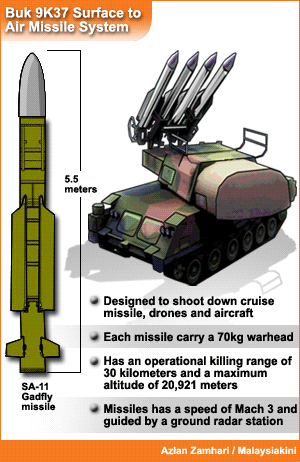
Russia today has pointed out that many former Soviet Union countries are armed with the same type of Buk missile which the Dutch Safety Board (DSB) had said was the type that brought down the ill-fated Malaysia Airlines MH17.
Russia's ambassador to Malaysia Valery N Yermolov said he was 'a little bit' surprised that Malaysian leaders, following report by the DSB, had said that the Malaysian aircraft was downed by a Russian-made Buk missile.
Russia today has pointed out that many former Soviet Union countries are armed with the same type of Buk missile which the Dutch Safety Board (DSB) had said was the type that brought down the ill-fated Malaysia Airlines MH17.
Russia's ambassador to Malaysia Valery N Yermolov said he was 'a little bit' surprised that Malaysian leaders, following report by the DSB, had said that the Malaysian aircraft was downed by a Russian-made Buk missile.
“We see that many former Soviet Union countries are armed with Buk missiles. Nato countries are armed with Buk missiles, like Greece.
“This means that this Buk missile was not made by Russia but by a former Soviet Union country,” he said at a press conference at the Russian Embassy in Kuala Lumpur today.
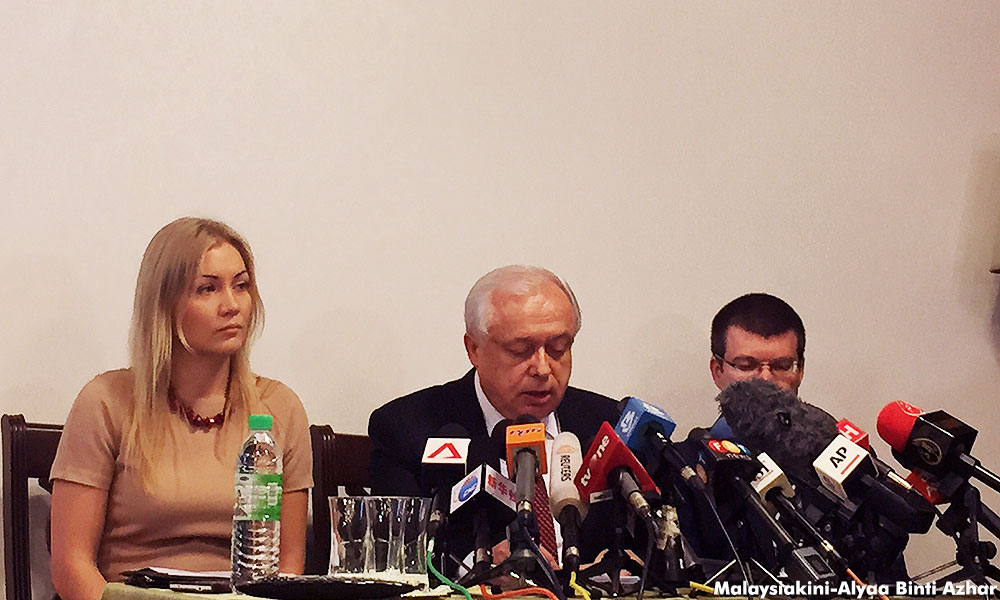 Yermolov (
centre in photo
) added that Russia no longer owned such missiles since 2011, after which the warhead was decommissioned.
Yermolov (
centre in photo
) added that Russia no longer owned such missiles since 2011, after which the warhead was decommissioned.
“The Buk missiles mentioned in the (DSB) report were developed in 1986 during conflict with the Soviet Union army after the declaration of independence and had a warranty period of 25 years.
“In 2011, these missiles were decommissioned by the Russian army, but we know that the Ukrainian (army) owns exactly 520 missiles until now,” he said.
‘Russian missiles no longer contain butterfly-shaped shrapnel’
Yermolov further explained that missiles owned by the Russian army no longer contained butterfly-shaped shrapnel that were found on the fuselage of MH17.
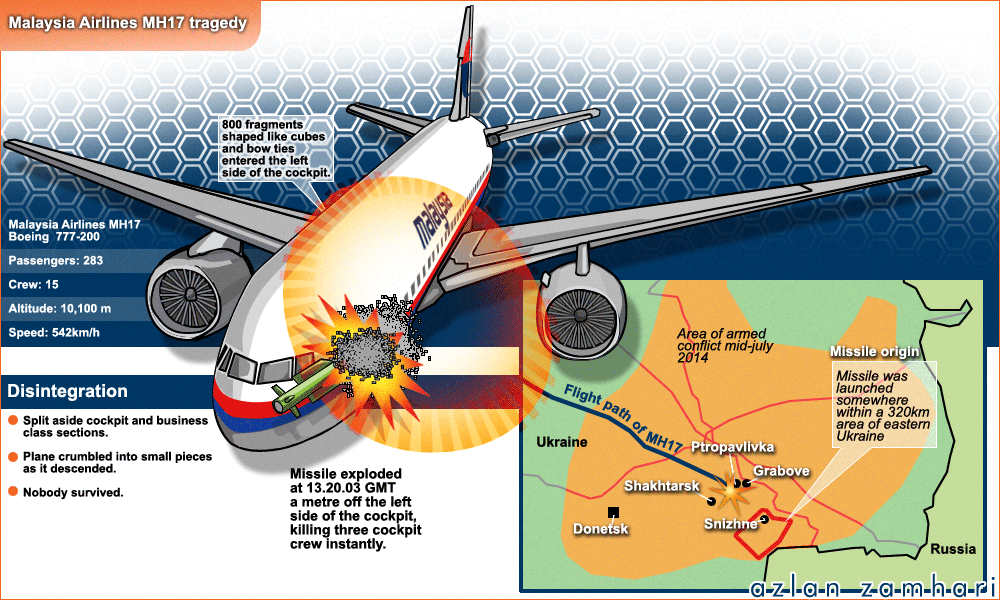 “Our missiles only contain shrapnel in the shape of parallelepiped. And the shrapnel found at the fuselage is from a type of missiles widely used by other separatists now,” he said.
The ambassador earlier in the press conference had stressed how his country had sought to take part in efforts by the groups of experts in the investigations into the MH17 crash.
He added that they had expected Russian experts to be able to access all the information available to the group, pointing out how Russia had set in motion the adoption by the UN Security Council of Resolution 2166, which contains provisions describing how the investigation is to be carried out.
Nevertheless, Yermolov said Russian experts were not given access to full investigation materials.
 “It is our understanding that the report on the crash by experts from Almaz-Antey, the main developer of Buk missile launchers, has also been ignored.
“In addition, Dutch colleagues have not responded to the invitation to visit Russia to study Almaz-Antey materials on the Boeing crash,” he said.
And although Russia is disappointed by these circumstances, Yermolov said it will continue to work with Malaysia and other relevant parties to find the culprits behind the downing of the plane.
“We are ready to work with Malaysia to find the truth to bring the perpetrators to justice.”
Continuing the investigation with the necessary adjustments and ensuring the participation of all countries that possess materials that could shed light on the MH17 crash, said Yermolov, could be a way out of this situation.
“It goes without saying that Russia stands ready to join these efforts," he said.
The DSB on Tuesday confirmed that MH17 was shot down by a Buk surface-to-air missile over eastern Ukraine last year.
Its chairperson Tjibbe Joustra said the missile’s warhead detonated on the left side of the aircraft’s cockpit.
MH17 was shot down while cruising at an altitude of 30,000ft and crashed in a tense area of Ukraine near the Russian border on July 17, 2014.
All 283 passengers and 15 crew onboard the Boeing 777 aircraft, which was en route to Kuala Lumpur from Amsterdam, perished.


Are you sure you want to delete this comment?
This action cannot be undone.