




Rights group: Change in Malaysia will be from within
Malaysia's main force of change when it comes to human rights abuses will come from within the country and not from foreign intervention, Human Rights Watch (HRW) says.
This is the pattern in most countries, except those under dictatorship where there is no room at all for civil societies or for freedom of expression, HRW’s Asia Division executive director Brad Adams said today.
Malaysia's main force of change when it comes to human rights abuses will come from within the country and not from foreign intervention, Human Rights Watch (HRW) says.
This is the pattern in most countries, except those under dictatorship where there is no room at all for civil societies or for freedom of expression, HRW’s Asia Division executive director Brad Adams said today.
"That's not Malaysia," he declared.
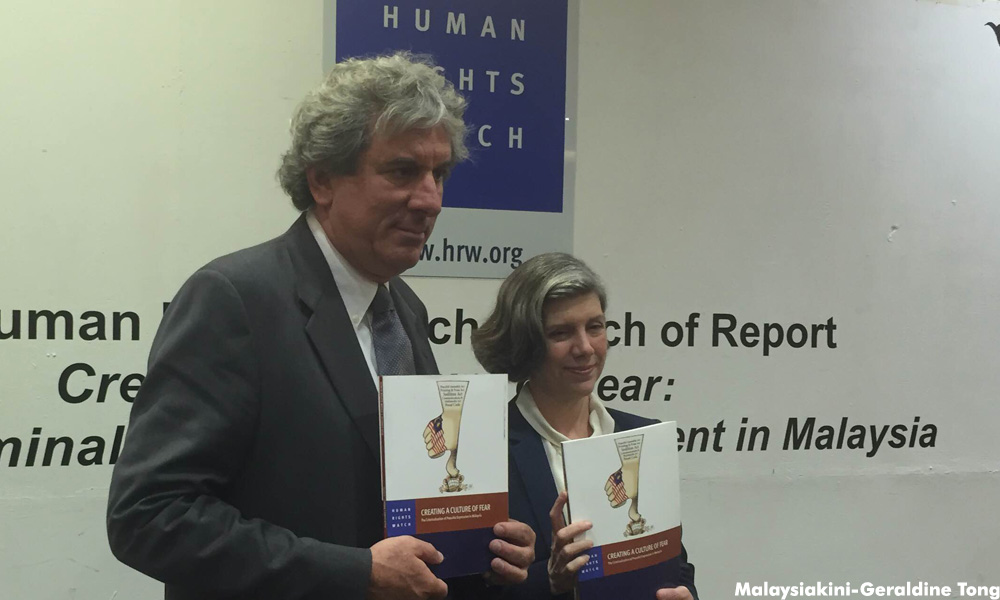 Adams (
left in photo
) said this during the release of the HRW report titled 'Creating A Culture of Fear: The Criminalisation of Peaceful Expression in Malaysia' in Kuala Lumpur.
Adams (
left in photo
) said this during the release of the HRW report titled 'Creating A Culture of Fear: The Criminalisation of Peaceful Expression in Malaysia' in Kuala Lumpur.
Despite all the crackdowns on dissent, he said, there was still significant space for people in Malaysia to push for change.
Foreign intervention and other methods are also important for change, but he stressed that change in Malaysia will most likely come from within the country.
"We're all ... for change, but the main impetus is going to be internal," Adams said.
Several advantages
The people of Malaysia have several advantages when it comes to pushing for change, he added.
"One thing Malaysia has going for it is an incredibly well educated group of people - articulate, experienced, knowledgeable - who are fighting for these issues."
One of the reasons the Malaysian government is cracking down on dissent is that it sees civil society as a 'formidable opponent'.
"And it doesn't like it," he added.
Adams was also quite confident that if the Malaysian government began to crack down on criticism of the Trans-Pacific Partnership Agreement (TPPA), the US would speak out strongly.
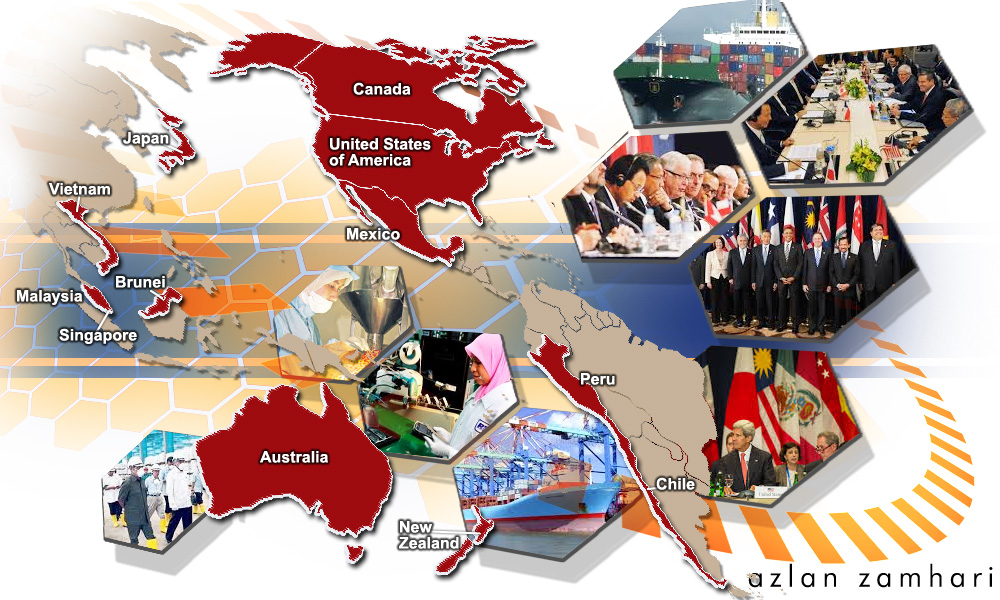 This is despite the apparent eagerness of the US to push through the TPPA, a sweeping trade agreement among 12 countries, including Malaysia.
"The US is consistently strong in the protection of civil societies and freedom of expression.
"I expect them (US) to be able to separate these issues," he said.
However, he strongly condemned Malaysia's upgrade in the US State Department's Trafficking in Persons (TIP) Index this year, from Tier 3 to Tier 2.
"It has created a widespread perception in Malaysia that it was a political gesture in order to enable the TPPA negotiations.
"If the US wants to pursue the TPPA, that's fine but they should not pollute that discussion by engaging in a politically engineered decision in the TIP," he opined.
Internet censorship
Adams also referred to the Communications and Multimedia Ministry's recent attempt to increase internet censorship in the country, saying this would negatively affect trade and economy.
"Decision-makers would have less information available to them; they won't really know what's going on in the rest of the world," he said.
He pointed out that Malaysia has built itself up to be an open space for digital businesses and technology giants like Google , Microsoft and Facebook .
"The country has to be extremely careful not to alienate the kinds of people who work in that industry.
"Google , Microsoft and Facebook do believe in freedom of speech. That's the currency that allows those industries to succeed.
"So, they can pick up their factories and contracts and move elsewhere tomorrow if they want, if this becomes an inhospitable place for them," he warned.


Are you sure you want to delete this comment?
This action cannot be undone.