



Confused about TPPA? Meet the couple who try to cut the clutter
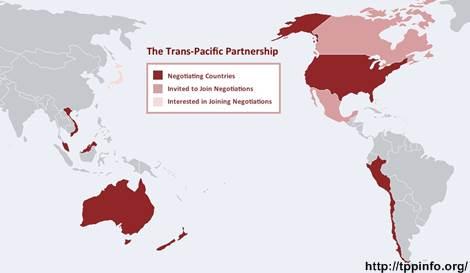
Are you confused about the Trans-Pacific Partnership Agreement (TPPA)? Can't make heads or tails out of the intimidating 6,350-page document?
A husband-and-wife team found themselves in this situation about a month ago, and decided to do something about it.
Sometime next week, the couple will be launching a new website to help disseminate information and facilitate discussion on the controversial and complex agreement involving a dozen countries.
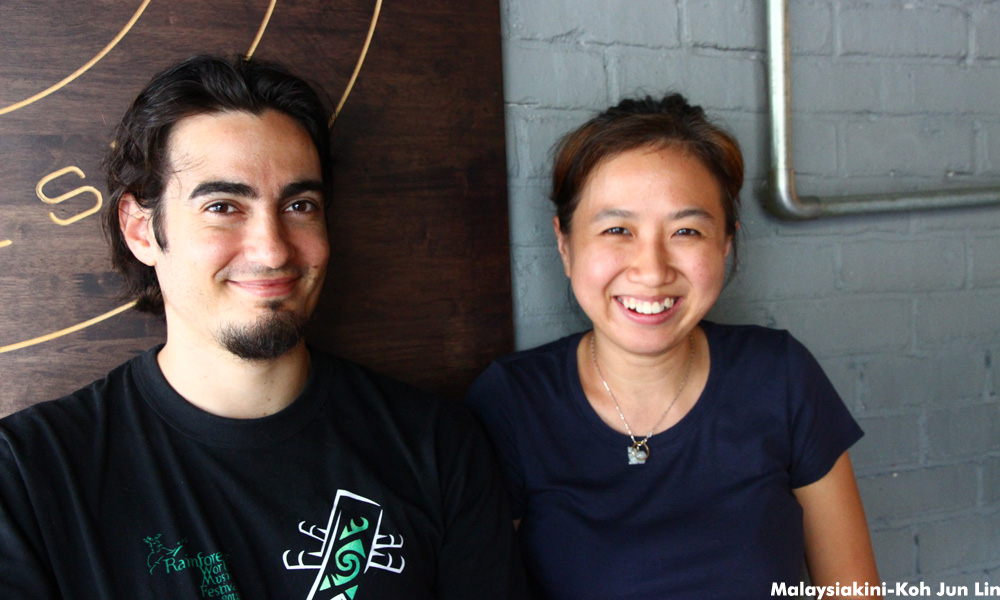
The duo is Argentinian national Leonardo Losoviz and Kuala Lumpur-based policy analyst Tan Jun-E, who already run the Mesym website to help environmental activists around the country find out what other environmental groups have been up to.
Losoviz said he had set up the Mesym website with Tan about three years ago, and was the one who wrote the programming that runs the website...
Are you confused about the Trans-Pacific Partnership Agreement (TPPA)? Can't make heads or tails out of the intimidating 6,350-page document?
A husband-and-wife team found themselves in this situation about a month ago, and decided to do something about it.
Sometime next week, the couple will be launching a new website to help disseminate information and facilitate discussion on the controversial and complex agreement involving a dozen countries.
The duo is Argentinian national Leonardo Losoviz and Kuala Lumpur-based policy analyst Tan Jun-E, who already run the Mesym website to help environmental activists around the country find out what other environmental groups have been up to.
Losoviz said he had set up the Mesym website with Tan about three years ago, and was the one who wrote the programming that runs the website.
There was a discussion on TPPA at a workshop on online privacy just over a month ago, and he decided to find out more about it and subsequently felt he had to act.
“TPP … was one of the things that would change the landscape. During the session, we were asked how we could improve things, so (I thought) maybe a TPP crowdsource website. That's when (the idea) came,” he told Malaysiakini during an interview in a Kuala Lumpur café on Wednesday.
He said he has been working on the new website dubbed Tppdebate since that workshop, and it will be finished sometime next week.
Losoviz, 33, explained that he had tried to learn more about TPP, only to find that there is too much information.
His solution, therefore, is to adapt the Mesym website to a format that is more suitable for debate and discussion, which is still a work in progress at the time of the interview.
 Among others, users - whether individuals or organisations - would have the ability to prominently display their stance on the TPPA issue as they argue their case and discuss materials and documents sourced elsewhere online.
The users can classify their postings according to whether they are for or against the signing of the agreement, or are still sitting on the fence.
The postings would be colour-coded according to the three different stances so that it can be easily understood, even at a glance.
In addition, users can vote their approval or disapproval of postings by others, similar to the popular online discussion website Reddit.
“The website is useful, mostly if both sides get engaged. Otherwise, if you have only the pro-TPPA side, just go to (the Ministry of International Trade and Industry's website) instead; if you only have the opposing side, just go to Bantah TPPA. They have their own platforms,” Losoviz said.
Another reason to adapt an existing website instead of start afresh is the lack of time, he explained.
Not very rewarding in monetary terms
The Dewan Rakyat will vote on the TPPA next month, tentatively on Jan 26, 2016. The agreement itself is expected to be signed in New Zealand in early February next year.
Losoviz also told Malaysiakini that he is not making any money from his work on the Mesym and Tppdebate websites, and there is also a third website in the pipeline that is aimed at helping to tackle the haze issue.
“So basically there are many projects that are extremely rewarding, but not very rewarding in monetary terms […]
“I think it is more important to do things that you care about. I'm sure that if you do the right thing, eventually you will make money, somehow,” he said, when asked why is he working without pay.
He mused that perhaps his online platform may find some commercial interest because it can be adapted to other purposes.
“Because the platform can be adapted to different situations, we could have 10 projects in which two projects are paid, for example. Those would subsidise the other non-profit projects,” his wife, Tan, added.
Unlike Losoviz, 32-year-old Tan has an income from taking on research projects as a freelance policy analyst.
She also handles Mesym's outreach efforts.
Asked what would happen after TPPA has been signed, Tan said the website would be kept online to serve as an archive on the discussions that have taken place.
However, Losoviz said the website may still see active use.
He pointed out that there is a two-year ratification period after TPPA is signed, and the website could be adapted to facilitate discussion and debate on the new laws being introduced.
In addition, fresh lawsuits filed by foreign corporations against governments using TPPA's investor-state dispute settlement (ISDS) mechanism may stir further interest in discussing the agreement, in which the website could serve a purpose, he said.


Are you sure you want to delete this comment?
This action cannot be undone.