



NSC Bill meant to pre-empt resurgent monarchy?
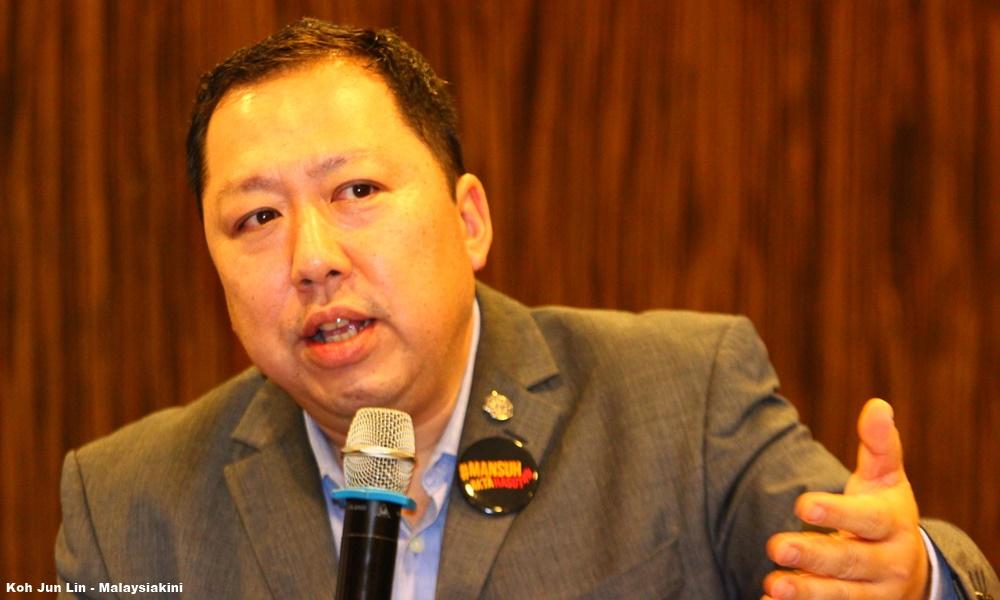
An increasingly vocal monarchy and active judiciary may have been among the reasons for the government to create the National Security Council Bill 2015, lawyer Andrew Khoo says.
The use of emergency powers would normally be the sole prerogative of the Yang di-Pertuan Agong, but some of the rulers of the next few states in line for the post do not have a history of good relations with the federal government, Khoo said.
“If you look back in the past, sometimes you can see that when the ruler of a certain state becomes the Agong, there are misgivings about the relationship between the executive and the institution of monarchy,” Khoo told a forum on the NSC Bill in Bandar Utama, Selangor, last night.
An increasingly vocal monarchy and active judiciary may have been among the reasons for the government to create the National Security Council Bill 2015, lawyer Andrew Khoo says.
The use of emergency powers would normally be the sole prerogative of the Yang di-Pertuan Agong, but some of the rulers of the next few states in line for the post do not have a history of good relations with the federal government, Khoo said.
“If you look back in the past, sometimes you can see that when the ruler of a certain state becomes the Agong, there are misgivings about the relationship between the executive and the institution of monarchy.
“We have seen the resurgence in Johor, for example. I'm wondering if somebody has said, 'Hmm, is that going to be a problem?'” Khoo told a forum on the NSC Bill in Bandar Utama, Selangor, last night.
The states on de facto rotation after the reign of current Yang di-Pertuan Agong Sultan Abdul Halim Mu'adzam Shah are Kelantan, Pahang, Johor and Perak.
Khoo said that if there is a poor relationship between the federal government and the reigning Agong, a scenario may arise where the Agong may refuse to declare an emergency when requested by the government.
He argued that while Article 40 of the Federal Constitution requires the Agong to act in accordance with the prime minister's advice in the performance of many of his functions, the proclamation of emergency is an exception to this.
Instead, the constitution stipulates that the proclamation of a state of emergency only requires that the Agong is satisfied that a grave danger exists, and that satisfaction cannot be challenged in court.
Better way: Alternative mechanism
As for the court, Khoo pointed out that the judiciary has occasionally thwarted the government's intentions, such as in the ruling that former Umno leader Khairuddin Abu Hassan and his lawyer Matthias Chang cannot be tried under the Security Offences (Special Measures) Act 2012.
“So the government has to watch out for the court; the government has to watch out for the monarchy.
“What better way to avoid any problems from all these by coming up with an alternative mechanism, whereby the prime minister - without the need to get the consent or agreement from the Agong, (and without being) challenged in the courts - can declare what in effect is an emergency? Just that we don't use the word,” he said.
However, Khoo stressed that these views are merely his personal opinion and not that of the Bar Council, in which he is human rights committee co-chairperson.
The NSC Bill was swiftly passed by the Dewan Rakyat on Dec 3, and is still pending in the Dewan Negara.
The bill provides for the formation of an NSC panel and gives the prime minister power to declare any place in Malaysia as a 'security zone' , within which a curfew can be imposed and security forces be sent in, among other powers.
The prime minister serves as the chairperson of the NSC, with the other members being the deputy prime minister, home minister, defence minister, communications and multimedia minister, chief secretary to the government, armed forces chief and the inspector-general of police.
Elsewhere, such councils are purely advisory
Former Bar Council president Ambiga Sreenevasan told the forum that she had surveyed the laws of democratic countries around the world and not one of them concentrates power in the head of government the way the NSC Bill does.
Instead, national security councils around the world are purely advisory in nature, Ambiga said.
She accused the 107 MPs who had voted in favour of the NSC Bill of being negligent, and vowed to find out and publicise their names.
 Universiti Malaya law lecturer Azmi Sharom (
photo
) pointed out that with some exceptions, such as in response to the May 13, 1969 riots, emergency powers had been used to resolve Umno's political dilemmas, rather than genuine security threats.
Universiti Malaya law lecturer Azmi Sharom (
photo
) pointed out that with some exceptions, such as in response to the May 13, 1969 riots, emergency powers had been used to resolve Umno's political dilemmas, rather than genuine security threats.
Examples of these include the emergency proclamation in Sarawak in 1966 and the emergency proclamation in Kelantan in 1977. In both cases, there was a change in the leadership of the states.
“In both cases, there was no real threat to national security. They were both political problems, for which the leaders used whatever power they had to solve their political problems.
“If we give them this law, this power, why on earth would anyone not think that they would use it to solve their problems, not our problems?” Azmi said.


Are you sure you want to delete this comment?
This action cannot be undone.