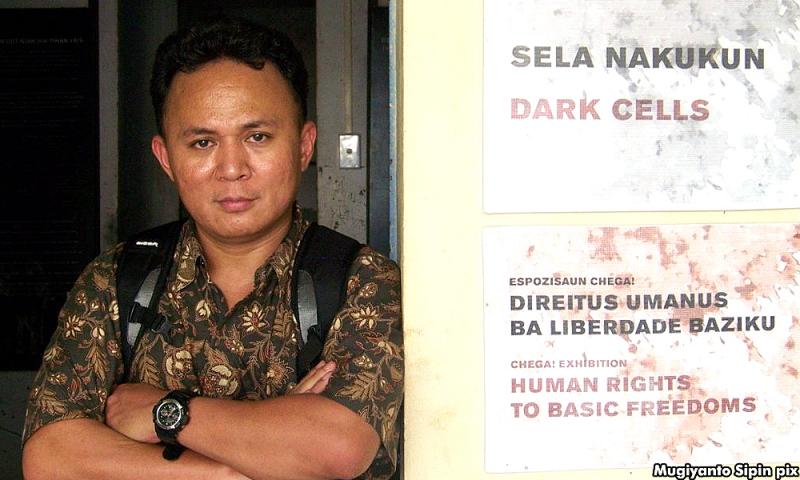

Malaysia breached international human rights codicils when it detained and deported Indonesian human rights activist Mugiyanto Sipin without proper cause on Jan 7, Amnesty International said today.
"The barring of Mugiyanto from entering Malaysia violates the rights to freedom of expression, and to receive and impart information - rights guaranteed under international law and standards.
"It is also inconsistent with the rights enshrined in the UN Declaration on Human Rights Defenders (Articles 6, 17 and 9)," its deputy director Josef Roy Benedict said in a statement.
Article 6 of the document guarantees the right of the public to obtain information on, discuss and promote human rights issues, Article 9 provides for the public to complain about polices and laws that violate human rights, while Article 17 protects human rights defenders from unreasonable restrictions by state actors.
Mugiyanto was due to participate in a forum at electoral reform advocacy group Bersih 2.0's #YellowMania festival on Thursday, but he was detained by Immigration officials upon arrival at the Kuala Lumpur International Airport and deported for allegedly trying "to interfere in local politics".
The deportation also denied Malaysian activists the right to freedom of expression, which includes the right to access information through diverse mediums, the organisation added.
The human rights watchdog noted that this latest incident highlights the ongoing pattern of repression against human rights defenders and government critics in recent years.
Amnesty International recounted other incidents where foreign activists or academics were barred from entering the country to discuss political or other issues, without clear rationale that they presented any security risks:
- In May 2015, Hong Kong student activist Joshua Wong who was involved in the Umbrella Movement was barred from entering Penang state, due to “security concerns”.
Furthermore, the organisation pointed to cases where local civil society activists, government critics and opposition politicians all had their freedom of movement restricted within the country:
- In December 2015, political activist Hishamuddin Rais was barred from boarding his flight to South Korea to act as an observer to a public assembly taking place in Seoul.
Hence, Amnesty International called upon Malaysian authorities to respect and protect the right to freedom of expression, including removing travel restrictions that violate their obligations under international law and to allow nationals to exercise their right to freedom of movement within the country.