



'Get a parliamentary select panel to question AG'
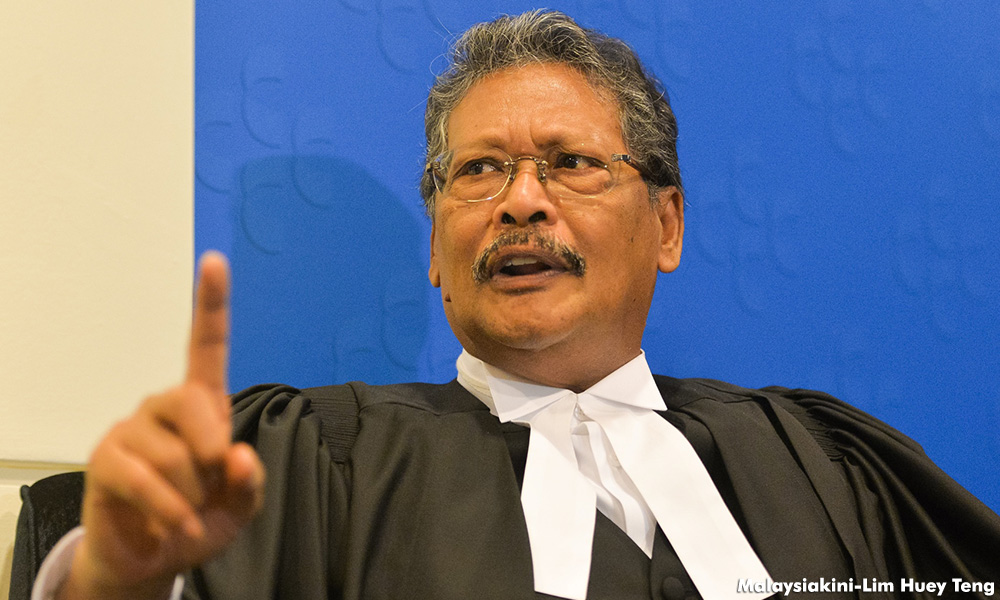
A renowned United Kingdom-based law expert, Venkat Iyer, says it is not necessary for the attorney-general (AG) to be a parliamentarian to be questioned in the august House.
Iyer said there may be advantages if the AG is part of the government as he would have a better understanding of policy, which is important if he wants to be professional.
A renowned United Kingdom-based law expert, Venkat Iyer, says it is not necessary for the attorney-general (AG) to be a parliamentarian to be questioned in the House.
Iyer said there may be advantages if the AG is part of the government as he would have a better understanding of policy, which is important if he wants to be professional.
The other advantage of having an AG as part of the cabinet is that his colleagues may be slightly more comfortable with him to share the necessary confidential information or to have a free and frank exchange before the AG can render advice.
“Although it has its advantages, I do not think it is necessary for those reasons to have an AG who is an MP,” Iyer said at a public lecture and discussion on the ‘Role of the Attorney-General: Time for a Rethink?’ organised by Penang Institute in George Town last night.
“It is perfectly possible for a country to get legal advice from an independent authority that is not part of Parliament, provided that the AG is still be able to come to Parliament when needed,” added Iyer, who was a former law commissioner of North Ireland.
“One of the possible solutions (to make the AG accountable) without him (or her) being an MP is to have a parliamentary select committee shadowing the AG’s Department or Chambers, as you call it in Malaysia,” he explained.
“This committee would periodically, frequently and regularly question the AG without him being part of the government. He can also appear before other committees; that would be a solution to the conundrum.”
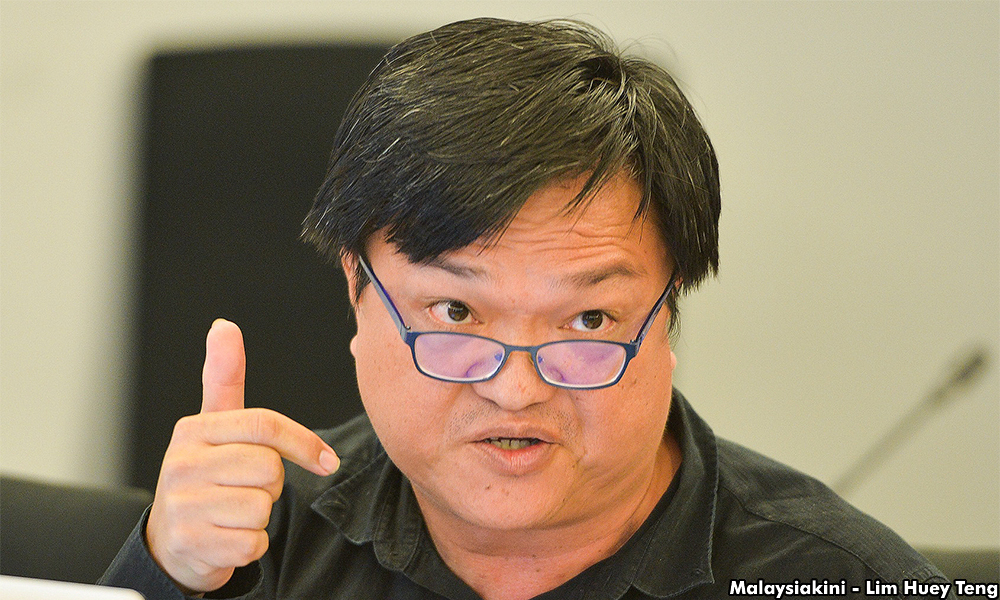 Accompanying Iyer at the event at the Wawasan Open University were senior lawyer Philip Koh. Penang Institute fellow Wong Chin Huat (
photo
) moderated the event, while the institute’s director and Bukit Mertajam MP Steven Sim gave the opening speech.
Accompanying Iyer at the event at the Wawasan Open University were senior lawyer Philip Koh. Penang Institute fellow Wong Chin Huat (
photo
) moderated the event, while the institute’s director and Bukit Mertajam MP Steven Sim gave the opening speech.
Iyer made the comments in response to Wong’s question on whether the AG should be a parliamentarian, if he (or she) should be elected or appointed as a senator.
One of the disadvantages of being an MP, Wong said, is that one cannot pretend to be apolitical or non-partisan.
On the other hand, having an AG as a parliamentarian would be an advantage, as he (or she) would be accountable to Parliament.
The AG's role has come into question with the curent attorney-general, retired judge Mohamed Apandi Ali, appearing to be delaying investigations into allegations of financial discrepencies involving Prime Minister Najib Abdul Razak over the 1MDB scandal and the RM2.6 billion donation deposited into his private bank accounts in 2013.
Lawyer Koh cited cases where the AG’s role and accountability are being debated, with the question remaining as to whether the AG “is so inviolate that he/she should not be questioned?”
'Power of Agong ursurped'
He pointed to the controversial National Security Council (NSC) Bill 2015 which has been passed by both the Dewan Rakyat and Dewan Negara in the last Parliament sitting.
According to the Malaysian Bar, the NSC Bill was not only unconstitutional , but also usurped the power of the Yang di-Pertuan Agong to declare emergency. However, the government says the Bill does not contravene the Federal Constitution.
“Former prime minister Dr Mahathir Mohamad had wanted to pass a similar legislation but the AG at the time, Abu Talib Othman, was objective enough to tell Mahathir it was not constitutional,” said the veteran lawyer and academician.
“He told Mahathir that he cannot have such a law without amending the Federal Constitution (Articles 149 and 150), which deal with seeking consent of the Agong to declare emergency,” Koh added.
He said he was reliably informed that Abu Talib had then gone to the cabinet to make his case, and that the cabinet was uneasy about the proposed law, while Mahathir himself somewhat backed down from insisting on it.
Koh also claimed to have heard that Mahathir had sought the opinion of the armed forces head and was told “we defend the constitution”.
“Even though Mahathir was very powerful, he still needed a cabinet paper to call for an emergency,” he said.
“The AG’s role is very crucuial. Abu Talib had a conviction to follow the rule of law, regardless that he served Mahathir faithfully during his tenure but here, the NSC Bill went through without question.
“Where is the AG in all this?” Koh asked.


Are you sure you want to delete this comment?
This action cannot be undone.