




Law expert: Rulers urging for NSC bill revision significant
The call by the Conference of Rulers for the government to revise the National Security Council (NSC) Bill will not stop the much-criticised Bill from being gazetted into law, says lawyer Syahredzan Johan.
The Federal Constitution states that a bill will be deemed as having received royal assent 30 days after it is presented to the Yang di-Pertuan Agong, whether or not the Agong consents to it, he said.
Constitutional expert and former law professor Abdul Aziz Bari said it was significant that the Conference of Rulers has called for a revision of the National Security Council Bill.
Abdul Aziz, who had joined the DAP, said the Conference of Rulers had powers to do so under Article 38 of the federal constitution but seldom utilised it.
“This is where they may discuss anything concerning the nation,” he told Malaysiakini today.
Article 38 (2) (c) states that the rulers '… can consent or withhold consent to any law and on making or giving advice on any appointment which under this constitution requires the consent of the conference or is to be made by or after consultation with the conference; and that it may deliberate on questions of national policy and any other matter that it thinks fit'.
To a question whether the rulers' call for a revision of the NSC bill would result in possible amendments, Abdul Aziz said this is remained to be seen.
“But the fact is that the rulers have made their call public and it is quite significant for it has not happened many times,” he said.
Lawyer Syahredzan Johan said the call by the Conference of Rulers for the government to revise the NSC Bill would not stop the much criticised bill from being gazetted.
The Federal Constitution states that a bill will be deemed as having received royal assent 30 days after it is presented to the Yang di-Pertuan Agong, whether or not the Agong consents to it, he said.
“Say no, or don’t give royal assent. It’s the same. It doesn’t matter. It will pass,” said Syahredzan, a former co-deputy chairperson of the Malaysian Bar’s constitutional law committee.
He said the government is under no obligation to amend the NSC Bill over the concerns raised by the Conference of Rulers.
If the government decides to amend the bill, he said, it must be tabled in the Dewan Rakyat and Dewan Negara again for Parliament to pass it.
Abdul Aziz agreed that the rulers have no power to object to the bill but they could do it through the Yang di Pertuan Agong as they did once before in 1983 and which triggered constitutional crisis.
This arose when the then Agong refused to sign a bill which sought to remove certain powers of the rulers concerning their assent to bills and their power to declare an emergency.
“The link here is that the Agong can be sacked by the conference should he refuse to do what the rulers decide.
“The problem with the government now is that the provision in Article 66 (4A) which gave Parliament the power to bypass the Agong was inserted behind the rulers' back by former premier Dr Mahathir Mohamad in 1994.
Abdul Aziz said Najib will just have to wait and see what happens during next 30 days.
Lead to dictatorship
The Conference of Rulers said yesteday it would write to the prime minister to call for some provisions in the Bill to be amended.
This came after attorney-general Mohamed Apandi Ali gave a briefing on the bill at the 240th meeting of the Conference of Rulers at Istana Negara, Kuala Lumpur.
Syahredzan said it is not clear why Apandi presented the bill to the Conference of Rulers, since the constitution only requires that a bill passed by Parliament is to be sent to the Agong.
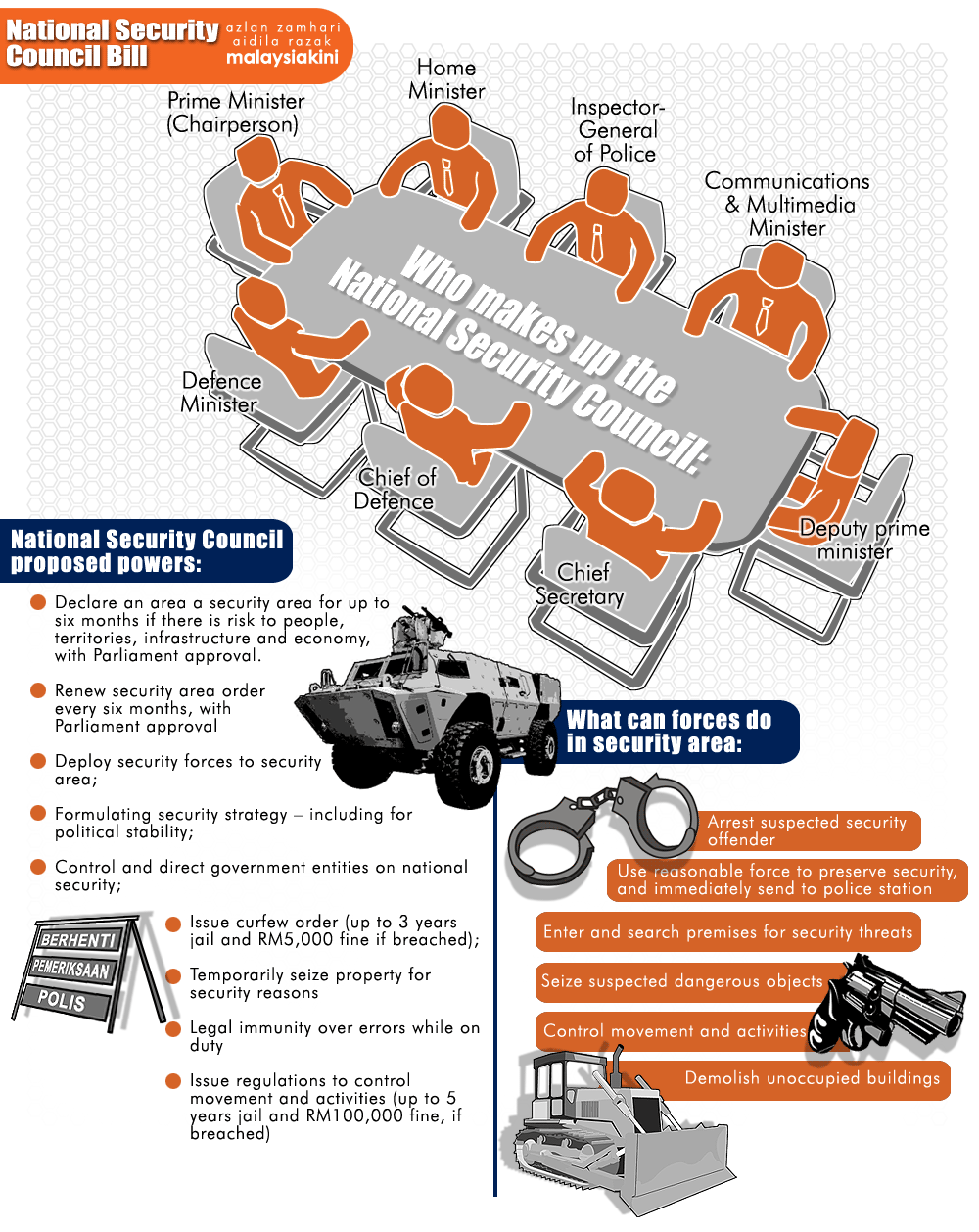
The NSC Bill, which critics say would lead to dictatorship, was passed by the Dewan Negara on Dec 22, 2015.
It provides the NSC chairperson – the prime minister – powers to declare an area a security area, and impose emergency-liked conditions over ill-defined provisions of “national security”.


Are you sure you want to delete this comment?
This action cannot be undone.