



Bar Council members laud 'politicians can't sue' decision
The Court of Appeal's decision yesterday that politicians cannot sue media for defamation for criticising them in their official capacity has been lauded by several members of the Malaysian Bar Council.
Bar Council members Andrew Khoo and Syahredzan Johan both welcomed this decision, with Khoo saying that it would make it easier for a responsible press to play their proper role as a watchdog.
The Court of Appeal's decision yesterday that politicians cannot sue media for defamation for criticising them in their official capacity has been lauded by several members of the Malaysian Bar Council.
Bar Council members Andrew Khoo and Syahredzan Johan both welcomed this decision, with Khoo saying that it would make it easier for a responsible press to play their proper role as a watchdog.
"This decision bodes well for a responsible press playing their proper role in their pursuit of transparent and accountable governance.
"Elected officials acting in their official capacity must be subject to scrutiny. Just as they rely on mass media to get their message out, they are subject to the fair comment and objective criticism of the mass media," he told Malaysiakini today.
Meanwhile, Syahredzan said this decision confirms the legal position that is already prevalent in certain jurisdictions "in the sense that a public official cannot bring an action for defamation".
However, he stressed that a distinction must be made between a public official suing for defamation in personal capacity and in their official capacity.
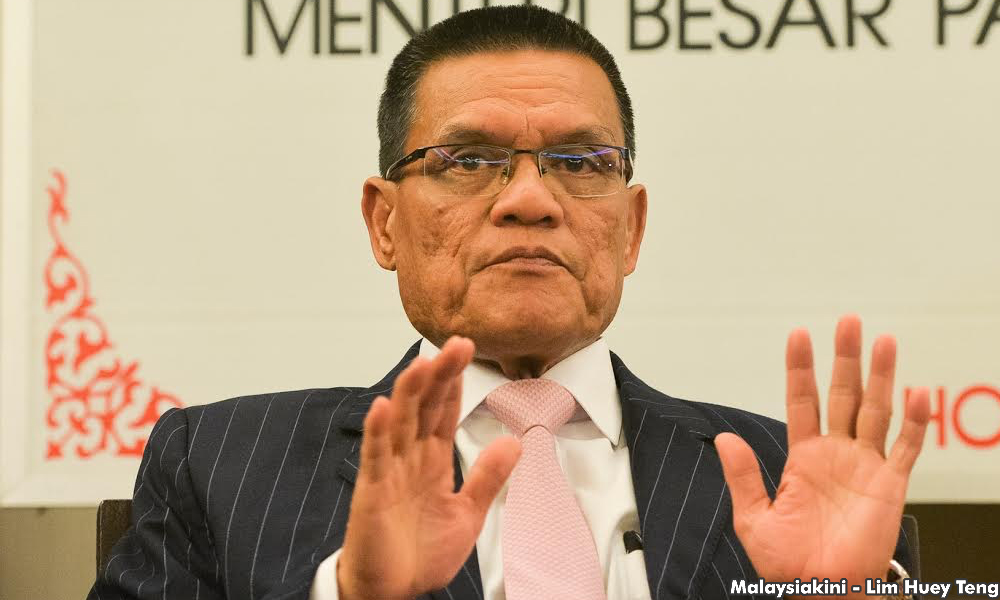
Syahredzan ( photo ) said the difference lies in what the media has theoretically reported on any such public officials originally.
For example, he explained, if a person who happens to be a public official is alleged by media to have committed a wrongdoing, and that person chooses to sue for defamation, that would be done in their personal capacity.
"Because if there were to be criminal charges, it would be taken against them (the public official), and not against the position," Syahredzan said.
Khoo added that criticism of a public official is different from an accusation or allegation that they have broken the law.
"An opinion is not the same as publishing a story based on investigative journalism.
"If you are going to accuse someone of wrongdoing, you will need to have your supporting facts, otherwise you can be sued," he said.
Syahredzan then cited the specific example of the allegations by the Wall Street Journal (WSJ) against Prime Minister Najib Abdul Razak.
Putting aside the issues with international borders, he said that he does not think this decision by the Court of Appeal would affect Najib's capability in suing WSJ.
"I would say, because the allegation is a personal allegation, then he (Najib) could and should still be able to sue for defamation in that case," he said.
WSJ first broke the news that RM2.6 billion had been deposited in Najib's personal bank accounts in July last year.
However, Najib consistently denied any wrongdoing and said that the money was a donation from the Middle East, which was concurred by the Malaysian Anti-Corruption Commission (MACC) and later on, the attorney-general Mohamed Apandi Ali, who also revealed that the donor was from Saudi Arabia.
Yesterday, WSJ again brought fresh allegations against Najib, saying that over US$1 billion had been deposited in the prime minister's bank accounts, a sum which includes the RM2.6 billion.
The US daily also claimed that most of the money came from 1MDB and not Saudi Arabia.
Something courts have to decide
This distinction between personal and public capacity, though, both Syahredzan and Khoo said, must be something the courts have to decide for themselves.
"This is where the courts will have to determine from the facts of the case in what capacity the original statement, the subject of criticism, was made," Khoo ( photo ) said.
Syahredzan also explained that this decision could potentially be reversed if the aggrieved party decides to file an application for leave to appeal at the Federal Court, as they would be the final arbiter for this case.
Meanwhile, the National Union of Journalists (NUJ) president Chin Sung Chew said that he, too, welcomes the decision by the Court of Appeal, adding that it was a wise decision.
"As a union, we think the media must always be protected, especially in cases that involve politicians.
"The media plays a role as a watchdog, this is part of our job. It is our duty to report the truth," he told Malaysiakini .
The Court of Appeal made this decision yesterday in allowing Utusan Malaysia's appeal to strike out the suit filed by Pahang Menteri Besar Adnan Yaakob.


Are you sure you want to delete this comment?
This action cannot be undone.