


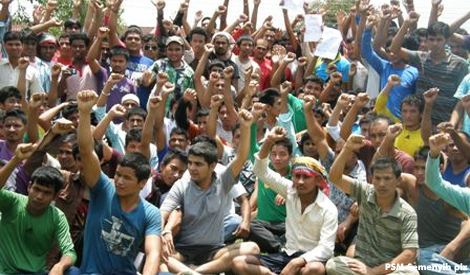

Gov't collected RM2.3b in foreign workers levy last year
The Home Ministry today revealed that it collected RM2.3 billion last year on foreign workers levy.
In a written parliamentary reply to Dr Siti Mariah Mahmud (Amanah-Kota Raja), the ministry also clarified that the levy hike on foreign workers had been postponed based on the feedback from industries which employs them.
However, the ministry did not set a new date.
PARLIAMENT The Home Ministry today revealed that it collected RM2.3 billion last year on foreign workers levy.
In a written parliamentary reply to Dr Siti Mariah Mahmud (Amanah-Kota Raja), the ministry also clarified that the levy hike on foreign workers had been postponed based on the feedback from industries which employ them.
However, the ministry did not set a new date.
It was responding to Siti Mariah who had asked about the government’s justification in increasing the foreign workers levy.
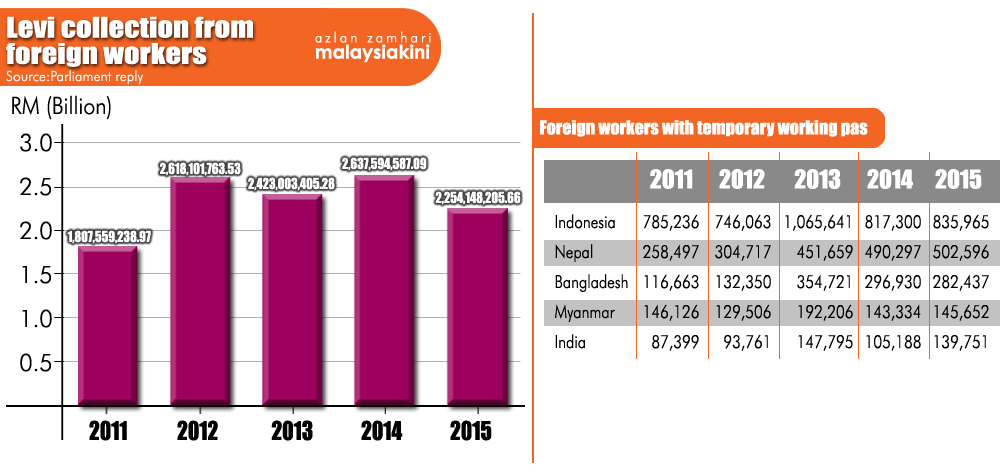
The ministry released data on the amount collected in foreign workers levy between 2011 and 2015, and foreign workers’ countries of origin.
The levy collected in 2011 was RM1.808 billion, and there was a huge spike in 2012 which registered a levy collection of RM2.618 billion.
In 2013, the amount of foreign workers levy collected dipped to RM2.423 billion, before increasing slightly to RM2.638 billion in 2014.
The levy amount plunged again in 2015 to RM2.254 billion.
According to the ministry, foreigners with visit passes for temporary employment (PLKS) in Malaysia mostly hail from Indonesia, Nepal, Nepal, Bangladesh, Myanmar and India.
The number of foreign workers in Malaysia had increased yearly, with Indonesia topping the list with 835,965 workers last year, followed by Nepal (502,596), Bangladesh (282,437), Myanmar (145,652) and India (139,751).
The government also announced that it was committed in restructuring the levy categorisation system, as it aims to improve its management of foreign workers’ affairs, and to encourage labour-intensive industries to further automate and mechanise their businesses.
In the restructured levy system, Category 1 will comprise businesses from the manufacturing, construction and service sectors; while Category 2 consists of the plantation and agricultural sectors.


Are you sure you want to delete this comment?
This action cannot be undone.