
Sue politicians fond of claiming 'misquoted', AG tells media
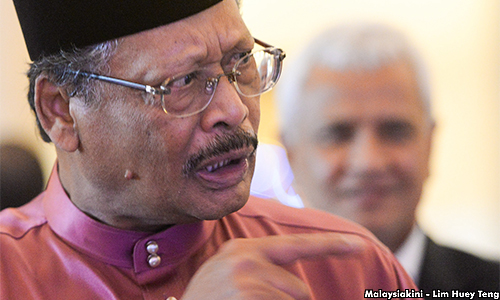
Attorney-general Mohamed Apandi Ali has a solution for the media against politicians who always claim that they have been misquoted when the evidence has proven otherwise, that is, to haul them to court.
He was responding to a question by the Sun daily ’s investigative journalist R Nadeswaran who lamented how media practitioners are accused of publishing false news but the politician in question can simply claim that he or she was misquoted.
Attorney-general Mohamed Apandi Ali has a solution for the media against politicians who always claim they have been misquoted when the evidence has proven otherwise, that is, to haul them to court.
He was responding to a question by the Sun daily ’s investigative journalist R Nadeswaran who lamented how media practitioners are accused of publishing false news but the politician in question can simply claim that he or she was misquoted.
“You have a legal remedy, sue him,” Apandi told Nadeswaran during the question and answer session after his luncheon talk to media practitioners and academicians in Kuala Lumpur today.
“Once in a while, you got to teach them a lesson. I, too, don't like people who lie when it (the evidence) is clear, it was tape recorded,” he said.
Apandi added how taking such politicians to court was not a normal thing as not all ministers like to claim misquotation.
“Only a few, one or two, so you pick up one or two, sue them,” he said.
Apandi earlier admitted that although it is unfortunate, prosecuting a person who had claimed that he or she was misquoted is not in the law.
“If you lodge a false police report then it is an offence. Giving a false statement is not an offence, (but making a) false statement in court is an offence.
“Lying is not an offence, criminally,” he added.
The attorney-general had started his lecture by apologising to media personnel for his "elusiveness".
“I’m very elusive with the reporters, when they call me for comment, I don’t answer. I know, that's the perception that you have received.
“I had to do that to avoid further controversies,” he said.
Apandi explained that his position requires him to be careful when giving comments.
“I’m following the deeds and sayings of the Prophet, say when it is needed, talk (and) comment when necessary.
“Despite you calling me many times and I refused to give comment, please forgive me,” he told the audience.
Inaccurate report can lead to loss, disturbances
In his lecture, Apandi said it was important for media practitioners to realise that the power they wield behind their pens and keyboards must be used responsibly.
“An inaccurate report which has been spread widely can lead to loss and irreparable disturbances.
“Although a particular report can be amended, but the damage has been done,” he said, addressing both the print and online media.
Meanwhile, citing Article 19 of the Universal Declaration of Human Rights (UDHR) which states how everyone is entitled to freedom of opinion, Apandi said the resolution was however not binding by law.
“As a sovereign and independent nation, we have the right and responsibility to determine what is the best point of reference for the rakyat and the country.
“As a member of the United Nations, we must respect the resolutions but if the point of reference is not suitable for Malaysia which has multiple races and religions, then it must be amended accordingly,” he said.
Before ending his lecture, Apandi posed a question to media practitioners.
“What benefit will the rakyat and the country receive when fake news is published?
“If the answer is in the negative, I ask for your cooperation as media practitioners to take prompt action in stopping news which are not beneficial,” he said.


Are you sure you want to delete this comment?
This action cannot be undone.