


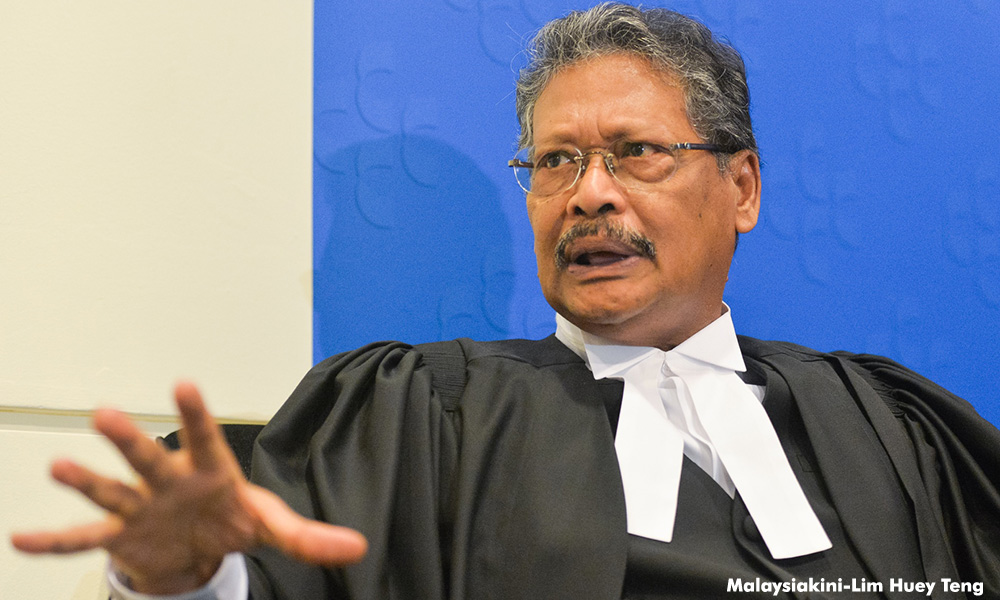

All three applications against AG Apandi to be heard separately
The High Court in Kuala Lumpur has today decided to hear the three applications against attorney general Mohamed Apandi Ali separately, following his decision not to prosecute prime minister Najib Abdul Razak, after the 1MDB fiasco.
The attorney-general had requested that the applications, which are for judicial reviews, be heard together.
However Justice Hanipah Farikullah decided in her chambers that there was merit in hearing the applications separately, after hearing submissions from lawyers representing former de facto Law Minister Zaid Ibrahim, former Umno Batu Kawan division vice-chief Khairuddin Abu Hassan and the Malaysian Bar.
The High Court in Kuala Lumpur has today decided to hear the three applications against attorney general Mohamed Apandi Ali separately, following his decision not to prosecute prime minister Najib Abdul Razak, after the 1MDB fiasco.
The attorney-general had requested that the applications, which are for judicial reviews, be heard together.
However Justice Hanipah Farikullah decided in her chambers that there was merit in hearing the applications separately, after hearing submissions from lawyers representing former de facto Law Minister Zaid Ibrahim, former Umno Batu Kawan division vice-chief Khairuddin Abu Hassan and the Malaysian Bar.
Lawyer Fahri Azzat for the Bar said the judge will hear Zaid first, followed by Khairuddin and then the Bar.
It is understood that the judge allowed the applications as although the facts are almost similar, the pleas sought were different.
Lawyer Americk Sidhu said it was more convenient to have the three matters heard separately.
Justice Hanipah fixed July 29 to hear Zaid's application for leave.
Khairuddin's application will be heard on Aug 12, while the Malaysian Bar's case will be on Aug 25, both also for leave.
Former Federal Court judge Gopal Sri Ram appeared with Americk and Amarjit Singh appeared for Zaid.
Senior federal counsel Shamsul Bolhasaan and Awang Armadajaya Awang Mahmud appeared for Apandi and the chambers.
Lawyers Mohamad Hanif Khatri Abdulla and Muhammad Rafique Rashid Ali appeared for Khairuddin, while senior lawyer Tommy Thomas and S Sivaneindiren appeared for the Malaysian Bar.
Zaid, the former Kota Baru MP, had filed a judicial review application on Feb 2 challenging Apandi's decision not to charge Najib.
He had said the decision not to charge Najib by the attorney-general was unreasonable and constituted an improper exercise of discretion.
The former minister pointed out that the attorney-general is under a constitutional duty to exercise the discretion conferred on him by the provisions of Article 145 (3) of the Federal Constitution, with due consideration, reasonably in public interest and with a sense of justice.
Zaid said based on reports and statements published by the Malaysian Anti-Corruption Commission (MACC) and other agencies investigating the financial affairs of 1MDB and SRC International, there was strong evidence of wrongdoing on the part of Najib, which indicates possible offences under the Anti-Money Laundering, Anti-Terrorism Financing and Proceeds of Unlawful Activities Act 2001 and the Financial Services Act 2013, which may also extend to criminal breach of trust and other offences under the Penal Code.
The Malaysian Bar, through its president Steven Thiru, also filed a judicial review application in March on the grounds that the attorney-general's discretionary powers are not absolute or unfettered.
This is over Apandi's decision to clear Najib who allegedly received deposits of RM42 million from state-owned SRC International and RM2.6 billion from an offshore account into his personal bank accounts.
The Bar is also seeking for Apandi to be disqualified from making further decisions relating to the case, requesting it to be delegated to the solicitor-general, as the attorney-general had reportedly advised Najib on the case.
Khairuddin's application is slightly different as it sought to challenge Apandi's appointment as the attorney-general, and also wants a royal commission of inquiry on the three investigations related to 1MDB.


Are you sure you want to delete this comment?
This action cannot be undone.