



'Durian gatherings good, but race-based digital mall bad for national unity’
The Coalition of Malaysian (Comango) NGOs lauded the government’s grassroots-level programmes like the ‘Rukun Tetangga’ (neighbourhood association) where people come together for durian-eating fiestas, but slammed certain ministers for further inciting racial disharmony by building a race-based digital mall in response to Low Yat Plaza brawl last year.
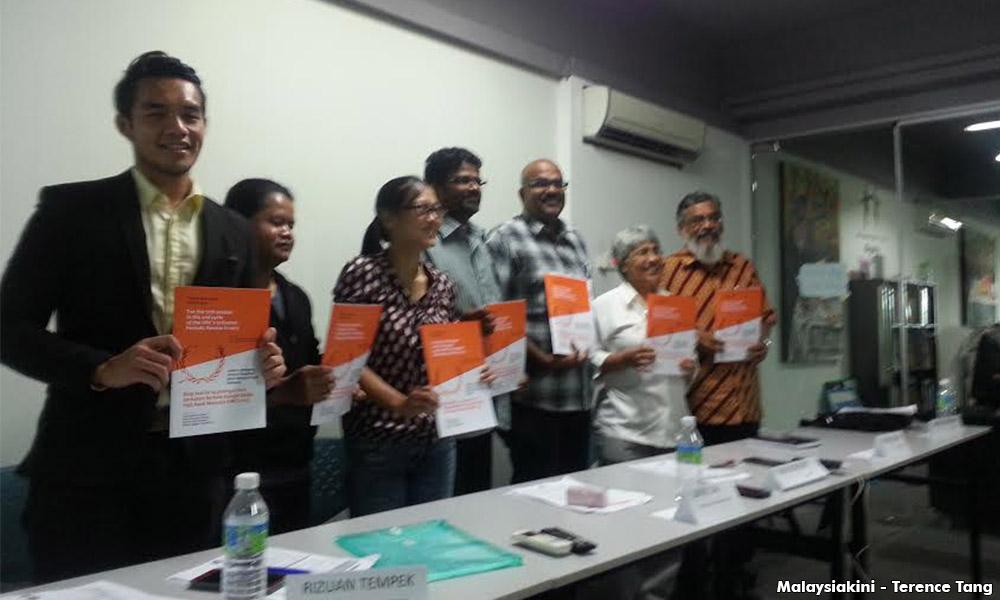
Human rights NGO Komas director Jerald Joseph was commenting on the state of national unity and social cohesion at the mid-cycle assessment of the United Nations Universal Periodic Review (UPR) for Malaysia today, at the North South Initiative centre in Petaling Jaya.
The Coalition of Malaysian (Comango) NGOs lauded the government’s grassroots-level programmes like the ‘Rukun Tetangga’ (neighbourhood association) where people come together for durian-eating fiestas, but slammed certain ministers for further inciting racial disharmony by building a race-based digital mall in response to Low Yat Plaza brawl last year.
Human rights NGO Komas director Jerald Joseph was commenting on the state of national unity and social cohesion at the mid-cycle assessment of the United Nations Universal Periodic Review (UPR) for Malaysia today, at the North South Initiative centre in Petaling Jaya.
“The government has shown some initiatives (in encouraging national unity) but it’s not enough. The administration has established a national unity coordinating council comprising a group of experts but we wonder why (most of its findings) were not made public,” Jerald claimed.
“One of the council and department of national unity and integration’s initiatives was to organise grassroots-level programmes such as ‘Rukun Tetangga’.
“Community activities like durian-eating gatherings are good, but the government should also track the effectiveness of these activities in improving national unity.
“This initiative is unlike the administration’s response to last year’s Low Yat Plaza incident (the July 12 phone store punch-up and ensuing riot with allegedly racial sentiments).
“A particular minister’s response was to build a race-based (digital mall) alternative to Low Yat,” the Komas director said.
This really counters the messages being preached by ‘1Malaysia’, Jerald opined.
“How can a minister response to an allegedly racially charged incident by building a race-based centre?” he asked.
Besides speaking on national unity, other representatives from NGOs Proham, Women’s Aid Organisation, Suaram, Empower, and indigenous people’s rights stalwart JKOASM, also assessed the government’s progress in other issues.
Among the human rights recommendations the Malaysian government accepted for the UN’s Universal Periodic Review between 2013 and 2018 were:
-
Repeal the Sedition Act (not implemented with situation regressing);
-
Raise the standards of press freedom and to adapt the Printing Presses and Publication Act to facilitate independent news media coverage (not implemented with situation regressing);
-
Promote and protect the rights of all people to worship in peace and security without discrimination or restriction (not implemented with situation regressing);
-
Step up efforts to reduce maternal mortality, including through an increased access to family planning (fully implemented with perceived progress); and
-
Enhance efforts on anti-trafficking in persons (fully implemented with perceived progress).
Comango also announced that Malaysia had fully implemented 20 percent of the 60 UN UPR recommendations the country had accepted.
The coalition also urged the government to take its UPR commitments seriously and to make its UPR pledges public – in Malay, Mandarin and Tamil.


Are you sure you want to delete this comment?
This action cannot be undone.