


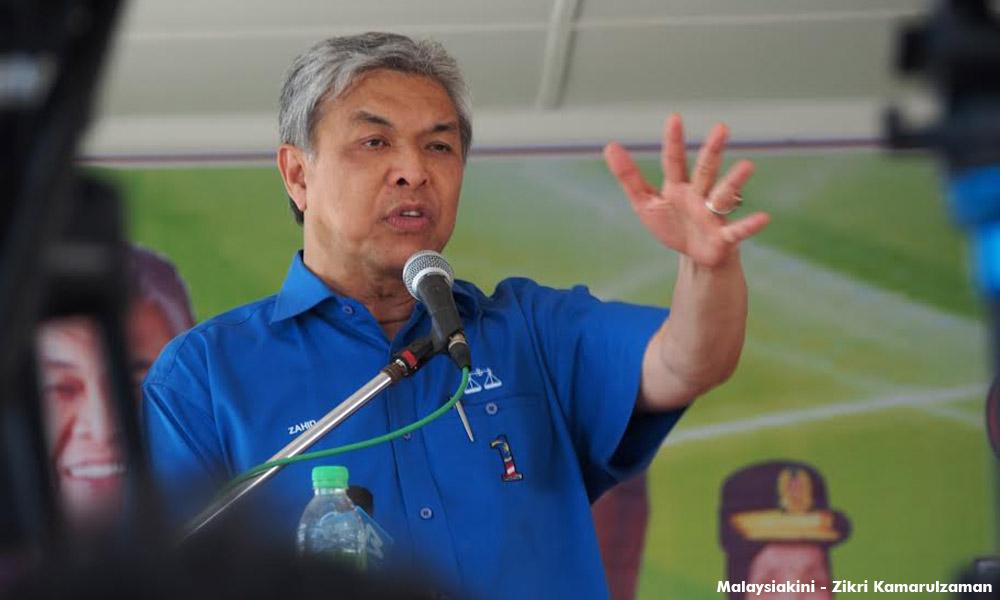

Zahid: Gov't still figuring out if refugees are truly Rohingya
The government is still in the process of determining the status of refugees who have been detained for almost one year at the Belantik detention centre in Sik, Kedah.
Deputy Prime Minister Ahmad Zahid Hamidi said this when asked for a response to an Amnesty International report on conditions of the refugees who were among those rescued last year.
"We are still checking whether they are really Rohingyas or Bangladeshi because there are no documents being issued to them by either the Bangladeshi government or the government of Myanmar," he told a press conference at the Royal Malaysian Air Force Base.
Zahid earlier welcomed the arrival of 68 Syrian refugees from 18 families who will be temporarily resettled in Malaysia.
Zahid said the government will also cooperate with the United Nations High Commissioner for Refugees (UNHCR) on the matter.
"We would like to work and see whether they can be issued with UNHCR cards," he said.
The Belantik centre is the temporary home for 1,158 Bangladeshis and Rohingya refugees who fled persecution and were found stranded near Langkawi last year.
Malaysia had signed a tripartite agreement with Thailand and Indonesia following what was dubbed as a humanitarian crisis.
Amnesty decries 'detention horror'
In a statement today, Amnesty said that in addition to Rohingya refugees, the boats that arrived in Malaysia were also carrying some 700 people from Bangladesh, many said to have been victims of human trafficking.
It noted that almost all of those from Bangladesh in both Indonesia and Malaysia have since been repatriated.
Amnesty International, however, said it was informed by sources that 65 from Bangladesh remained in detention at the Belantik camp.
The Amnesty report and statement were released following a visit to Malaysia to investigate the fate of the 'boat people' after one year.
“We went to Malaysia to investigate the fate of the boat crisis survivors and found that, for hundreds of them, the suffering and human rights abuse continue,” said Khairunissa Dhala, a refugee expert at Amnesty International.
“Women, men and children fled from persecution in Myanmar, only to undergo the horror of being abandoned at sea by the unscrupulous gangs who run the sea routes.
"Malaysia should have been their place of safety – but instead they have spent a year in detention, with no end in sight,” she said.
One of the things agreed upon in the tripartite agreement was for the countries to provide temporary shelter and resettle the refugees in a third country within one year.
To date, Amnesty said approximately 50 Rohingya refugees from the group in Malaysia have been put forward for resettlement to a third country.


Are you sure you want to delete this comment?
This action cannot be undone.