


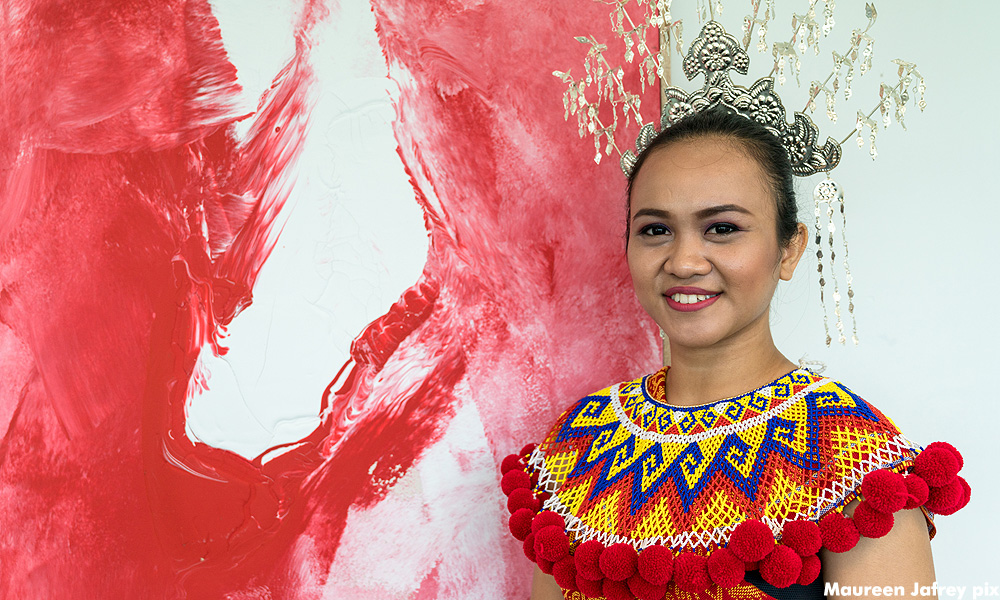

Experiencing the Ibans' Pua Kumbu textile through Google app
COMMENT There has been a lot of talks about Sarawak - the land of the Hornbills - being the last frontier in Malaysian politics.
But, it is not surprising how much - in fact, I should say, how little - West Malaysians know about the Iban culture and the Pua Kumbu and the Gawai festival, which is celebrated on June 1 every year.
Most West Malaysian kids, especially those growing up in the urban cities of Kuala Lumpur and Petaling Jaya, would never have truly experienced the beauty of the Pua Kumbu if not for the labour of love by one Bidayuh researcher, Dr Welyne Jeffrey Jehom.
COMMENT There has been a lot of talks about Sarawak - the land of the Hornbills - being the last frontier in Malaysian politics.
But, it is not surprising how much - in fact, I should say, how little - West Malaysians know about the Iban culture and the Pua Kumbu and the Gawai festival, which is celebrated on June 1 every year.
Most West Malaysian kids, especially those growing up in the urban cities of Kuala Lumpur and Petaling Jaya, would never have truly experienced the beauty of the Pua Kumbu textile if not for the labour of love by one Bidayuh researcher, Dr Welyne Jeffrey Jehom.
The researcher and lecturer from Universiti Malaya has spent over a year and a half to research and document the traditional Pua Kumbu weaving industry in Sarawak.
She and three of her postgraduate students - Wong Pui Yi, Janet Rata Noel and Ulsha Nicholl Ganuh - had travelled on a number of occasions to this little village Kapit in the interiors of Sarawak, where they captured on video camera the story of the Pua Kumbu in two longhouses - Rumah Gare and Rumah Engsong - which I believe will mesmerise future generations of Malaysians.
And, the exhibition on the Pua Kumbu is currently being held at the Art Gallery of Universiti Malaya until the end of this month. The Art Gallery is located at Level 5 of the new chancellery building behind the Dewan Tunku Canselor.
The exhibition, which is of international standards, is sadly attracting only Western tourists, but not the local young people despite it using the latest polysensory intermedia. Young children would be fascinated to use Google apps alongside what is otherwise a traditional exhibition to learn a part of the Iban culture which is fast becoming extinct.
(I have requested a professional photographer Maureen Jafrey to share her photographs for more people to appreciate both her photography skills and the exhibition.)
Ignorance is not bliss
Pua what? I can almost hear the question being asked. In a multicultural Malaysia, where East and West Malaysia are supposed to be one nation, the ignorance about the Pua Kumbu cannot be forgiven.
It is certainly not Gua Mulu, which is probably more popular than the Pua Kumbu textile. While the Mulu caves have been promoted overly by Tourism Malaysia, the Pua Kumbu textile industry is hardly given the highlight.
The name Pua Kumbu was first introduced to me by one Professor Harold Thwaites of Sunway University who spoke about the polysensory intermedia as a new technology that can be used to enhance exhibitions.
Young people who visit the exhibition would be fascinated to pre-install the Pua Explorer apps from Google Play. “The Google app will be able to digitally tell the story of the woven pua motifs that are geometrically stylized within the designed patterns of the Pua Kumbu,” explains Dr Welyne.
With a smartphone camera pointed at the Pua Kumbu textile, the young person can pick up a story quickly and watch it digitally. “This is what bridges the young people to a part in the world of the Iban community that the exhibition tries to promote,” she says.
Via a quick check in Wikipedia, Pua Kumbu is a “traditional patterned multicolored ceremonial cotton cloth used by the Iban” which is woven by hand, and requires a lot of skills, patience and long hours to produce just a piece of cloth. It is often used as a “ceremonial blanket”, besides also being used as shawls and tailored as clothes.
One month-long exhibition
The exhibition will run between now and June 30. The doors are open from 9am through 5pm. The ticket includes traditional cuisines from Sarawak such as the famous non-spicy Sarawak laksa and the kueh lapis (layered cake).
There are also traditional Iban dance performances by local Sarawakians in conjunction with the Gawai festival.
Themed ‘Textile Tales of Pua Kumbu - the Sacred Journey’, the exhibition is the result of many hours of work by a team of more than 20 academicians and professionals in various areas of discipline such as sound, lighting and virtual reality photography.
I would be ashamed if I claim to be a Malaysian, yet I do not give my children an opportunity to experience for themselves the Iban culture and learn to at least appreciate the Pua Kumbu textile.
STEPHEN NG is an ordinary citizen with an avid interest in following political developments in the country since 2008.


Are you sure you want to delete this comment?
This action cannot be undone.