


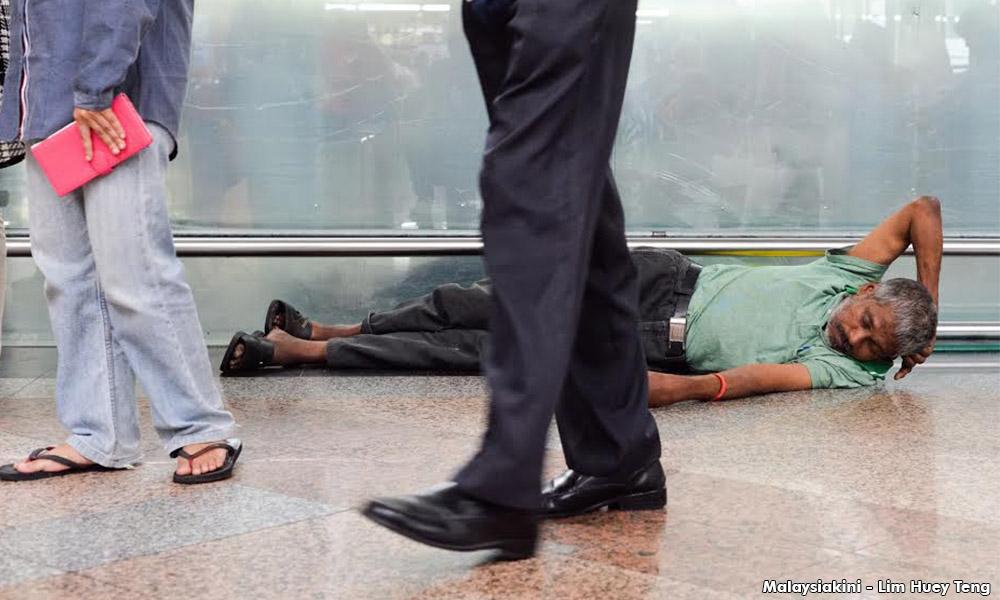

Go out in the night and help the homeless, say activists
As bureaucracy among government agencies rears its ugly head when offering a lifeline to the homeless, human rights activists say it should be shackled immediately.
Many of them feel bureaucracy has long plagued the homeless, forcing some to resort to begging as it took too long for help to arrive.
Persatuan Belia Nur Kasih patron, Senator Shahanim Mohd Yusof, said bureaucracy was the main issue faced by the homeless when attempts are made to improve their lives.
She said the association found that most of the homeless people complained of facing difficulty in obtaining aid from the relevant agencies due to issues such as not having a permanent home address, employment, identification documents, or marriage certificates and divorce certificates.
"If there are requests (for help) from them (homeless), the tithe-related agencies, or the Social Welfare Department should not reject them straight away.
“Instead, they should go down to the ground and investigate... do not only refer to the application filed, (but) go and see where they sleep," she told Bernama in a recent interview.
"Do not simply work until 5pm. Try to come out during the night and see the (dilemma or situation of the) homeless. What is the point of having skyscrapers, but below them, there are many homeless people?" asked Shahanim.
Meanwhile, Malaysian International Humanitarian and Welfare Organisation (MyWelfare) secretary-general Nurainie Haziqah Shafi'i said the relevant agencies should work together, and go down to the ground with NGOs to understand the situation and problems faced by the homeless.
"When we deal with people in need, the less fortunate, they may have problems such as not being able to read well, no permanent home address, or have lost important personal documents.
"Such matters can cause bureaucratic problems to rise. At the end of the day, we want to help, not to further trouble those who are already in difficulty," she said, often visiting the homeless around Masjid Negara, to help them out.
She added that tithe collections should also be utilised as best as possible, including to help the homeless.
Human rights activist Norhelmy Ahmad said based on his experience working with an NGO in Johor Baru, he found it was easier to approach and delve into the problems of the homeless during the night.
"In the daytime, they may not be at their 'port', as they have either gone out to beg or perform odd jobs. They should be approached at night," he said.
- Bernama


Are you sure you want to delete this comment?
This action cannot be undone.