



Economist: Umno warlords out; GLCs, opposition in
The control of large portions of Malaysia’s corporate sector has been concentrated in the hands of the minister of finance over the past decade, at the expense of Umno warlords.
At the same time, according to the Universiti Malaya economist Edmund Terence Gomez, opposition elected representatives are being appointed as directors of state-owned enterprises, even though they had previously criticised such practices.
The control of large portions of Malaysia’s corporate sector has been concentrated in the hands of the minister of finance over the past decade, at the expense of Umno warlords.
At the same time, according to the Universiti Malaya economist Edmund Terence Gomez, opposition elected representatives are being appointed as directors of state-owned enterprises, even though they had previously criticised such practices.
“We had a time when there was a very fragmented Umno. There were many Umno leaders who had a key presence in the corporate sector. They were a source of patronage… They were powerful. They were warlords with interests in the corporate sector.
“That is not the case today. Today you see not a fragmented Umno control over the corporate sector, but a well-integrated executive controlling the corporate sector.
“That is the shift. We have an executive who is also the finance minister; we are talking about an extreme concentration of economic and political control,” Gomez told a public lecture held in the university’s main campus today.
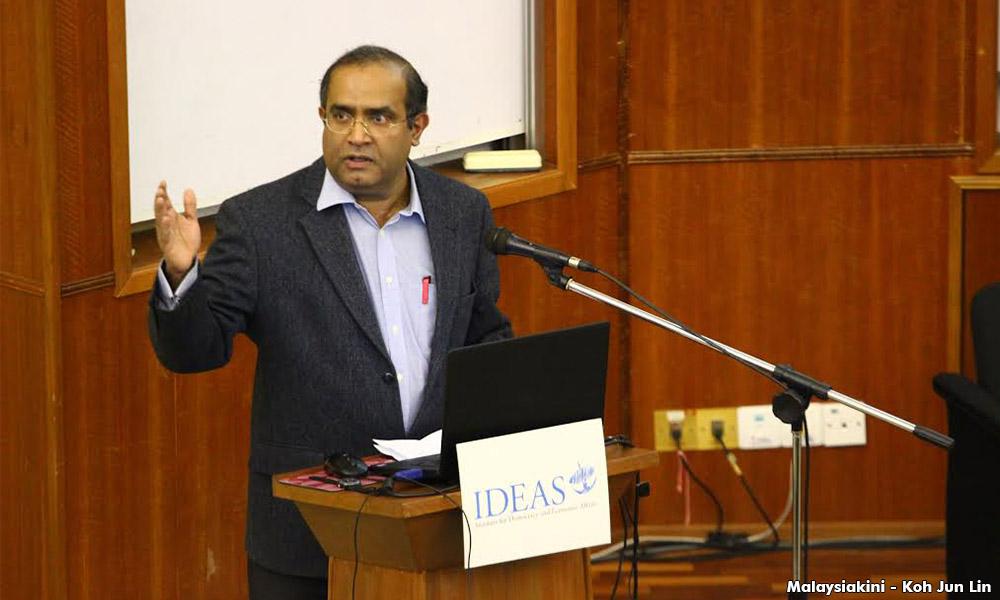 Gomez (photo) was presenting the preliminary findings of study of seven government-linked investment companies (GLICs) and the Top 100 public-listed companies in Malaysia, up to 2013.
The seven GLICs are Minister of Finance Inc, Permodalan Nasional Bhd, Khazanah Nasional Bhd, the Employees Provident Fund, Lembaga Tabung Angkatan Tentera, Lembaga Tabung Haji and Kumpulan Persaraan Diperbadankan.
The research was funded through a grant from the Institute for Democracy and Economic Affairs (Ideas), where Gomez is a fellow.
The professor of political economy said that in 1996, many directors in Malaysia’s Top 100 companies had links with Umno.
This included the then Malaysian Airlines CEO Tajuddin Ramli, Tengku Adnan Tengku Mansor and Ahmad Zahid Hamidi who are now federal ministers, then New Straits Times Press group editor-in-chief Abdul Kadir Jasin and three of then prime minister Dr Mahathir Mohamad’s sons.
Gomez said this as he zoomed past seven pages of slides filled with names of purportedly Umno-linked individuals, and the companies they headed.
Opposition parties too moving in
However, in 2013, there were only eight Umno members and four former Umno leaders in the list. Instead, the directors of these companies are mainly former bureaucrats.
At the same time, opposition leaders were beginning to show up on the list.
“Opposition parties that control state governments are taking their members of Parliament and state assemblies and making them directors of their GLCs.
“We are beginning to see evidence of that even among public-listed companies. It is a fact among non-publicly listed companies.
“This is an issue we must talk about. Umno is moving out, and opposition members are moving in. Now this is an interesting change of events. How do you interpret this?
“Are opposition members copying Umno, while Umno has moved on to do other things in different ways? We need to talk about it. I raise this now because opposition members used to be very critical of these issues, but are now doing the same,” Gomez said.
The two opposition members are Telok Kemang MP Kamarul Baharin Abbas and Subang MP Sivarasa Rasiah. The two PKR parliamentarians are directors of Kumpulan Perangsang Selangor Bhd, which is linked to the Selangor government.
Meanwhile, GLICs have direct ownership over 427 companies as of 2013, Gomez said, whether as parent companies of a subsidiary, a golden shareholder or a minority shareholder.
These include many high-value companies, which reflect the concentration of wealth that is taking place. These companies may also own other companies, even up to 10 companies down the chain.
Explaining how the phenomenon came into being, Gomez said he is not sure if Umno is even aware of the shift that has transpired.
It started in the 1997 fallout between Mahathir and his protégé Anwar Ibrahim. In order to remove the directors who are Anwar’s supporters, Mahathir resorted to using GLCs taking over their companies.
After that, there were not many bumiputera capitalists that the GLCs could transfer the companies to.
Since then, successive prime ministers continued Mahathir’s practice of holding both the prime minister’s and finance minister’s post because it has become so powerful.
Gomez said he is not against state-owned enterprises controlling a large swathes of the corporate sector, and argued that such companies have a social role to play.
However, such extreme concentration of wealth with little check-and-balance is unhealthy, he said.


Are you sure you want to delete this comment?
This action cannot be undone.