



Anwar fails in bid to cite Syariah Court registrar for contempt
The Syariah Appellate Court today rejected Anwar Ibrahim's application to cite the Kuala Lumpur Syariah Court registrar for contempt in the ongoing qazaf application against Mohd Saiful Bukhari Azlan.
The PKR de facto leader filed the contempt application on June 2 after registrar Muhammad Khairul Nizam Kassim barred Anwar's lawyer Mohd Rafie Mohd Syafie from attending a case management session on May 16.
The Syariah Appellate Court today rejected Anwar Ibrahim's application to cite the Kuala Lumpur Syariah Court registrar for contempt in the ongoing qazaf application against Mohd Saiful Bukhari Azlan.
The PKR de facto leader filed the contempt application on June 2 after registrar Muhammad Khairul Nizam Kassim barred Anwar's lawyer Mohd Rafie Mohd Syafie from attending a case management session on May 16.
However, judge Md Yusup Che Tah found that the registrar acted according to procedure as the wakalah agreement which verifies that Mohd Rafie was appointed by Anwar was not in the registrar's records.
The court found while there was a receipt that the document was filed, the document was not provided to the court or to the opposing legal team.
The court also found that there would be no impact because the hearing of the qazaf proceedings would go on as scheduled in October.
Under syariah court regulations, a lawyer must be formally appointed by his client through an agreement (wakalah) witnessed by the registrar. The document is then filed in the court records.
Mohd Rafie said he had received instructions to file a review on the decision with the Yang di-Pertuan Agong in the next two weeks.
The Syariah Appellate Court is the highest court in the syariah judicial system. Appeals against the Appellate Court is made to the Agong.
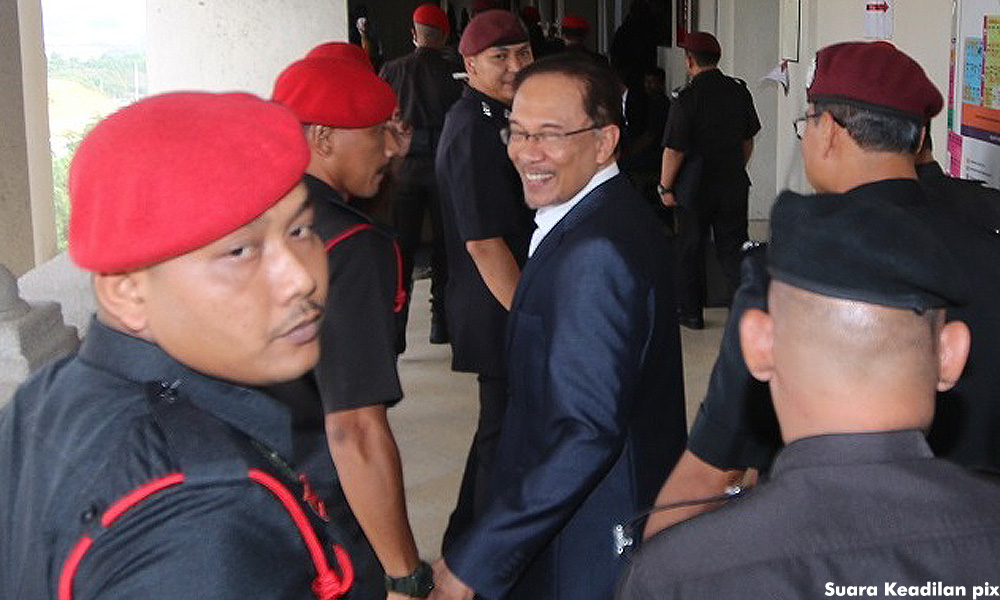
Anwar, who was present today, questioned how this could happen.
"We fail at the Syariah Court so we will appeal to the Agong as per the procedure, because we have submitted (the wakalah) to the registrar but now the records are no longer there," he said.
Anwar is serving a five-year sentence for sodomising Saiful Bukhari, a charge which he has consistently described as "politically motivated" and denied.
However, the government has argued otherwise.
Anwar filed a qazaf claim against Saiful Bukhari, for failing to present four witnesses to support his accusation that Anwar had sodomised him in 2008.
Qazaf under syariah law is the offence of accusing someone of having illicit sex, without proof.
Editor's Note: Due to inaccuracies, an earlier version of this article has been replaced with the above. We regret the error.


Are you sure you want to delete this comment?
This action cannot be undone.