



Adult awareness training important to tackle child sexual abuse
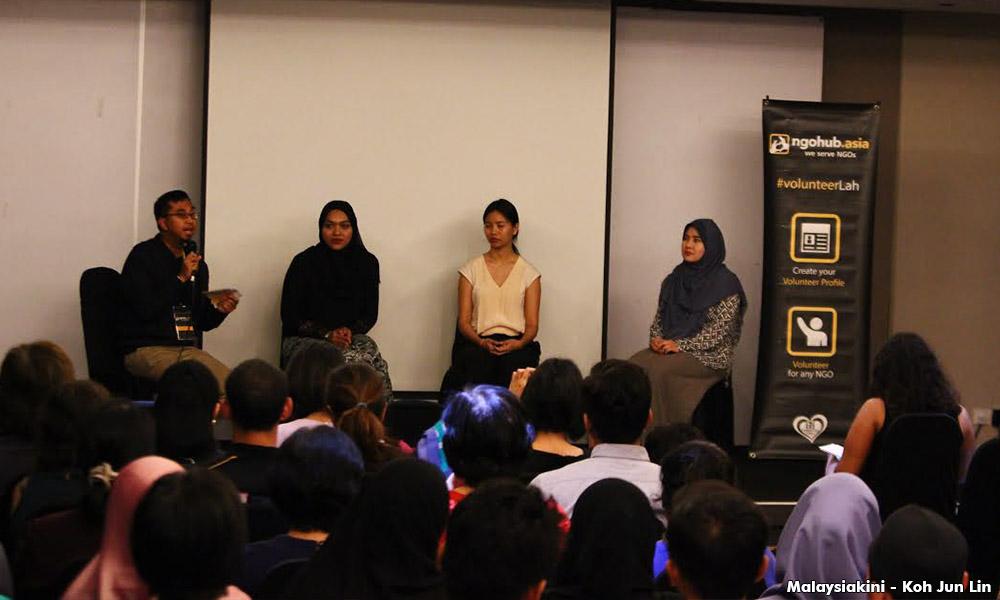
Panellists at a forum on child sexual abuse last night have stressed on the importance of awareness training for adults, in order to tackle the issue.
In lieu of formal training however, one panellist Dr Zahilah Filzah Zulkifli said adults should seek out information online about child sexual abuse by themselves, in order to be equipped with knowledge on the issue.
Panellists at a forum on child sexual abuse last night have stressed on the importance of awareness training for adults, in order to tackle the issue.
In lieu of formal training however, one panellist Dr Zahilah Filzah Zulkifli said adults should seek out information online about child sexual abuse by themselves, in order to be equipped with knowledge on the issue.
“Training is good. By all means, I support training, but remember that training does not have to be formal. You can go home, and you can Google and read about child sexual abuse.
“You need to speak to people. You won’t know that one time you talk to someone that you have learnt the perpetrators (of child sexual abuse) are usually in the family; the child may not exhibit signs of depression; you can get help from social welfare by calling up 15999 or going to the hospital - this three information can help people.
“This is what I am urging you guys to do, because this is a crisis. I can’t wait for everyone to go for training,” said the representative from the Malaysian Advocates for Child Health.
The forum was organised by NGOHub in Kuala Lumpur.
 The panellists including Zahilah (photo) had earlier highlighted that adults often have misconceptions about what constitutes the sign of child sexual abuse.
Even when a child under their care reports abuse, the adults don’t necessarily know what to make of it, or what to do next and where to get help.
Zahilah, a paediatrician who also heads the Suspected Child Abuse and Neglect (Scan) team of a government hospital, said 80 percent of cases of child sexual abuse would have 'normal' medical findings.
This may cause the child’s parents or teachers who brought the child to the examination to doubt the child's testimony, but this shouldn’t be the case.
She explained that the abuse does not necessarily involve penetration but such inducing the child to watch pornographic videos with the perpetrator, molestation, talking dirty to a child, or by causing the child to perform oral sex on the perpetrator.
Even when vaginal or anal penetration has taken place, the tears in these areas may have been superficial. In these cases, the wounds could heal quickly – in about 20 to 40 hours.
“That is why in the court of law, what is more important is not that. It is the effectiveness and consistency of the child report,” Zahilah said.
She said a child sexual abuse victim may also be cheerful in appearance, to the extent that nurses have questioned whether the child was telling the truth.
She said this is because the child has yet to understand that she has been taken advantage of, even though the child may have been uncomfortable during his or her ordeal.
To the child’s mind, she said, the child had merely followed an adult’s instructions, and got a treat as a reward afterwards.
“He wasn’t depressed. He wasn’t sad. He doesn’t know what is going on, because he doesn’t know what sex is.
“In Malaysia especially, the culture is, listen to adults. We tell that to all children,” she said, regarding a case where a boy was sodomised by his father and was given ice cream afterwards.
Important to seek justice for children
Zahilah also stressed on the importance of allowing multiple interviews with the child to take place, and for the child to be brought to the crime scene as part of the evidence gathering process.
She said while this can be distressing for the children and their parents, it is important to seek justice for the children, including for the sake of the children’s future wellbeing.
 Speaking to reporters later, another panellist Petra Gimbad (photo) explained that awareness training sessions for adults include training on how to handle disclosures on child sexual abuse, the myths and laws regarding the issue, reporting system for reporting child sexual abuse.
If requested, there are also training modules on how to report child sexual abuse in a sensitive manner, she said.
Her organisation Projek Layang-Layang is among several groups that offer the training.
Earlier during the forum, Gimbad said that teaching children about sexual abuse is important, but it is not enough if adults are aware of the issue too.
“The way we look at our work is that we need to raise awareness amongst adults because, to a large degree, what is the point of giving a child that awareness only for the child to discover that there is no system of support around them […]
“We feel that something needs to done structurally to empower as well as to protect children. That’s why we are targeting adults rather than children,” she said.
Meanwhile, Protect and Save the Children representative Farah Iylia Fauzi said there had been 38 reported cases of child sexual abuse this year, but no convictions.
In addition, parents are often reluctant to report instances of child sexual abuse even when they become aware of it.
“They (the parents) are looking at facing shame and what society is saying about them not being good parents.
“We always encourage parents to report because we need the number of reporting to increase, so hopefully we can do something about it as now the conviction rate is still very low,” she said.


Are you sure you want to delete this comment?
This action cannot be undone.