



Trump and Ali Tinju bad news, but good revenue
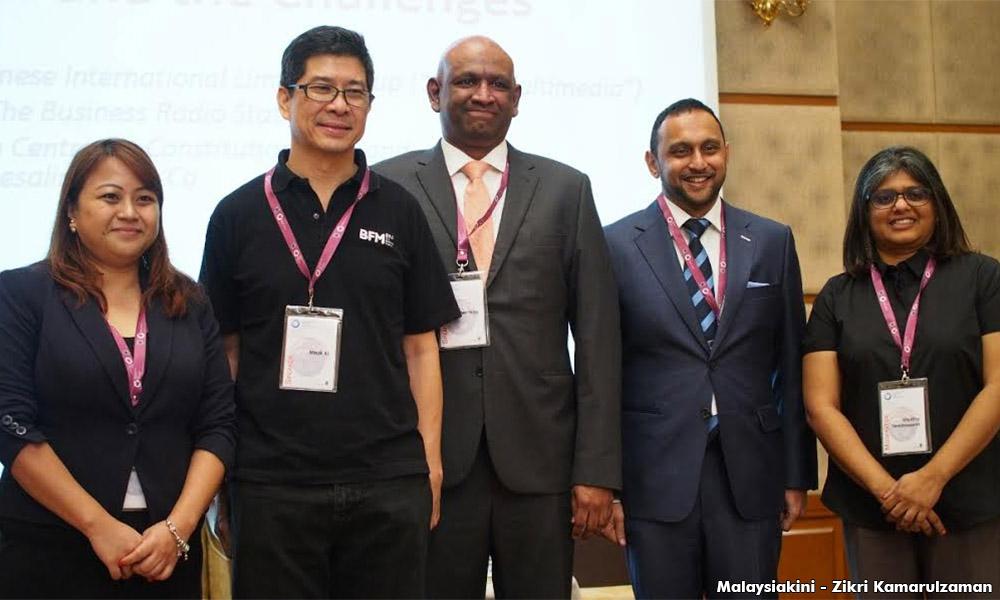
BFM radio station boss Malek Ali is of the opinion that providing too much media coverage for "colourful characters" is a disservice to the public.
As examples, he cited US presidential candidate Donald Trump, Perkasa president Ibrahim Ali and Gerakan Merah leader Mohd Ali Baharom, better known as Ali Tinju.
BFM radio station boss Malek Ali is of the opinion that providing too much media coverage for "colourful characters" is a disservice to the public.
As examples, he cited US presidential candidate Donald Trump, Perkasa president Ibrahim Ali and Gerakan Merah leader Mohd Ali Baharom, better known as Ali Tinju.
However, Tan Lee Chin, the chief content officer of Media Chinese International Limited Group, pointed out that such personalities are good for business.
"I remember at some point in time, sitting with the news team, and saying 'lets not chase after everything these guys say.'
"Because we're doing everyone else a disservice. These people are using us (the media) to get their ridiculous words out.
"We know our audience are tired of listening to this," Malik told a forum on media law in Kuala Lumpur this morning.
He was responding to a question on whether the amount of media attention surrounding Trump had anything to do with making money.
Malek said that coverage of such personalities was not influenced by business making decisions, at least not for his radio station BFM.
Tan, on the other hand, argued that news regarding people like Trump, attracted more online viewers, which could translate into revenue.
"Its easier for stupid things to be more apparent online.
"Whereas people like Hillary Clinton are not 'sexy' (news lingo for interesting) online," he said.
On a separate matter, Malek said for mainstream media, the government did not differentiate what they broadcasted on public airwaves, and what they published online.
This is despite their broadcasting license only being for radio, he said.
He said BFM discovered this when the station landed in trouble with the government for their online content, which is often not as censored compared to their radio broadcast.
Meanwhile, lawyer Shanmuga Kanesalingam urged Malaysia to adopt the 'Johannesburg Principles', which seeks to balance national security with freedom of expression.
The principles, drafted by international law experts in 1995, say that national security only covers matters such as national defence, and protecting the country from violence.
It also says that government cannot use national security as an excuse to stifle free speech that embarrasses the government.


Are you sure you want to delete this comment?
This action cannot be undone.