



Court cases against redelineation may derail exercise
Court cases filed against the redelineation exercise might see the process getting delayed, leading it to be ultimately scrapped.
Serdang MP Ong Kian Ming said this might be the case as the exercise - from the time it was announced on Sept 15 until a report on the matter is handed over to the prime minister – has to be completed within two years.
Court cases filed against the redelineation exercise might see the process getting delayed, leading it to be ultimately scrapped.
Serdang MP Ong Kian Ming said this might be the case as the exercise - from the time it was announced on Sept 15 until a report on the matter is handed over to the prime minister – has to be completed within two years.
“If it takes more than two years - for example, in between, a court case is taken up by the state government of Selangor or (electoral reform group) Bersih or any other NGO, this whole exercise can be delayed.
“Handing over (the report) to the prime minister can be delayed because the court will ask for a stay while hearing for the decision and if this whole exercise cannot be completed in two years, it would have to be scrapped.”
The exercise, therefore, would have to be restarted as exceeding the two-year limit renders the whole exercise null and void.
 “(This is) something I’m hoping will occur,” the DAP's Ong (photo) said at a roundtable discussion on the redelineation exercise organised by the Society for the Promotion of Human Rights (Proham) yesterday.
Court cases aside, after the Oct 14 deadline for the collection of objections, the Election Commission (EC) will organise public hearings on a state-by-state basis.
A hearing’s duration would depend on the number objections received and larger states would naturally take longer time for the hearings to conclude.
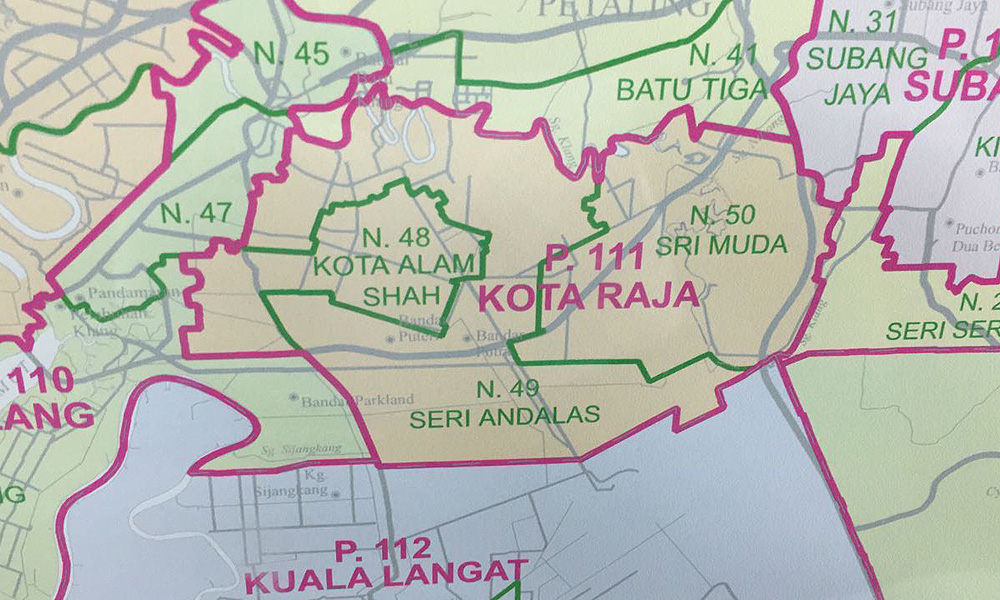
“I expect Selangor would be one of the states with the most number of objections because of the large number of changes,” Ong said.
The EC will then take into account feedback received from the first round of public hearings.
Then, a second round of objections would commence after the EC revises its redelineation plans.
Explaining the objections process further, Penang Institute fellow Wong Chin Huat described it as a “flawed process”.
“The EC will fix it (the date), it’s going to be half an hour, (from the 100 objectors) 20 to 30 can be present while only three people can speak.
“Objectors cannot have legal representation, there won’t be media coverage. Basically, there is no public record of their objections,” he said.
Apart from this, Wong said the outcome of the inquiries would not be revealed and objectors would not know why their objections were accepted or rejected.
Wong then stressed the importance for the reasons to be made known so that an objector would know the next course of action to be taken.
“You won’t know the outcome of the second round of inquiry, too.
“By then the report would have been submitted to the prime minister, the prime minister would table it in Parliament together with the draft parliamentary order.
“And another tricky part - the prime minister need not accept the entire recommendations. He can decide what to include (and) what to exclude,” Wong added.
‘EC's impartiality important’
Meanwhile, Proham chairperson Kuthubul Zaman Bukhari, who spoke about electoral integrity, stressed the importance for the EC to be impartial.
“I Googled and found the Wikipedia article on the EC as a commission set up for the purpose of ensuring a BN victory in the general election. This is the perception of the public,” he said, to laughter from the some 30 participants of the discussion.
But the public, Kuthubul said, cannot be blamed for thinking in such a way, citing the EC’s way of doing things in relation to the redelineation exercise, perceived by many as ensuring a BN win.
The EC, he pointed out, is under the Prime Minister’s Department and the prime minister is also the one who appoints top members of the EC.
“(So) are they really acting independently?” Kuthubul asked.
Malaysia, therefore, could take a leaf from the books of different democracies.
Citing the case of New Zealand, Kuthubul said the chief of the institution responsible for elections is an employee under the Ministry of Justice.
“Maybe we should look at New Zealand and amend our EC on a similar line.
“As long as the present EC carries out what it has been doing, I don’t think we can see a change in government.
“Because the perception is, the redelineation exercise by the EC only shows that the present government would remain in power for more generations to come,” added Kuthubul.
Both BN and opposition parties have hit out at the proposed redelineation, claiming that it could create racial imbalance in some electoral constituencies.
Opposition parties have charged that the redelineation proposals are lopsided and in favour of Umno.


