


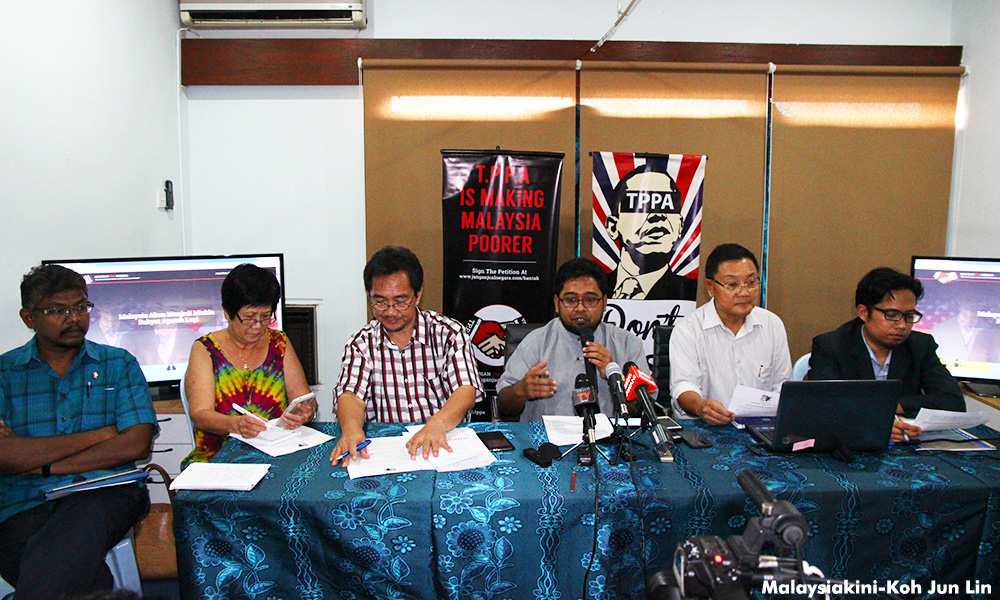

Anti-TPPA group wary of Trump’s promise to dump deal
While they would welcome with open arms if US president-elect Donald Trump dumps the Trans-Pacific Partnership Agreement (TPPA), the Bantah TPPA group believes that this will probably not happen.
“But we are wary that it may too simplistic for us to believe that Trump will keep his promise to the American voters to dump the TPPA.
“Considering the strong lobbying by big multinationals during Barack Obama’s presidency, this will surely come to bear during Trump presidency. Same concern if Hillary Clinton had won,” the group’s deputy chairperson Azlan Awang told Malaysiakini.
Azlan posited that the Trump victory could lead to several scenarios.
“One is Obama and Congress - who are both beholden to big businesses - will try to pass the TPP during this transition period,” he said.
Trump will only take office in January next year and Bantah TPPA sees the passing of this agreement by the Congress as “an unlikely but possible outcome”.
While they would welcome with open arms if US president-elect Donald Trump dumps the Trans-Pacific Partnership Agreement (TPPA), the Bantah TPPA group believes that this will probably not happen.
“But we are wary that it may too simplistic for us to believe that Trump will keep his promise to the American voters to dump the TPPA.
“Considering the strong lobbying by big multinationals during Barack Obama’s presidency, this will surely come to bear during Trump presidency. Same concern if Hillary Clinton had won,” the group’s deputy chairperson Azlan Awang told Malaysiakini.
Azlan posited that the Trump victory could lead to several scenarios.
“One is Obama and Congress - who are both beholden to big businesses - will try to pass the TPP during this transition period,” he said.
 Trump will only take office in January next year and Bantah TPPA sees the passing of this agreement by the Congress as “an unlikely but possible outcome”.
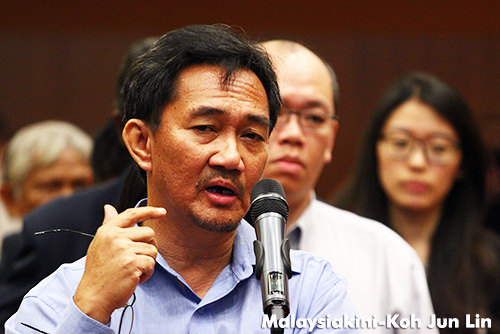
“But as president, Trump can still block it from coming into force,” Azlan (photo) reasoned.
Another scenario that he cited is that “nothing happens in the lame duck period”, but after taking over as president, Trump could buckle to pressure and lobby from the big multinationals.
He could agree to proceed with the TPPA with minor changes and with more concessions from other partner countries, Azlan said, adding that the US had done this before with other bilateral trade agreements.
“Some of the changes they may pursue are currency manipulation, to carve out on tobacco, and give more concessions on intellectual property (IP) and whatnot,” he said.
Azlan explained that it is not possible for the rest of the countries to go ahead without the US as they would not have the economic weight to carry the deal.
However, he said, new developments in Malaysia’s relationship with China would also have a bearing on how Malaysia looks at the TPPA.
Regionally speaking, he argued, how the Regional Comprehensive Economic Partnership involving Asean and other countries in the Asian region unravels itself, during the next few rounds of negotiations, would indicate if there is a future for US-style trade and investment agreements.
The TPPA seeks to link up Pacific countries in a greater economic sphere, supposedly to encourage open trade, though some fear that it is to allow the larger American economy easy access to the Asian market, to the detriment of smaller economies.
Trump, who won in yesterday’s US presidential election, ran on a seemingly inward-looking platform that also called for the withdrawal of US involvement in the trade agreement to, among other reasons, to safeguard American jobs.


Are you sure you want to delete this comment?
This action cannot be undone.