


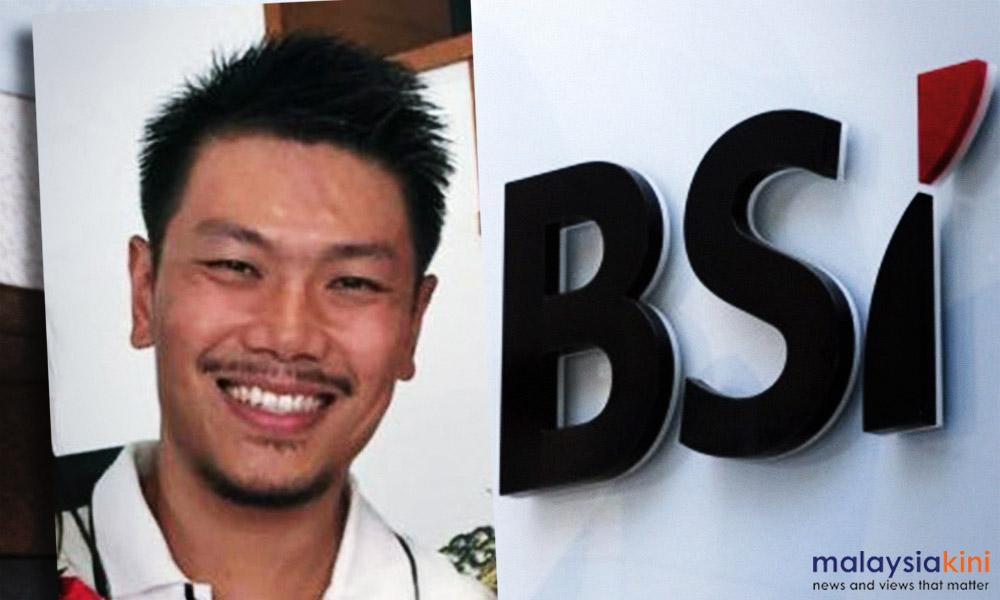

Ex-BSI banker Yeo amassed RM74m in 15 months
Former BSI wealth planner Yeo Jiawei accumulated some S$23.9 million (RM74 million) in 15 months through "secret profits" after he left the bank in June 2014.
Former BSI wealth planner Yeo Jiawei accumulated some S$23.9 million (RM74 million) in 15 months through "secret profits" after he left the bank in June 2014.
This was revealed by the prosecutors in Yeo's trial on four counts of witness tampering in Singapore, according to The Edge Markets.
Yeo, 34, said his net worth was around S$2 million, mostly from his salary and bonuses, when he left the now-defunct BSI Bank in Singapore.
In a document titled ‘Wealth Statement’ found in Yeo's iPad, which was confiscated by investigators, he had a list of his assets.
These include three properties in Singapore and two in Australia, as well as cash in various currencies at several banks such as HSBC and OCBC, with the total value of these assets at S$25,988,735.
Singapore's deputy public prosecutor Tan Kiat Pheng said it was "quite unbelievable" that Yeo could accumulate so much money in such a short span of time by acting as a mere "introducer, intermediary, independent consultant or relationship manager".
These were the terms Yeo had used to describe himself.
"Mr Yeo, I am putting it to you that your wealth of about S$25.9 million includes funds that you earned through illicit means, including taking secret profits, during and after your BSI days. Do you agree or disagree?" Tan asked.
"Your Honour, I totally disagree. At that time, the client is a sovereign wealth fund, one of the biggest sovereign wealth funds in the world," Yeo had replied.
Though he did not mention the client by name, it was revealed earlier in the trial that his clients included Malaysian sovereign wealth fund 1MDB and Abu Dhabi state-owned International Petroleum Investment Company’s (IPIC) subsidiary Aabar Investments PJS.
Meanwhile, Tan pointed out that Yak Yew Chee, Yeo's senior colleague at BSI and private banker to controversial businessman Jho Low, only earned S$27 million over four years.
Yeo claimed that this was because he was an independent consultant and could negotiate his fees directly, unlike Yak who only earned commission through BSI.
He also said that there was nothing wrong with earning fees from introducing his own clients, such as Aabar and Low, to service providers such as Amicorp.
Pointing out that this was a common way BSI generated its revenue, Yeo estimated that half of BSI's revenue of between US$100 million and US$200 million came from such intermediary fees, though he did not specify the financial period.
‘Witnesses lying to save their skins’
Yeo's former supervisor at BSI, Kevin Swampillai, had testified against him and claimed that Yeo was paid S$500,000 a year by Low.
However, Yeo maintained that he never worked for Low and that he had never taken a single cent from the man said to be at the centre of the 1MDB controversy.
He voluntarily submitted his 2015 notice of income tax assessment, which indicated he earned S$441,000 in 2014.
Yeo also produced an offer of employment from rival wealth manager UBS for S$490,000.
This had probably led Swampillai into having the false impression that Yeo had joined Low for S$500,000, he said.
He would not have joined billionaire Low for just S$500,000, Yeo added.
The deputy public prosecutor pointed out that the S$441,000 was based on just half a year of work, since Yeo left BSI in June 2014.
Later, under re-examination by Yeo's lawyer Philip Fong, Yeo said that his income for 2014 included "very significant" bonuses earned for 2013 that were only paid in March 2014.
Yeo also rejected the portrayal of him as someone at the centre of a web of cross-border money-shuffling, which involved numerous entities and individuals.
He argued that, as an intermediary, he was not the sole person responsible as the financial institutions also did not step in to stop the transactions.
It was only when news surrounding 1MDB arose that various prosecution witnesses, such as Swampillai and Samuel Goh Sze-Wei, turned against him.
Yeo also questioned why Amicorp relationship manager Jose Renalto Carvalho Pinto had called him arrogant when they had a good working relationship.
These three individuals were all complicit in one way or another, Yeo said, but now they were pushing the blame on him.
"These witnesses are lying to save their own skin," Yeo said.
The court will announce the verdict on Dec 21, after 12 days of trial.
Yeo will face another charge, on seven other counts of money laundering, next April.


Are you sure you want to delete this comment?
This action cannot be undone.