



Don’t demolish our school, pleads Rohingya teenager
Fourteen-year-old Hamidun’s eyes were full of questions, but he still managed a shy smile as he sat in front of me at the meeting room of Knowledge Garden Learning Centre – a school for Rohingya children in Serdang, Selangor.
After I explained the purpose of the interview, Hamidun started to relax and answered my questions in proficient Bahasa Malaysia.
His competency in the language was a pleasant surprise to me, as the teenager had set foot in Malaysia merely four years ago. Hamidun attributes his ease in speaking the language to the conversations made with friends in the country.
As a 14-year-old, Hamidun is the oldest in his school which comprises mostly students from the ages of seven to 12. Because of this, he is forced to learn the Standard Five syllabus, despite his age.
Hamidun, who harbours hope of becoming a doctor one day, likes to read in his spare time and plays sepak takraw after school hours...
Fourteen-year-old Hamidun’s eyes were full of questions, but he still managed a shy smile as he sat in front of me at the meeting room of Knowledge Garden Learning Centre – a school for Rohingya children in Serdang, Selangor.
After I explained the purpose of the interview, Hamidun started to relax and answered my questions in proficient Bahasa Malaysia.
His competency in the language was a pleasant surprise to me, as the teenager had set foot in Malaysia merely four years ago. Hamidun attributes his ease in speaking the language to the conversations made with friends in the country.
As a 14-year-old, Hamidun is the oldest in his school which comprises mostly students from the ages of seven to 12. Because of this, he is forced to learn the Standard Five syllabus, despite his age.
Hamidun, who harbours hope of becoming a doctor one day, likes to read in his spare time and plays sepak takraw after school hours.
 Although he was happy when told that his school would not be demolished, his shyness melted away and Hamidun turned serious as he looked me in the eye and pleaded: “Please help us, don’t demolish (the school).”
His plea comes despite Selangor Menteri Besar Azmin Ali’s confirmation that the school will not be demolished.
It was apparent how Hamidun still fears the possibility of the school being demolished. And this is understandable.
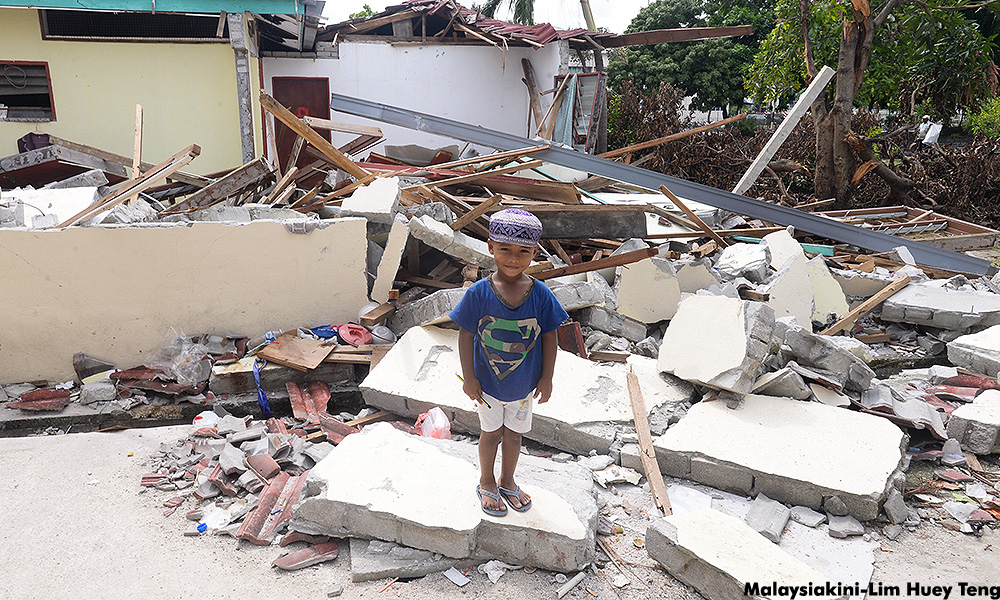
The teenager was around when authorities demolished part of the school last month.
“The children were terrified and the little ones cried. I couldn’t do anything and could only watch,” he said regretfully.
Aside from wanting his school to remain, he also prefers staying in Malaysia, citing his “many friends” and Malaysia’s position as a Muslim-majority nation.
“In Myanmar, we couldn’t go out (from Rakhine State). If we did, we would be beaten,” said Hamidun who also expressed hope to return to Myanmar once he is older.
Born in Myanmar, his mother, elder brother and younger sister are still in the Buddhist-majority country while his father works in Terengganu.
His father came to Malaysia 12 years ago, while Hamidun entered the country in 2013 with a relative who now stays in Puchong.
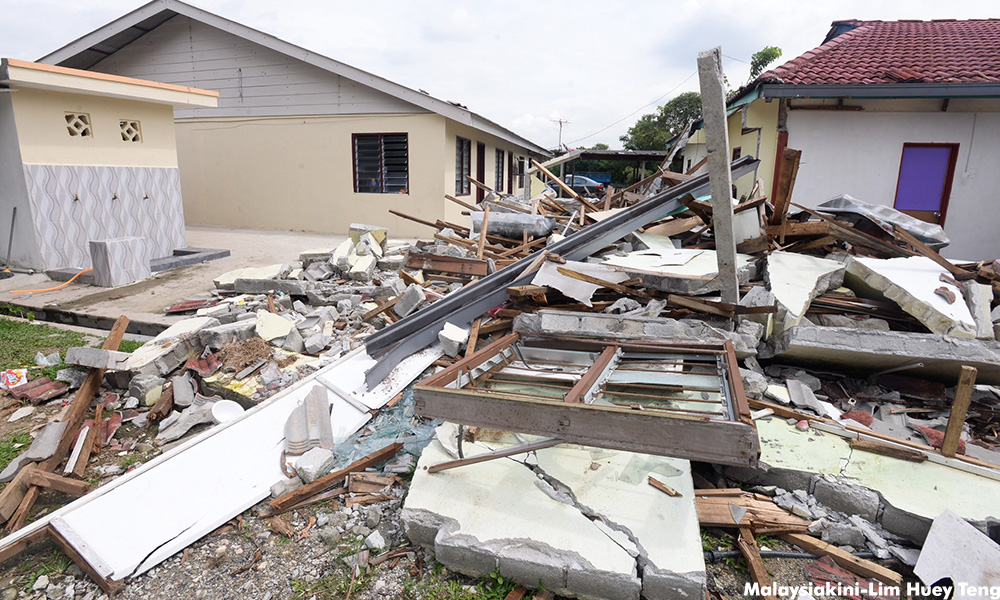 The plight of Hamidun’s school came to light a week ago after NGO Serantau Muslim urged the Selangor state government to reconsider demolishing the school, which was illegally built on state land.
Azmin then instructed for the demolition order on the school to be revoked, citing humanitarian grounds.
However, Azmin said, the land office and Subang Jaya Municipal Council would identify other unused and suitable premises for the education of the Rohingya children so that they can be relocated to a more suitable location.
School head: We want to stay here
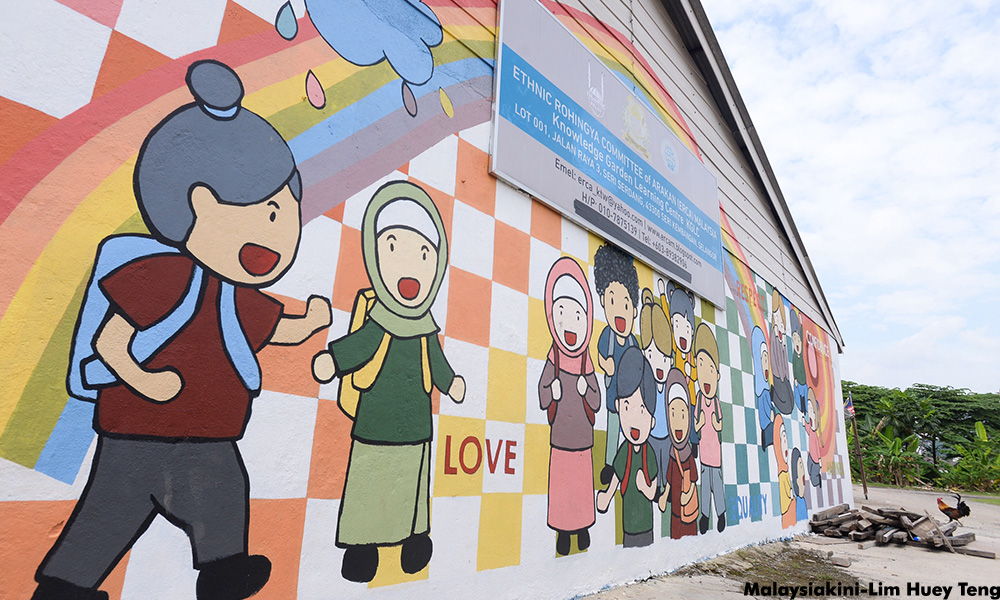
Speaking to Malaysiakini, the school’s headmaster, Mohd Rafiq Khairul Bashar, said while he was very much thankful to the menteri besar, he also expressed his insistence on staying put in the area.
“We want to stay here if it is possible. The children can be noisy but as the area is quite secluded, we have not had complaints thus far from the other residents.
 “But the same cannot be said if we were to move to another area. Also, if we were to move, who is going to build a new building for us?” queried Rafiq.
The school, he added, had incurred debts totaling as high as RM90,000 since it was opened in 2013.
“I had to borrow here and there and ask for donations. Extra cash needs to be used during instances when children get sick and when food is not enough,” said the father-of-two.
Rafiq, who has stayed in the country for 20 years, said that prior to the school being opened in 2013, the place was used to handle funeral services of the Rohingya as well as a place to discuss matters between quarrelling spouses.
As such, Rafiq expressed hope that the menteri besar would come to the school to see things for himself.
Asked whether he has tried contacting the menteri besar, Rafiq said he has no friends who can intermediate between them.
“I’m embarrassed to simply go there. I am just a small fry, a foreigner and a refugee,” said Rafiq, who welcomed assistance from anyone who was willing to do so.
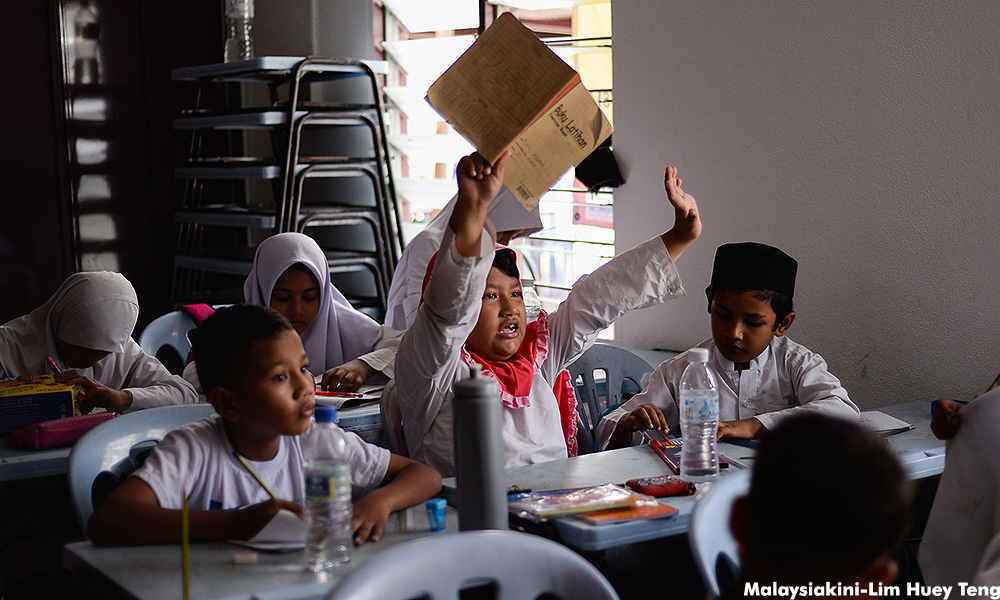 As I walked around the school compound, some of the Rohingya children happily ran in and out from their classrooms and some even entered the classes of others, despite school being in session.
For Suraya (not her real name), 38, controlling the children is high in the list when it comes to the challenges she faces in the school.
This was also very much different to the experience she had as a teacher in a local school.
“Even if we tell them to keep quiet, they will still make noise. But, after a while, they will listen.”
Because of this, Suraya tries to adopt the pre-school style of teaching.
“We try to do things according way it is done in the national schools, but students are not used to it if it’s too serious. Besides, they will get bored if it is too serious.”
Chiming in, her colleague Fatimah (not her real name), said they try to come up with exciting activities that involve “a lot of singing”.
So what do they do, then, when students still go out from their classes on a whim?
“I will tell them they won’t get anything like chocolates if they go out from class,” said Suraya.
Adopting the Kurikulum Standard Sekolah Rendah (KSSR) method, students at the school undergo monthly tests and also sit for their mid- and final-term examinations.
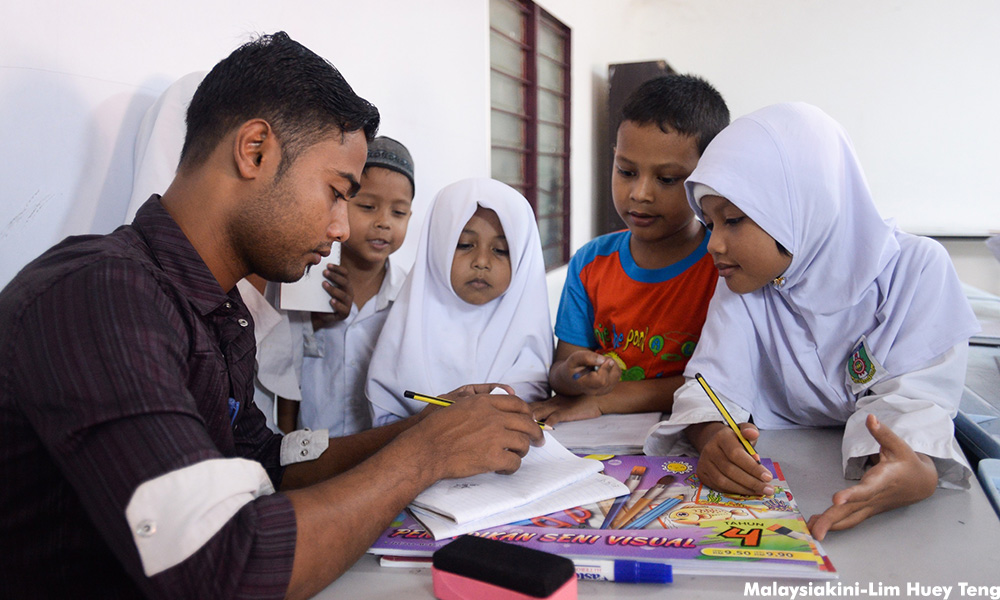
With 40 students, the school’s five teachers teach their respective students who are divided into three classes.
Both Suraya and Fatimah joined the school only a month ago. But unlike Suraya, Fatimah, who teaches Bahasa Malaysia and Science, does not have prior experience as a teacher.
“My experience is in editing and translating books,” said 39-year-old Fatimah.
Despite the lack of teaching experience, Fatimah does not find her current job stressful.
“The children are not disobedient, they are just naughty,” Fatimah said, with a chuckle.
Apart from the challenges faced, both teachers, however, lamented their students’ statelessness.
“They only have United Nations High Commissioner for Refugees (UNHCR) cards. As they do not have citizenship, they cannot take the Ujian Pencapaian Sekolah Rendah (UPSR) examination.
“It’s a sad thing… Because these students are bright,” Fatimah said.


