




Same treatment for adult, child detainees
The country's laws on immigration offences and subsequent punishment if found guilty apply equally to both children and adults, according to the Immigration Department.
The country's laws on immigration offences and subsequent punishment if found guilty apply equally to both children and adults, according to the Immigration Department.
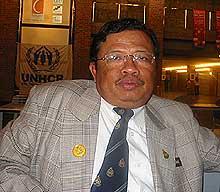 Its Enforcement Unit Director Ishak Mohamed (photo) said as such, foreign children identified to have entered or stayed in the country without valid travel documents would have to face the same detention conditions as adults charged for the same offence.
"Our Immigration Act does not differentiate between adults and children," he told malaysiakini yesterday in Kuala Lumpur after attending the official launch of a photo exhibition organised by the office of the United Nations High Commissioner for Refugees (UNHCR).
Ishak was responding to a question as to why children in immigration detention centres, some as young as two, were made to face the same conditions and treatment as the adult detainees.
According to the latest statistics from the Immigration Department, there are currently 42 children being detained in the country's 15 detention centres. It is yet to be ascertained how many of this number are UNHCR recognised child refugees as the country's law does not accredit a refugee status.
Toddler's death
"In fact, in terms of the law, there are no refugees in Malaysia. We have not ratified the [1951] United Nations Convention [Relating to the Status] of Refugees. On paper, that's the situation," Ishak said.
Statistics provided in late May by the UNHCR, however, have identified 42 child refugees from Burma, Aceh and other ethnic and national groups being detained in various immigration depots.
Rights groups have long complained of the overcrowded, unsanitary, and poor conditions of these immigration depots, stressing that they were extremely unsuitable for children for any period of time much less for an extended term.
The issue came to the fore early last month with the death of a two-year-old Filipino child deportee in Zamboanga City in Mindanao, Philippines. The child, Rene Nasir, had then just been ejected from an immigration depot in Sandakan, Sabah.
She was among six who had been suffering from severe dehydration. They had been vomiting after suffering from a severe bout of diarrhea.
'Bound by compassion'
Asked about Rene's death, Ishak maintained there have been 'no reports' of deportees being sick, let alone dying. He acknowledged that deportees were returned to their countries of origin via sea.
"If there is such a report, I want to see it. I have not received any reports of any sick deportee. If there was any deportee who was sick, the ship would have been told to stop," he said when told that the child's death had been confirmed by Filipino authorities.
"There is enough food and there are doctors for them in the (detention) camps as well as on the ships," he added.
 Earlier, in opening the UNHCR exhibition, the Regent of Perak Raja Nazrin Shah said Malaysia should protect refugees on its land although it is not a party to the 1951 United Nations Convention on Refugees.
"Though Malaysia is not bound by the 1951 UN Convention Relating to the Status of Refugees, we are, however, bound by our human compassion to protect refugees and respect their rights," he said.
The exhibition themed 'Face to face: Confronting the humanity of refugees in Malaysia' presents a collection of photographs capturing the situation of refugees as seen through the lens of Malaysian photographer Bernice Chauly.
The exhibition at the Kuala Lumpur Performing Arts Centre (KLPac) in Sentul will run until Aug 7. Admission is free.


